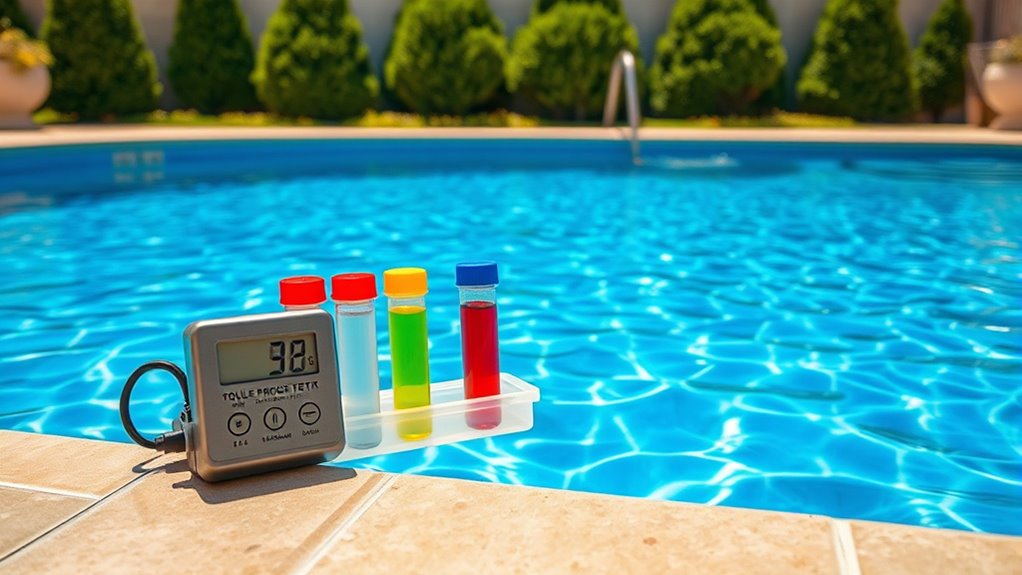

To troubleshoot common pool chemistry problems, start by testing your water regularly to check pH, chlorine, and alkalinity levels. If you notice algae, cloudy water, or odors, adjust chemicals promptly—shocking the pool or adding algaecide may help. Maintaining proper pH (7.2-7.6) is essential for sanitizer effectiveness and preventing issues. For ongoing problems, fine-tuning chemical balance and preventive care make a big difference—discover more tips to keep everything in perfect check.

Get pool and patio gear delivered free — and shop member deals
- Fast, free delivery on millions of items
- Access to Prime Big Deal Days deals on October 6–7
- Prime Video, Amazon Music and more included
Key Takeaways
- Regularly test and adjust chlorine and pH levels to prevent algae growth and maintain water clarity.
- Keep pH within 7.2 to 7.6 for effective sanitizer performance and balanced water chemistry.
- Brush pool surfaces frequently to remove algae spores and prevent buildup.
- Use shock treatments or algaecides promptly when algae signs appear to control spread.
- Monitor water chemistry consistently, especially after heavy use or rain, for ongoing pool health.
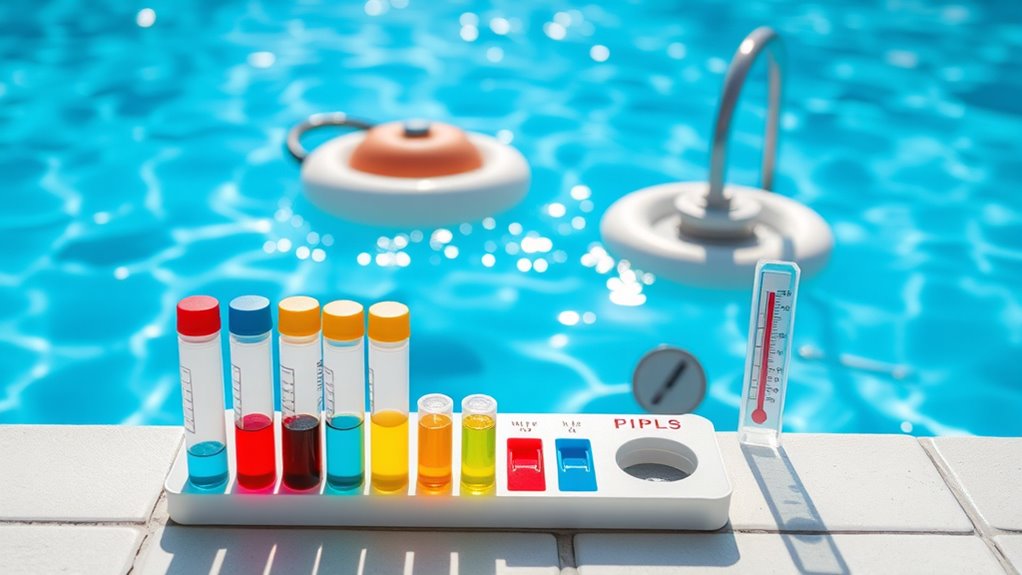
Maintaining proper pool chemistry is essential to keep your pool safe, clean, and inviting. When it comes to keeping your water crystal clear, understanding how to prevent algae growth and maintain proper pH levels is key. Algae prevention starts with keeping your chlorine levels steady and ensuring your sanitizer is active enough to inhibit algae spores from taking hold. If you notice a green tint or slimy film forming on the surface, it’s a sign you need to act quickly. Brushing the walls and floor helps remove algae that may be beginning to settle, but chemical treatment is critical. Shocking the pool with a high dose of chlorine or algaecide can eliminate existing algae and prevent new growth. Regular testing and adjustment of your chemical levels are indispensable, especially after heavy rain, pool parties, or when the pool has been unused for a while. Proper pool chemistry tuning can significantly improve water quality and reduce maintenance efforts.
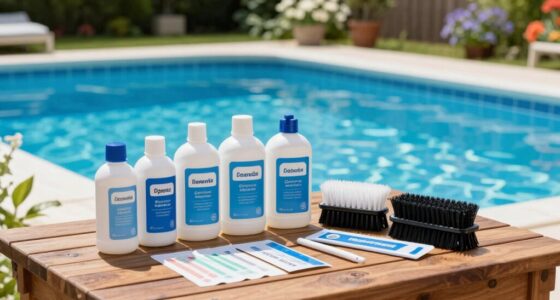
Balancing your pH levels is equally important for algae prevention and overall water quality. When pH swings too high or too low, it affects the effectiveness of chlorine, making it less capable of disinfecting. If your pH is too high (above 7.6), chlorine becomes less active, giving algae and bacteria more room to flourish. Conversely, if pH drops too low (below 7.2), the water can become corrosive, damaging your pool equipment and surfaces. To maintain proper pH balancing, test your water regularly using a reliable test kit, ideally at least twice a week during peak swimming season. If the pH is off, add the appropriate chemical—pH increaser or decreaser—to bring it back into the ideal range of 7.2 to 7.6. This not only improves water clarity but also enhances sanitizer performance, reducing the risk of algae and bacteria growth.
Consistent monitoring and adjustments are your best defense against common pool chemistry problems. Keep your sanitizer levels in check by testing chlorine or bromine regularly, especially after heavy use or rain, and adjust as needed. When you notice cloudy water, algae, or strange odors, it’s a sign your chemistry needs tweaking. Proper pH balancing plays a pivotal role in this process, helping your sanitizer work more efficiently and protecting your pool surfaces. By proactively managing algae prevention and pH levels, you create a balanced environment that keeps your pool inviting and safe for everyone. Remember, maintaining steady, proper chemistry isn’t a one-time task—it’s an ongoing process that ensures your pool stays in top condition all season long.
As an affiliate, we earn on qualifying purchases.
Frequently Asked Questions
How Often Should I Test My Pool Water Chemistry?
You should test your pool water chemistry at least twice a week using pool test kits to guarantee proper balance. During heavy use or after a rainstorm, increase testing to three or more times weekly. Regular water testing frequency helps you catch imbalances early, preventing issues like algae growth or cloudy water. Consistent testing keeps your pool safe, clean, and inviting, making it easier to maintain ideal water conditions.
What Are the Signs of Algae Growth in My Pool?
You’ll notice algae growth in your pool when you see a slimy or fuzzy film on the pool surface. Algae detection is easier if you observe green, yellow, or black spots that don’t brush away easily. Sometimes, the water turns cloudy or greenish, and your pool might develop an unpleasant odor. Regularly check the pool surface and test water chemistry to catch algae early and keep your pool crystal clear.
Can I Use Household Chemicals to Balance My Pool?
You can’t rely on household chemicals to balance your pool because doing so risks pool safety. While it might seem convenient, common household cleaners or chemicals aren’t formulated for pool use and can cause dangerous chemical imbalances. Instead, stick to proper pool chemicals designed for maintaining water chemistry. This guarantees your pool remains safe, clear, and healthy, preventing potential hazards caused by improper chemical use.
How Do I Fix Cloudy Pool Water Quickly?
To clear cloudy pool water quickly, start by adding a pool clarifier to help tiny particles settle. Run your filter continuously and perform filter maintenance if needed to guarantee it’s working efficiently. You might also need to shock the pool to break down organic contaminants. Regularly check your chemical levels to prevent future cloudiness, and keep the filter clean for ideal circulation and clarity.
What’s the Best Way to Prevent Chemical Imbalances?
Think of your pool as a delicate dance that needs perfect timing. To prevent chemical imbalances, you keep up with regular pool maintenance, testing water levels weekly, and adjusting chemicals as needed. Balance pH, alkalinity, and sanitizer levels consistently. Always follow proper chemical safety guidelines, handling chemicals carefully and storing them securely. Staying proactive guarantees your pool remains crystal clear and safe, avoiding surprises and costly fixes.
As an affiliate, we earn on qualifying purchases.
Conclusion
Keeping your pool balanced is essential for safe, clean swimming. Did you know that 85% of pool issues stem from improper chemistry? By understanding common problems and their solutions, you can avoid costly repairs and enjoy crystal-clear water all season. Regular testing and maintenance make a huge difference, so stay proactive. With a little knowledge, you’ll prevent most issues before they start, ensuring your pool stays inviting and safe for everyone to enjoy.
As an affiliate, we earn on qualifying purchases.
As an affiliate, we earn on qualifying purchases.
Fall Picks
fall essentials
As an affiliate, we earn on qualifying purchases.