TL;DR

Get pool and patio gear delivered free with Prime
- Fast, free delivery on millions of items
- Prime Video, Amazon Music and more included
- Member-only deals all year
A Country Living report recommends winter rye and crimson clover as fall cover crops for gardeners seeking to protect bare beds and improve soil by spring. Rye can suit later planting and dense soil; crimson clover needs more mild weather to establish and can add nitrogen when properly inoculated.
Country Living recommends winter rye and crimson clover as two cover crops gardeners can sow in fall to shield bare beds over winter and add plant material to the soil in spring. The choices suit different conditions: rye can germinate in cold weather, while crimson clover needs enough mild days to establish before freezing weather.
Winter rye is presented as the stronger option for late-season sowing. The report says it can germinate at temperatures as low as 34°F and that its extensive roots can help break up dense clay soil. The roots and plant cover can also help limit erosion and improve soil structure over time. If the foliage dies back in winter, the report says the roots may keep growing, with top growth resuming as temperatures rise.
For spring management, Country Living advises cutting rye before it sets seed, usually when it reaches 12 to 18 inches. Gardeners can turn the cut plants into the soil or leave them on top as mulch, then wait several weeks for decomposition before planting. Crimson clover is offered as an alternative for areas with more mild weather left in fall. Its flowers can provide nectar for bees and other pollinators in spring, and the crop can contribute nitrogen when its seeds are appropriately inoculated.
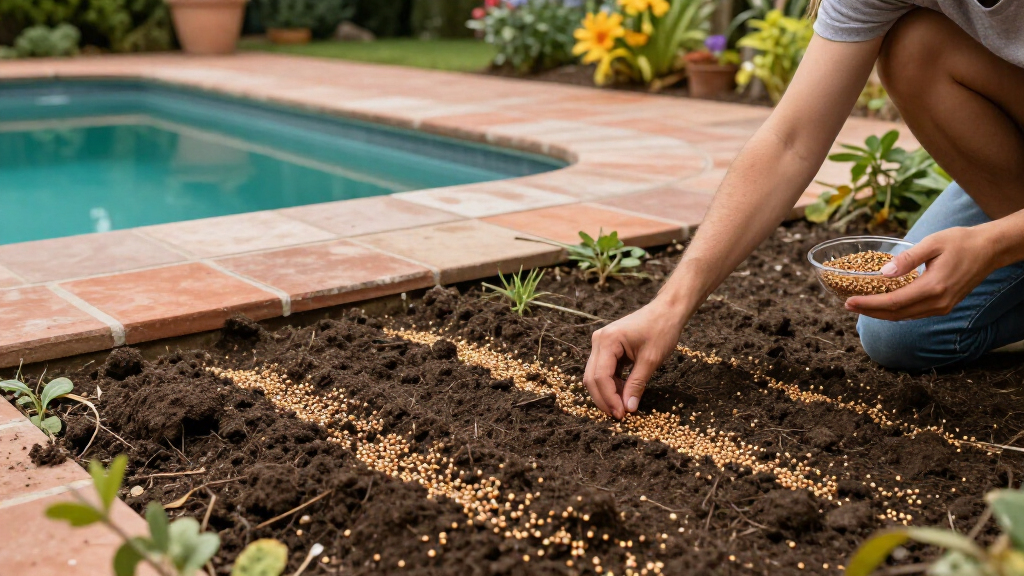
For either crop, the report advises clearing spent plants and weeds, raking the soil, then scattering seed at the rate and depth on its packet. Lightly rake or press seeds into contact with the soil and water them; keep the surface moist until seedlings are established. If fall conditions no longer allow a cover crop to establish, the report suggests protecting bare soil with materials such as chopped leaves, straw or leaf mold.
Choosing a Crop for Fall Conditions
A cover crop can give exposed garden soil a living cover during a season when rain and wind may carry soil away. The plants also add organic matter when cut back and decomposed in spring. That can make fall sowing relevant to gardeners planning next season’s beds, although results depend on local conditions, planting timing and how the crop is managed.
The two recommendations are not interchangeable. Winter rye tolerates colder germination conditions and may be useful where the planting window is short or soil is dense. Crimson clover offers a different potential benefit—nitrogen contribution and spring flowers—but needs time to establish and suitable seed inoculation. Matching the crop to the remaining growing weather is more useful than treating either as a universal solution.
As an affiliate, we earn on qualifying purchases.
Frost Dates Shape the Planting Window
The report’s central timing advice is to sow while seedlings still have time to establish before the first frost. Gardeners can check a local estimated frost date and compare it with the seed packet’s information on germination and growth. The article does not provide one calendar date for planting because the window varies by location and conditions.
Crimson clover seeds may need inoculation with specialized Rhizobium bacteria to help the plant fix atmospheric nitrogen. Country Living advises gardeners who have not grown crimson clover in recent years to seek inoculated seed or treat uninoculated seed themselves with an inoculant. The report says buying treated seed may be more convenient for smaller beds, while treating seed separately may cost less when sowing a larger area.
“Winter rye can germinate in cold weather, down to 34°F.”
— Country Living report
As an affiliate, we earn on qualifying purchases.
Local Results Depend on Weather
The report offers general gardening guidance, not a location-specific planting calendar or a guarantee of soil improvement. Whether either crop can establish now depends on local frost timing, current temperatures, soil conditions and the time remaining for growth. The source does not specify a universal sowing date, seed rate or depth; it directs readers to local frost estimates and the instructions on each seed packet.
It also does not quantify how much erosion reduction, organic matter or nitrogen a home gardener should expect. Crimson clover’s nitrogen contribution depends on successful establishment and the relevant bacteria, while the time needed for cut plants to decompose can vary. Those outcomes should not be read as assured results for every garden.
garden soil erosion control cover crop
As an affiliate, we earn on qualifying purchases.
As an affiliate, we earn on qualifying purchases.
Check Seed Labels Before Sowing
Gardeners considering a cover crop should check their estimated first frost date, read the seed packet for sowing instructions and decide whether there is enough mild weather for seedlings to establish. If choosing crimson clover, they should check whether the seed is inoculated. After sowing, keep the soil moist until seedlings take hold, using rain when it arrives soon enough.
In spring, rye should be cut before it sets seed, while the report recommends cutting crimson clover when about half the plants have bloomed. Either crop can be turned into the soil; the report advises allowing several weeks for plant material to decompose before planting beds. If the planting window has passed, mulch can cover exposed soil instead.
As an affiliate, we earn on qualifying purchases.
Key Questions
Which cover crop is better for late fall planting?
Country Living identifies winter rye as the better choice for late sowing because it can germinate in cold weather, down to 34°F. Whether it is still suitable depends on local conditions and the time left for seedlings to establish.
When should winter rye be cut back?
The report advises cutting rye in spring before it sets seed, usually when the plants are 12 to 18 inches high. The cut material can be turned into the soil or left on the surface as mulch.
Does crimson clover need inoculated seed?
The report recommends inoculated seed, particularly if crimson clover has not been planted in recent years. The seed treatment contains Rhizobium bacteria that help the plant fix atmospheric nitrogen.
What if it is too late to sow a cover crop?
Country Living suggests covering bare soil with leaf mold, chopped leaves, straw or another suitable mulch. Keep mulch away from plant crowns and tree trunks, the report advises.
Source: rss
Halloween Picks
halloween
As an affiliate, we earn on qualifying purchases.