Natural swimming pools are genuinely sustainable because they rely on organic filtration processes that use plants, beneficial bacteria, and physical filters, reducing or eliminating chemicals. They support ecological balance, minimize environmental impact, and require less energy compared to traditional pools. By using natural materials and native plants, these pools promote long-term sustainability and water health. To see how they can fit into your outdoor space and make a difference, keep exploring their eco-friendly advantages.
Key Takeaways
- Natural pools use biological filtration, reducing or eliminating chemical treatments and lowering environmental impact.
- They promote ecological balance by supporting local biodiversity and incorporating native plants and natural materials.
- Their sustainable design requires less energy for operation compared to conventional pools.
- They utilize eco-friendly landscaping and natural filtering zones, minimizing runoff and soil erosion.
- Overall, natural pools offer a sustainable, chemical-free water environment with a smaller ecological footprint.
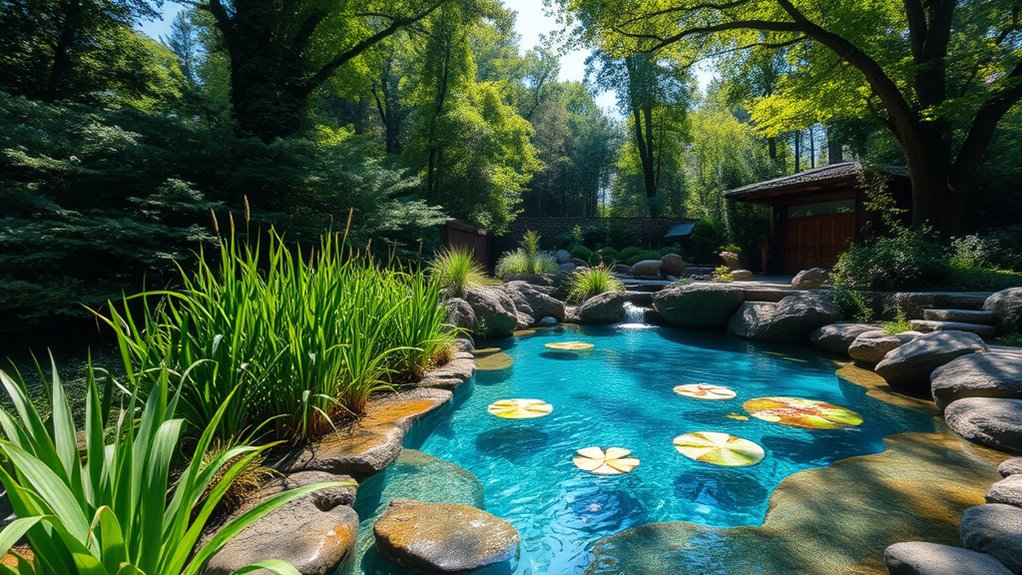
Natural swimming pools are gaining popularity because they offer an eco-friendly alternative to traditional chlorinated pools. Instead of relying on harsh chemicals, these pools use chemical free filtration systems that harness biological processes to keep the water clean. You’ll find that the filtration involves a combination of plants, beneficial bacteria, and natural physical filters, which work together to break down organic matter, pollutants, and algae. This approach not only reduces the need for chemical treatments but also creates a safer environment for you and your family. When you opt for a natural pool, you’re actively reducing the chemical footprint of your backyard oasis, making it a healthier choice overall.
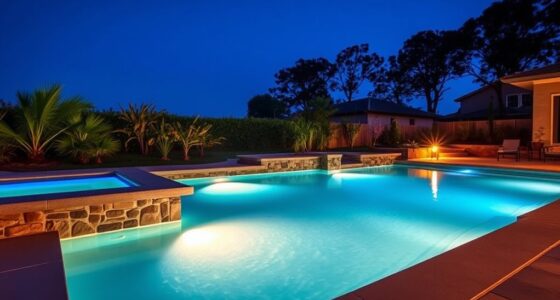
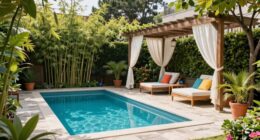
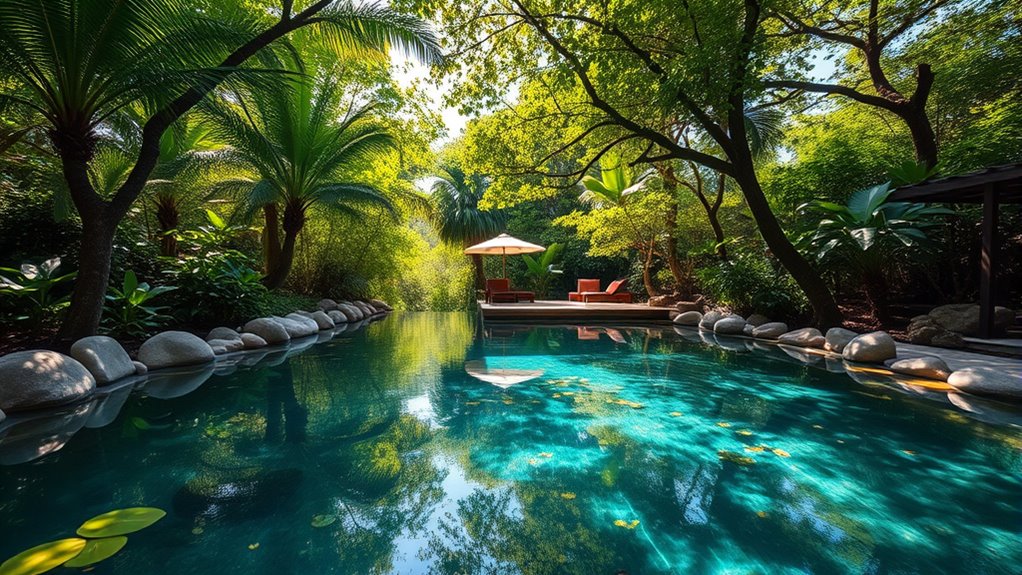
One of the key benefits of natural swimming pools is their integration into eco friendly landscaping. Instead of stark, synthetic pool surroundings, you get lush plantings and natural materials that blend seamlessly into your landscape design. These pools often feature a designated regeneration zone filled with aquatic plants that act as natural filters, creating a self-sustaining ecosystem. This landscaping approach not only enhances the visual appeal but also supports local biodiversity. You might notice birds, frogs, and beneficial insects thriving around your pool, turning the area into a mini habitat rather than just a water feature. The use of native plants and sustainable materials minimizes environmental impact, promoting a balanced ecosystem that requires less maintenance and fewer resources.
With eco friendly landscaping, you also have the opportunity to customize the appearance of your natural pool. You can choose indigenous plants that thrive naturally in your region, reducing watering and fertilization needs. The design often incorporates natural stones, wood, and other eco-friendly materials, which help your pool blend into the surrounding environment. This creates a more harmonious outdoor space, transforming your backyard into a sanctuary that’s both beautiful and sustainable. Additionally, these design choices can decrease runoff and soil erosion, further reducing environmental impact and promoting long-term sustainability.
In essence, natural swimming pools leverage chemical free filtration and eco friendly landscaping to deliver a sustainable alternative to traditional pools. They require less energy and fewer chemicals, resulting in a more environmentally responsible option. By choosing this type of pool, you’re not only investing in a healthier, chemical-free water experience, but you’re also supporting ecological balance and promoting sustainable landscaping practices. The combination of biological filtration and eco-friendly design makes natural pools a compelling choice for environmentally conscious homeowners who want to enjoy water recreation without sacrificing sustainability.

Aumzong W3C17502 Swimming Pool Plus Cartridge Filter Assembly 200 Sq Ft,150 GPM Compatible with Hayward StarClear Plus,Replacement Element Part C-8319
【Replacement Part Number】 W3C17502
As an affiliate, we earn on qualifying purchases.
As an affiliate, we earn on qualifying purchases.
Frequently Asked Questions
What Are the Long-Term Maintenance Costs of Natural Pools?
Your long-term maintenance costs for natural pools are generally lower since you avoid expensive chemicals. You’ll need to regularly check the chemical balance to keep water clear and healthy. Algae control is essential, but natural filtration helps minimize its growth. Expect periodic cleaning of biofilters and plants, which can be manageable over time. Overall, with proper upkeep, natural pools cost less to maintain than traditional chlorinated pools.
Do Natural Pools Require More Space Than Traditional Pools?
They say “size matters,” and natural pools often require more space than traditional ones. You’ll need extra room for the ecological filtration zone, which influences pool aesthetics and water chemistry. While they may take up more space, natural pools blend seamlessly into your landscape, offering a sustainable and visually appealing alternative. If you prioritize a harmonious environment and enjoy a natural vibe, the extra space is a small price to pay.
How Do Natural Pools Impact Local Biodiversity?
Natural pools positively impact local biodiversity by creating wildlife habitats and supporting aquatic plants. You encourage diverse species, including insects, amphibians, and birds, by maintaining these ecosystems. The aquatic plants naturally filter water and provide shelter, enhancing the environment’s health. As a result, natural pools promote ecological balance, making your backyard a vibrant habitat that benefits both wildlife and your enjoyment of a sustainable swimming experience.
Are Natural Pools Suitable for All Climates?
Natural pools are generally suitable for most climates, but their climate adaptability depends on your location. In areas with mild, stable temperatures, they perform well year-round, providing consistent seasonal performance. However, in colder climates, you might need to implement additional insulation or covers to maintain water quality and warmth during winter. With proper planning, natural pools can be a sustainable, enjoyable option across diverse climates.
What Is the Lifespan of a Natural Swimming Pool?
A natural swimming pool typically lasts 15 to 25 years, depending on maintenance and materials used. You’ll notice that its pool aesthetics remain appealing with proper care, as the design blends seamlessly with nature. Water filtration plays a key role in extending its lifespan, keeping the water clean without chemicals. With regular upkeep, your natural pool can stay beautiful and functional for many years, offering a sustainable swimming experience.
SELLOTZ Inflatable Pool for Kids and Adults, 120" X 72" X 22" Oversized Thickened Family Swimming Pool for Toddlers, Outdoor, Garden, Backyard, Summer Water Party
【Family-size Inflatable Pool】: With 120" X 72" X 22" size,SELLOTZ swimming pool with 312 gal water capacity can…
As an affiliate, we earn on qualifying purchases.
As an affiliate, we earn on qualifying purchases.
Conclusion
As you dip into a natural swimming pool, picture clear water shimmering with life, untouched by harsh chemicals. You’re surrounded by lush plants filtering and cleansing, creating a vibrant ecosystem beneath the surface. This isn’t just a pool; it’s a sustainable haven where nature and your enjoyment intertwine. Embrace the beauty of this eco-friendly oasis, knowing that each swim supports a balanced, thriving environment. Ultimately, natural pools invite you to connect deeply with nature’s purest form of refreshment.

Biological Filter for Scican SCF032
Fits: Air Compressor
As an affiliate, we earn on qualifying purchases.
As an affiliate, we earn on qualifying purchases.

Carl Pool BR-61 Plant Food 9-58-8 3 Lbs
9 – 58 – 8
As an affiliate, we earn on qualifying purchases.
As an affiliate, we earn on qualifying purchases.