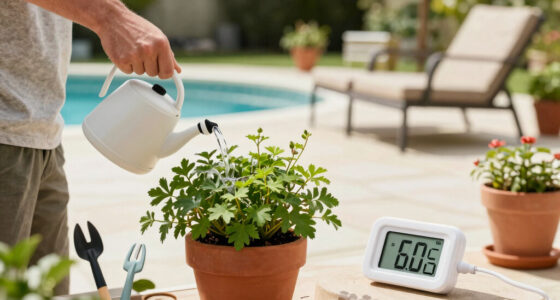

As a pool owner, rising water costs and environmental concerns make you pay closer attention to how much water your pool uses. You want to avoid wasting water through evaporation, leaks, or unnecessary refilling. Proper seasonal maintenance, chemical balance, and water-saving equipment can help you save money and protect the environment. If you want to discover effective strategies for reducing water consumption and managing costs, there’s important information you shouldn’t overlook.

Get pool and patio gear delivered free with Prime
- Fast, free delivery on millions of items
- Prime Video, Amazon Music and more included
- Member-only deals all year
Key Takeaways
- Rising water costs incentivize pool owners to reduce usage and conserve water to lower expenses.
- Environmental concerns drive owners to minimize water waste and ecological impact.
- Seasonal maintenance and leak detection help prevent unnecessary water loss.
- Proper chemical balancing reduces the need for draining and refilling pools.
- Water-efficient equipment and conservation techniques support cost savings and sustainability efforts.
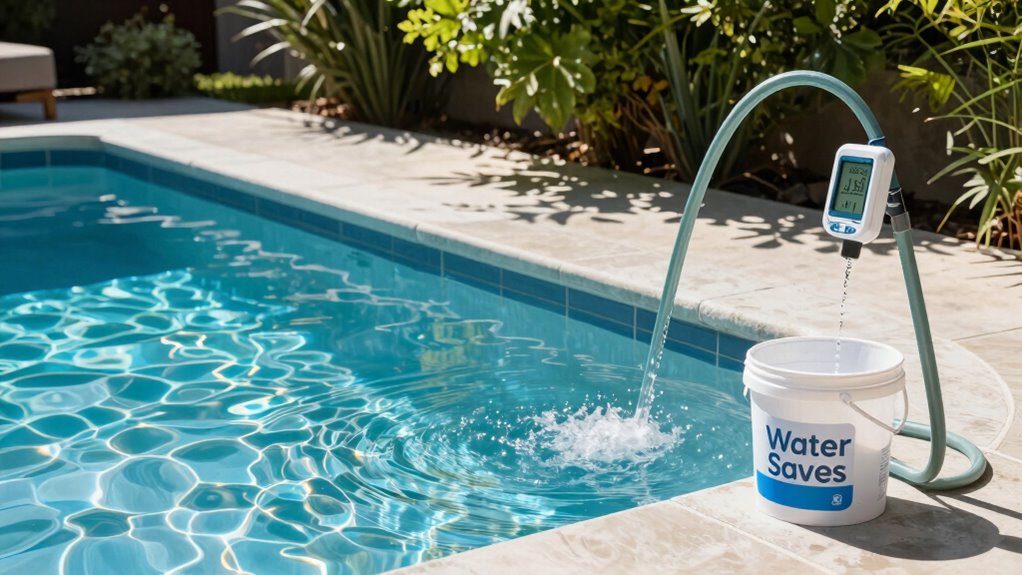
Have you ever wondered how much water your pool actually uses? It’s a question that becomes more pressing as water costs rise and environmental concerns grow. Pool owners are increasingly paying attention to water use not just to save money but to reduce their ecological footprint. One key factor in this effort is understanding how water evaporates and leaks from your pool, which can happen more frequently during seasonal changes. Proper seasonal maintenance becomes essential to prevent unnecessary water loss, ensuring your pool retains the right amount of water without excessive refilling.
Maintaining a good chemical balance is equally important in managing water use. When your pool’s chemical levels—like chlorine, pH, and alkalinity—are off, it can lead to water imbalance, which sometimes causes water to become cloudy or encourages algae growth. To keep your pool clean and clear without overusing chemicals or wasting water, you need to regularly test and adjust these levels. Doing so helps prevent the need for draining and refilling the entire pool, which is often a costly and wasteful process. Proper chemical balance also extends the lifespan of your pool equipment and lining, reducing the chance of leaks that can cause additional water loss. Additionally, chemical management can help optimize water chemistry, further reducing waste. Being aware of pool water conservation techniques can make a significant difference in your water-saving efforts.
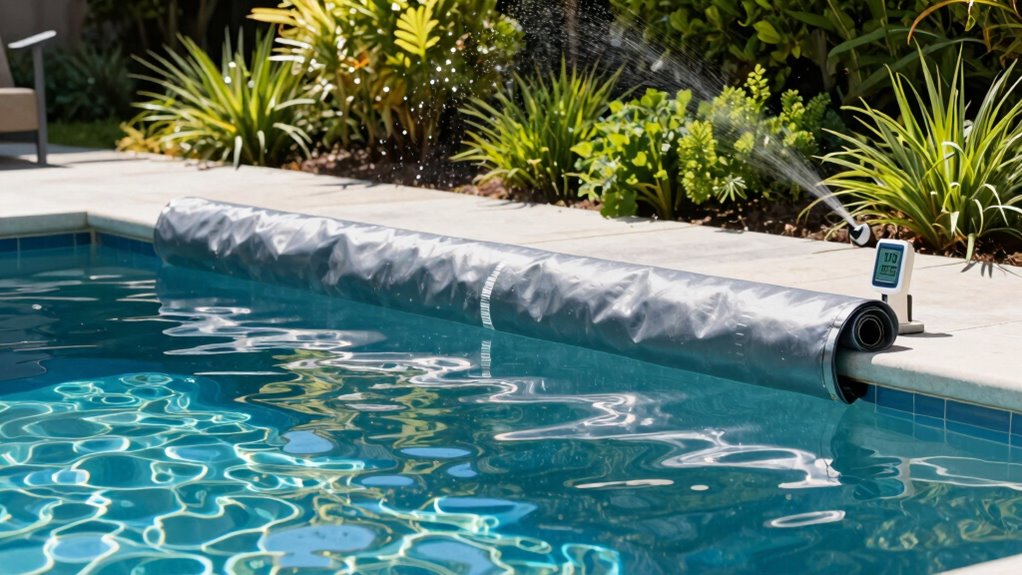
Seasonal maintenance plays a crucial role in controlling water use. As seasons change, so do the conditions that affect your pool’s water levels. For example, during winter or fall, you might need to cover your pool or lower the water level to prevent damage from freezing. In summer, evaporation rates spike, prompting more frequent top-offs. Being proactive with seasonal maintenance—such as inspecting for leaks, cleaning filters, and adjusting covers—can help you minimize unnecessary water consumption. Regularly checking for leaks, especially around fittings and seals, can save significant amounts of water over time. It’s also wise to monitor weather patterns, as heavy rain can either add to or reduce your pool’s water level, affecting your water management strategy. Additionally, understanding water evaporation and how it impacts your pool can help you develop more effective strategies to conserve water. Incorporating water-saving accessories like automatic covers and timers can also support your conservation efforts. Furthermore, employing water-efficient equipment can significantly reduce overall water waste in your pool maintenance routine.
As an affiliate, we earn on qualifying purchases.
Frequently Asked Questions
How Can I Reduce Chemical Usage in My Pool?
You can reduce chemical usage by using natural filtration systems that minimize the need for chemicals. Regularly cleaning your filter and encouraging beneficial bacteria growth helps keep your water balanced. Additionally, using a solar cover retains heat and reduces evaporation, lowering chemical demand. These methods work together to maintain clear, safe water while cutting back on chemical reliance, making your pool more environmentally friendly and cost-effective.
What Are the Best Ways to Prevent Water Evaporation?
Cover maintenance and wind barriers are your best defenses against water evaporation. A high-quality pool cover, especially when used consistently, considerably reduces water loss by preventing direct exposure to heat and air currents. Additionally, installing wind barriers around your pool, like fences or shrubs, blocks strong gusts that accelerate evaporation. These measures work together to keep your water level stable, saving you both water and money.
How Often Should I Test My Pool Water?
You should test your pool water at least once a week to maintain proper water chemistry and guarantee safe swimming conditions. During heavy use or after storms, test more frequently. Regular testing is essential for effective pool maintenance and water conservation, as it helps you avoid unnecessary chemical use and water waste. Keep a testing kit handy, and adjust chemicals promptly to keep your pool balanced and eco-friendly.
Are There Eco-Friendly Pool Cleaning Options?
Yes, there are eco-friendly pool cleaning options available. You can opt for natural pool maintenance, which uses less harsh chemicals and relies on biological filters or mineral systems. Eco-friendly cleaning methods include robotic vacuums that use minimal energy and biodegradable cleaning agents. These options help reduce water and chemical use, making your pool safer for both the environment and your family while keeping your pool sparkling clean.
How Does Water Temperature Affect Evaporation Rates?
Higher water temperatures increase evaporation rates because thermal loss accelerates, causing more water to evaporate from your pool. When you raise the temperature for better temperature regulation, it also boosts evaporation, leading to more water loss. To conserve water, you might consider using a pool cover, especially during peak heat times, which helps reduce thermal loss and minimizes evaporation, saving you both water and money.
As an affiliate, we earn on qualifying purchases.
Conclusion
So, as you see, paying attention to your pool’s water use isn’t just about saving money—it’s about protecting our environment too. By being mindful, you can enjoy your pool without wasting resources. Imagine a summer where every splash counts and your pool stays pristine without draining the planet’s precious water. Isn’t that a future worth swimming toward? Start making small changes today, and you’ll make a big difference tomorrow.
As an affiliate, we earn on qualifying purchases.
As an affiliate, we earn on qualifying purchases.
Halloween Picks
halloween
As an affiliate, we earn on qualifying purchases.