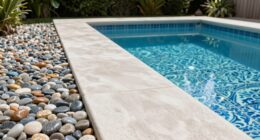
Saltwater systems benefit the environment by reducing chemical runoff, which minimizes pollution and ecological harm. They also consume less energy since automatic chlorine generation is more efficient than traditional chemical treatments, lowering your pool’s carbon footprint. Plus, they produce fewer harmful byproducts, making your pool maintenance more sustainable. These systems help you maintain a healthier pool while supporting eco-friendly practices. Keep exploring to discover even more ways saltwater pools protect our environment.
Key Takeaways
- Reduce chemical runoff, minimizing environmental contamination and water pollution.
- Lower chemical manufacturing and transportation decrease carbon footprint and resource use.
- Decrease reliance on harsh chemical additives, promoting healthier aquatic ecosystems.
- Promote energy-efficient chlorine production, reducing electricity consumption and greenhouse gas emissions.
- Support sustainable pool maintenance with automated systems that limit chemical waste and manual handling.
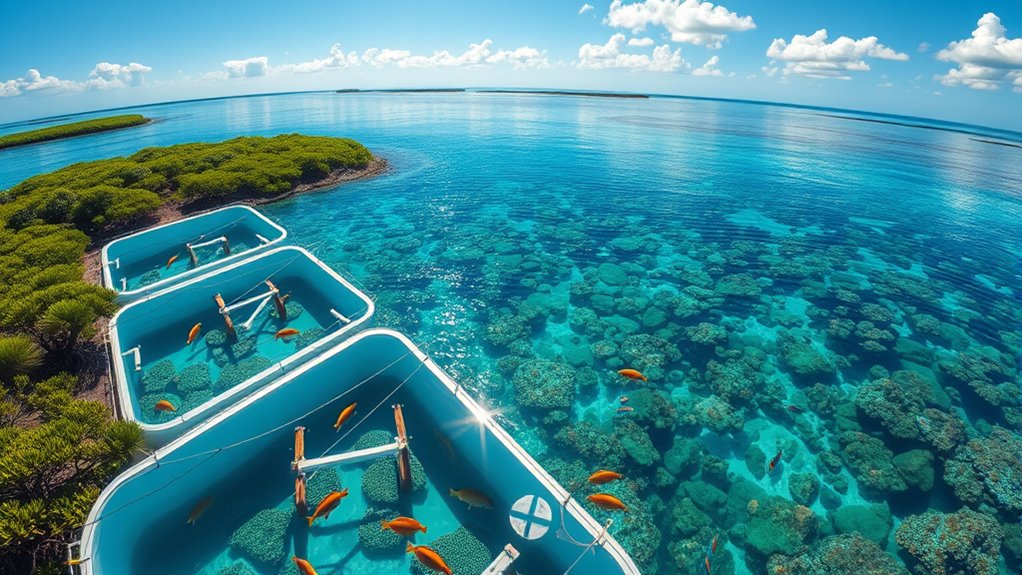
Saltwater systems offer several advantages that make them a popular choice for pool owners. One of the key benefits is their improved corrosion resistance. Unlike traditional chlorinated pools, saltwater pools generate chlorine naturally through a salt-chlorine generator, which produces a steady supply of disinfectant without the need for adding harsh chemicals. This process results in less chemical handling and reduces the corrosion of pool equipment, fixtures, and even the pool structure itself. Because saltwater systems operate at a lower chlorine concentration, they tend to cause less wear and tear on pool components over time, extending the lifespan of your equipment and saving you money on repairs and replacements.
Saltwater pools resist corrosion better and extend equipment lifespan through natural chlorine generation.
Another significant advantage of saltwater systems is their energy efficiency. These systems require less energy to maintain proper sanitizer levels because they continuously produce chlorine from salt. Instead of relying on chemical pumps or manual addition, the salt-chlorine generator runs efficiently, using less power while keeping your pool clean and safe. This increased energy efficiency translates into lower utility bills, making saltwater pools more environmentally friendly and cost-effective in the long run. Plus, the consistent chlorine production minimizes the fluctuations that can lead to over- or under-chlorination, reducing the need for frequent chemical adjustments and further conserving energy.
Beyond corrosion resistance and energy efficiency, saltwater pools tend to be gentler on your skin, eyes, and hair. Because the salt concentration is lower than seawater, it’s less irritating and feels more natural. This means you can enjoy your pool longer without discomfort, which encourages you to use your pool more frequently and reduce the need for chemical treatments that can impact the environment negatively. The reduced chemical usage also means fewer harmful byproducts are released into the environment, supporting ecological health and making your pool more sustainable.
Additionally, saltwater pools are easier to maintain. Since the system produces chlorine automatically, you spend less time adding chemicals and balancing water chemistry. This convenience not only reduces your environmental footprint by cutting down on chemical manufacturing and transportation but also minimizes the potential for chemical runoff into nearby ecosystems. Moreover, advancements in pool technology have made saltwater systems more accessible and user-friendly for homeowners. Overall, by choosing a saltwater system, you’re investing in a cleaner, greener pool that benefits both your personal health and the environment. It’s a smart choice that combines sustainability with practicality, giving you a healthier swimming experience while reducing your ecological impact.
Top picks for "benefit saltwater system"
Open Amazon search results for this keyword.
As an affiliate, we earn on qualifying purchases.
Frequently Asked Questions
How Do Saltwater Systems Impact Local Freshwater Ecosystems?
Saltwater systems can negatively impact local freshwater ecosystems by causing freshwater contamination through salt leakage or runoff, which raises salinity levels and harms native species. You might notice habitat disruption, as increased salinity alters the delicate balance of the ecosystem, displacing freshwater plants and animals. This disruption can lead to a decline in biodiversity and impair the natural functions of the freshwater environment, making it harder for native species to survive.
Are Saltwater Systems More Energy-Efficient Than Traditional Systems?
Saltwater systems are often more energy-efficient than traditional freshwater systems because they require less energy for operations like heating and pumping. You can achieve significant energy savings by using saltwater systems, which improve overall system efficiency. This means you’ll reduce your energy costs while maintaining effective water management. So, if you’re looking to boost efficiency and cut down on energy use, saltwater systems are a smart choice.
What Are the Maintenance Costs Associated With Saltwater Systems?
You’ll find that maintenance expenses for saltwater systems tend to be higher than traditional systems due to corrosion and mineral buildup. Regular inspections, cleaning, and replacing parts like pumps and filters add to your costs. Conducting a thorough cost analysis helps you understand these expenses better. While maintenance may be pricier, many users find the environmental benefits and efficiency improvements outweigh the ongoing costs.
Can Saltwater Systems Be Used in All Climate Zones?
Can saltwater systems be used in all climate zones? While they’re versatile, their climate adaptability has limits. Extreme cold can cause freezing issues, and high humidity might accelerate corrosion. Are you prepared for system limitations? In colder regions, you may need specialized heaters or insulation. In hot, humid areas, additional maintenance prevents corrosion. Consider your local climate’s impact before installing a saltwater system to guarantee peak performance and longevity.
How Do Saltwater Systems Influence Marine Biodiversity?
Saltwater systems positively influence marine biodiversity by supporting coral health and maintaining diverse fish populations. You’ll notice healthier corals, which provide habitats for many species, and stable fish populations that thrive in balanced ecosystems. When managed properly, these systems promote a resilient marine environment, attracting a variety of marine life. This helps sustain biodiversity, ensuring the ocean remains vibrant and productive for future generations.
Conclusion
Embracing saltwater systems isn’t just good for the environment—it’s like giving Earth a powerful, unstoppable boost that could change everything. By choosing these systems, you’re not just making a small difference; you’re releasing a tidal wave of positive change that could save ecosystems, slash pollution, and transform our planet into a thriving paradise. So, plunge in and be the hero who turns the tide—your actions today could make history tomorrow!