A water-saving pool cover effectively minimizes evaporation, saving you water and lowering refill costs. It creates a barrier that traps moisture, reducing evaporation by up to 95%, and helps maintain a consistent water temperature when paired with solar heaters. Plus, it prevents algae growth and reduces chemical use, making pool maintenance easier and eco-friendly. To discover how these covers can benefit you beyond water savings, keep exploring the options available.
Key Takeaways
- Pool covers can reduce water evaporation by up to 95%, conserving significant water resources.
- They create a barrier that traps moisture, preventing water loss from the pool surface.
- Using a cover minimizes the need for frequent refills, saving water and associated costs.
- Covers block sunlight from reaching the water, preventing evaporation caused by heat and UV exposure.
- When combined with solar heating, covers help maintain water temperature, reducing energy and water waste.
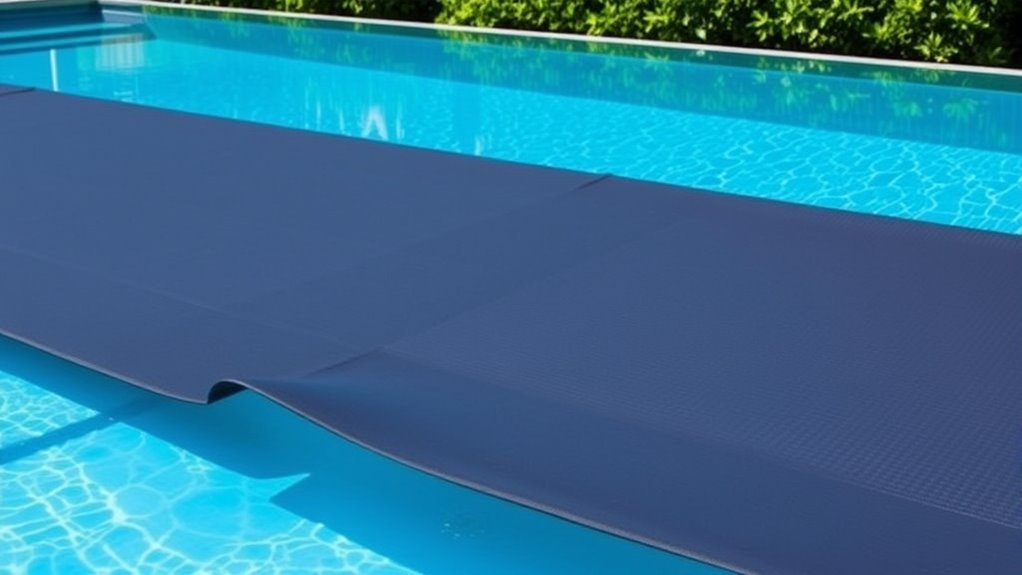
Using a pool cover is one of the most effective ways to conserve water and reduce your environmental impact. When you cover your pool, you markedly decrease water evaporation, which is the leading cause of water loss in swimming pools. This not only helps you save water but also reduces the need to refill your pool frequently, saving you money and effort. A well-fitted pool cover creates a barrier that traps moisture and prevents it from escaping into the air, especially during hot, windy days. This simple step can cut evaporation rates by up to 95%, making a noticeable difference in water conservation.
Covering your pool can reduce water evaporation by up to 95%, conserving resources and saving you money.
To maximize the benefits, consider choosing a pool cover that works in tandem with your solar heater. Many covers are designed to retain heat, so they help your solar heater maintain a more consistent water temperature. This synergy allows you to extend your swimming season without increasing energy consumption. Keeping the water warm with a solar heater reduces the need for chemical treatments and energy-intensive heating systems, further lowering your environmental footprint. Plus, a cover that works with your solar heater can make the water warmer and more inviting, even during cooler months, without wasting additional resources.
Another key benefit of using a pool cover is algae prevention. When your pool is left uncovered, sunlight penetrates the water and encourages algae growth. Algae not only make your pool look unappealing but also require extra chemicals and filtration to control. A pool cover blocks sunlight, preventing algae from developing and reducing the need for chemical treatments. This means fewer harsh chemicals are released into the environment, and you spend less time and money on maintenance. Additionally, a covered pool stays cleaner longer, saving you the hassle of frequent skimming and brushing.
Incorporating a high-quality water‑saving pool cover into your routine is a smart move for both your wallet and the environment. It’s a simple, effective way to cut water waste, enhance your solar heating system, and prevent algae growth. Not only will you enjoy a cleaner, more inviting pool, but you’ll also contribute to conserving a precious resource. By making this small investment, you’re taking a meaningful step toward sustainable pool ownership and AI Security a healthier planet.

LO-CHLOR Aqua Blanket – The Liquid Solar Blanket for Pools and Energy Saving Liquid Pool Cover, Non-Toxic and Safe Pool Evaporation Prevention, Greatly Reduces Heat and Chemical Loss AB009-12 (32 Oz)
Hassle-Free: Just one small weekly dose of this liquid pool cover offers an invisible solar pill for pool…
As an affiliate, we earn on qualifying purchases.
As an affiliate, we earn on qualifying purchases.
Frequently Asked Questions
How Long Does a Water-Saving Pool Cover Typically Last?
A water-saving pool cover typically lasts between 3 to 5 years, depending on its material and how well you care for it. If you choose a high-quality cover made from durable materials like polyethylene or polypropylene, it can withstand sun, chemicals, and weather longer. Regular cleaning and proper storage extend its lifespan, ensuring you get the most out of your investment and continue minimizing evaporation effectively.
Are Water-Saving Covers Suitable for All Pool Types?
Water-saving covers are versatile and suitable for most pool types, but you need to take into account pool material compatibility and installation considerations. Some covers work better on specific surfaces, and improper installation can reduce their effectiveness. You’ll want to choose a cover designed for your pool’s shape and material, ensuring a snug fit. With the right fit, you’ll save water like a hero saving the world—effortlessly keeping your pool pristine and efficient.
Can These Covers Be Used in Extreme Weather Conditions?
Yes, you can use water-saving pool covers in extreme weather, but you should consider their durability. Look for covers designed with extreme weather durability to withstand harsh conditions. When weather conditions change, follow proper cover removal procedures to prevent damage. Secure the cover tightly during storms or high winds, and remove it carefully afterward to maintain its effectiveness and longevity, ensuring your pool stays protected year-round.
Do Water-Saving Covers Affect Pool Chemical Balance?
Water-saving covers can impact your pool’s chemical balance if the cover material isn’t breathable. They may trap moisture and affect chemical stability, requiring you to adjust your chemical levels more frequently. To prevent this, choose covers made from high-quality, breathable materials that allow for proper ventilation. Regular testing of your pool water helps maintain the right chemical balance, ensuring your pool stays safe and clean while you save water.
How Much Maintenance Is Required for These Covers?
You’ll need to clean your water-saving pool cover regularly, about once a month, to remove debris and prevent mold. Storage is simple—just rinse it off and fold it in a cool, dry place when not in use, especially during winter or off-season. Minimal maintenance is required, but staying consistent with cleaning and proper storage keeps the cover effective and extends its lifespan, saving you time and money.

VEVOR Solar Pool Cover, 28 x 14 ft Rectangle Solar Cover 16 mil for Pools, Inground Above Ground Swimming Pool Solar Blanket with Bubble, Heat Retaining Solar Covers Blue
Extend Swimming Season: Embrace warmth with VEVOR solar pool cover, which efficiently absorbs heat during the day and…
As an affiliate, we earn on qualifying purchases.
As an affiliate, we earn on qualifying purchases.
Conclusion
Using a water-saving pool cover can reduce evaporation by up to 95%, saving thousands of gallons annually. Not only does this protect your water supply, but it also cuts down on energy costs for heating your pool. By investing in a quality cover, you’re making a smart choice for both your wallet and the environment. So, next time you’re poolside, remember that a simple cover can make a big difference—helping you conserve water effortlessly.

Cleartide Smart Automatic Pool Cover Pump, 1/4 HP 2160 GPH with Auto On/Off & Freeze Protection, Pump for Inground/Above Ground Winter Pool Covers, Dual Mode, 25ft Cord, 120V AC
✅【Smart Auto Mode and Flexible Manual Mode】Switch between Auto and Manual modes for versatile applications. In Smart Auto…
As an affiliate, we earn on qualifying purchases.
As an affiliate, we earn on qualifying purchases.

SeaKlear 90-Day Algae Prevention & Remover, 1 Qt
Reliable & Effective
As an affiliate, we earn on qualifying purchases.
As an affiliate, we earn on qualifying purchases.