TL;DR

Get pool and patio gear delivered free with Prime
- Fast, free delivery on millions of items
- Prime Video, Amazon Music and more included
- Member-only deals all year
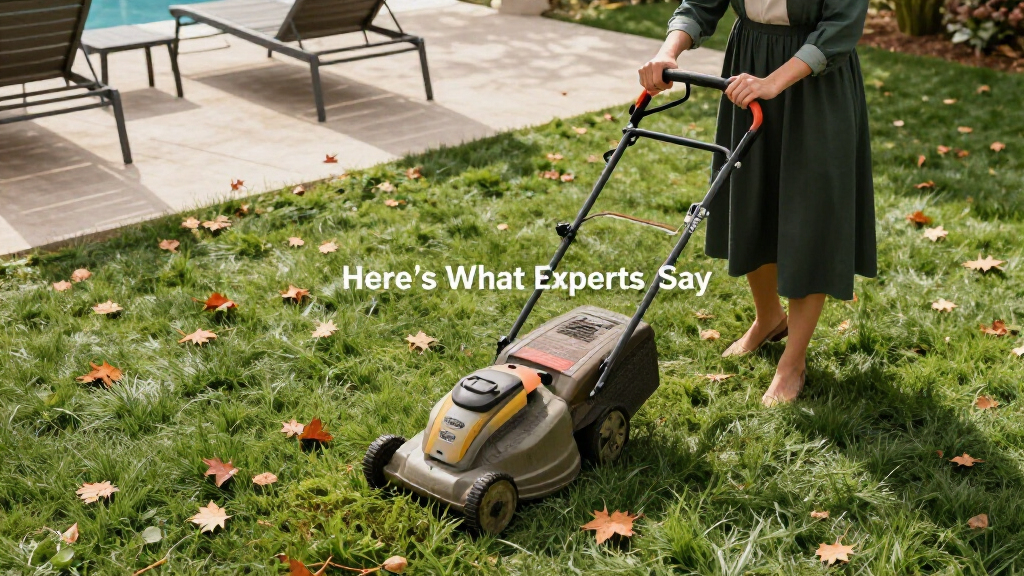
UMass Amherst turf specialist Jason Lanier advises continuing to mow at the recommended height until grass growth stops in late fall. A slightly lower final cut can help keep a lawn tidy and may reduce leaf area exposed to snow mold, but cutting too short is not necessary and may harm grass in some conditions. Avoid mowing or walking on frosted or frozen turf.
Grass does not need a close buzz cut before winter, according to Jason Lanier, a turf-management extension specialist at UMass Amherst. His guidance is to keep mowing at the recommended height while the lawn is growing, then stop when growth ends in late fall; the right final height depends partly on grass type and local climate.
Lanier says the last mow may come later than many homeowners expect. Grass can continue growing in cool weather, and he said he has mowed his own Massachusetts lawn into December in some years. The practical signal to stop is not a fixed date but the end of active growth.
He advises against letting a lawn become substantially overgrown simply because the season is winding down. Mowing at the recommended height helps maintain lawn density and the desired surface, he said. A modestly lower final cut is also widely accepted as a way to leave a tidier appearance and somewhat less leaf area for snow mold and other winter problems.
That does not mean scalping the lawn. Lanier says most existing shoot tissue will die back as plants enter dormancy, so an unusually short cut is not needed to prepare them for winter. Guidance cited from Alabama’s cooperative extension gives different target ranges by grass type: 1 to 2 inches for warm-season lawns and 3 to 4 inches for cool-season lawns. Those figures are regional guidance, not a universal height for every lawn.
Why the Final Cut Height Matters
Choosing a suitable final height can help homeowners avoid two different problems: leaving a lawn untidy or reducing its ability to withstand winter conditions. A slightly lower cut may be useful where snow mold is a concern, but a very short cut can expose grass to damage. The balance depends on the lawn’s grass species and the local winter climate, rather than a single rule for every yard.
The timing of the final mow matters, too. Grass that is still growing can benefit from continued maintenance, according to Lanier. Stopping by the calendar alone may leave a lawn needing attention while growth continues; mowing after frost, however, can injure the turf. The advice gives homeowners a practical distinction: mow while grass is actively growing, but keep off frozen turf.
lawn mower for cool-season grasses
As an affiliate, we earn on qualifying purchases.
As an affiliate, we earn on qualifying purchases.
Late-Fall Mowing Guidance
The guidance comes from a Country Living report that consulted Lanier, an extension specialist and group leader in turf management at UMass Amherst. His expertise includes plant stress physiology and water and nutrient management. The report frames the final mow as a seasonal decision that varies with regional conditions and turf type, not as a requirement to cut every lawn to a set height.
Lanier’s advice also distinguishes normal late-season mowing from a “minimal mowing” approach. He says continuing routine mowing while growth persists supports lawn density and surface upkeep. At the same time, he acknowledges that lowering the grass somewhat at the last mowing is commonly accepted, particularly in snowy areas, because it leaves less leaf surface where winter issues may develop.
The cited Alabama extension recommendation illustrates why local guidance matters: warm-season and cool-season grasses have different suggested heights. In areas where snowfall is possible, grass cut too short may be more vulnerable to root damage, according to that guidance. The recommendation should not be treated as a national standard because lawns and climates differ.
“I’ve mowed my own lawn in Massachusetts into December in some years.”
— Jason Lanier
As an affiliate, we earn on qualifying purchases.
Local Grass Conditions Differ
The guidance does not set one final mowing height or last-mow date for every lawn. Grass species, climate and local winter conditions affect what height is appropriate, and the Alabama extension figures cited in the report apply as regional guidance rather than a universal prescription. The report also does not specify a precise temperature or date at which homeowners should stop mowing; it points instead to grass growth ending.
The source does not quantify how much a slightly lower final cut reduces snow-mold risk, or how likely winter root damage is at different heights. Those outcomes can vary with conditions. Homeowners who are unsure which grass they have or what height suits their area can consult a local cooperative extension or turf professional.
As an affiliate, we earn on qualifying purchases.
Watch Growth and Frost
For the rest of fall, homeowners can continue mowing when grass is actively growing, maintaining the recommended height for their lawn. As growth slows, the final cut can be slightly lower if that suits local conditions, but the guidance does not call for a close cut. Once frost or freezing conditions arrive, avoid mowing and walking on the lawn until the turf is no longer frozen.
Because the appropriate height differs by grass type and region, local extension recommendations are the best next reference for a specific yard. The source report offers seasonal guidance, not a forecast for when any particular lawn will stop growing or when frost will arrive.
As an affiliate, we earn on qualifying purchases.
Key Questions
Should I cut my grass very short before winter?
No close buzz cut is necessary, according to UMass Amherst specialist Jason Lanier. Keep mowing at the recommended height while the grass grows; a slightly lower final cut may be suitable in some conditions.
When should I stop mowing for the season?
Stop when the grass has stopped growing, rather than relying on a fixed date. Some lawns may continue growing late into fall, depending on local conditions.
Does the ideal final grass height vary?
Yes. It depends partly on grass type and climate. The report cites Alabama extension guidance of 1 to 2 inches for warm-season grass and 3 to 4 inches for cool-season grass, but those regional figures are not universal.
Can I mow or walk on the lawn after frost?
Lanier advises against mowing or walking on frosted or frozen turf because it can injure the lawn and, in severe cases, kill some plants. Wait until the turf is no longer frozen.
Source: rss
Halloween Picks
halloween
As an affiliate, we earn on qualifying purchases.