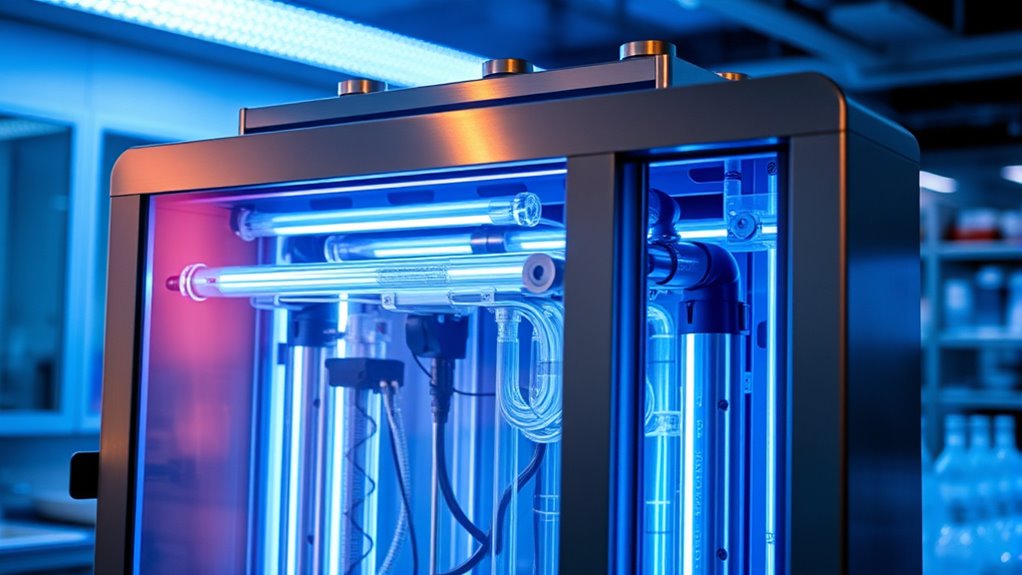

Advanced filtration systems combining UV-C and ozone offer a powerful, chemical-free way to purify your air and water. UV-C light destroys bacteria and viruses by damaging their DNA, while ozone oxidizes organic contaminants, odors, and pesticides. Together, they provide a broader, more effective clean by targeting a wide range of pollutants and pathogens. This dual-action approach minimizes chemical residues and enhances safety, so you can enjoy cleaner air and water—explore how this technology can benefit you further.
Key Takeaways
- Combines UV-C light and ozone oxidation to target a broader range of contaminants effectively.
- UV-C damages microbial DNA/RNA, while ozone oxidizes organic pollutants and odors.
- The synergy ensures chemical-free, residue-free sterilization for air and water purification.
- Ozone decomposes into oxygen, leaving no harmful residues, enhancing environmental safety.
- Suitable for residential, commercial, and industrial systems seeking comprehensive, eco-friendly filtration solutions.
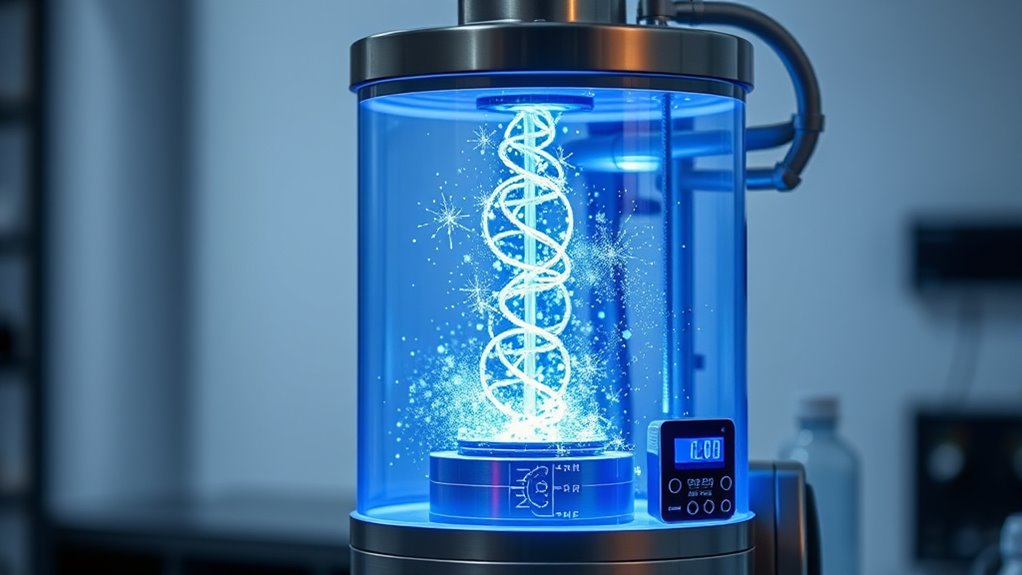
Have you ever wondered how modern filtration systems effectively remove contaminants from air and water? It’s fascinating how advanced technology combines different methods to guarantee purity and safety. One effective approach involves using UV-C sterilization alongside ozone oxidation, creating a powerful dual-action process that targets a wide range of impurities. UV-C sterilization employs ultraviolet light in the 200-280 nanometer range, which destroys microorganisms by damaging their DNA and RNA. This method is especially effective against bacteria, viruses, and other pathogens, rendering them harmless without the use of chemicals. When integrated into filtration systems, UV-C lamps are strategically placed to disinfect water or air as it passes through, providing a quick, chemical-free sterilization process.
UV-C light inactivates pathogens, providing chemical-free disinfection for air and water filtration systems.
Ozone oxidation complements UV-C sterilization by introducing ozone (O₃) into the mix. Ozone is a highly reactive form of oxygen that readily reacts with organic compounds, bacteria, and viruses, breaking down their molecular structures. When ozone is injected into water or air, it oxidizes contaminants, transforming complex pollutants into simpler, less harmful substances. This process is particularly effective against organic materials, pesticides, and odors, making it a popular choice in advanced filtration setups. Ozone oxidation not only disinfects but also improves the taste and smell of water, removing unpleasant odors caused by sulfur or chlorine compounds.
The true strength of these systems lies in their combination. By integrating UV-C sterilization with ozone oxidation, filtration units can achieve a broader spectrum of contaminant removal while reducing reliance on chemical disinfectants. For instance, in water treatment, ozone oxidizes organic pollutants and inactivates microorganisms, while UV-C ensures that residual pathogens are eliminated. The synergy between the two methods results in cleaner, safer water or air with fewer residues and byproducts. Furthermore, because ozone decomposes back into oxygen, it leaves behind no harmful chemical residues, making this approach environmentally friendly.
You benefit from this advanced filtration because it offers a highly effective, chemical-free way to purify your environment. Whether used in residential, commercial, or industrial settings, systems that combine UV-C sterilization with ozone oxidation provide a thorough solution to complex contamination problems. They’re designed to be efficient, reliable, and safe, ensuring you breathe easier and enjoy purer water without the worry of harmful chemicals or lingering pathogens. As technology continues to evolve, these dual-action systems stand out as some of the most sophisticated and effective methods for maintaining a healthier environment.
Frequently Asked Questions
How Do UV-C and Ozone Systems Compare in Energy Consumption?
You’ll find that UV-C systems are generally more energy-efficient and have lower operational costs compared to ozone systems. UV-C uses less power to operate, making it a cost-effective choice for continuous disinfection. Ozone systems, while effective, tend to consume more energy due to ozone generation processes. So, if you’re prioritizing energy efficiency and reducing operational costs, UV-C is the better option for your water treatment needs.
Are There Any Safety Concerns With Ozone Generation?
You should worry about ozone toxicity and UV exposure when using ozone generators. Surprisingly, the safety concerns are real—ozone, while effective, can cause respiratory issues if inhaled in high concentrations. UV-C light can also pose risks, like skin or eye damage, if you’re exposed directly. Always guarantee proper containment and ventilation to avoid these hazards, because safety isn’t just a concern—it’s a necessity.
Can UV-C and Ozone Systems Treat All Types of Contaminants?
UV-C and ozone systems offer good system versatility but aren’t effective against all types of contaminants. They excel at targeting specific contaminants like bacteria, viruses, and organic compounds, yet may struggle with heavy metals, dissolved salts, or non-organic pollutants. Your system’s effectiveness depends on contaminant specificity, so it’s vital to evaluate your water quality and choose complementary treatments to guarantee thorough purification.
What Maintenance Is Required for UV-C and Ozone Combination Systems?
You need to stay on top of system calibration and filter replacement to keep your UV-C and ozone combo running smoothly. Regularly check the UV lamps and ozone generation components, replacing filters as recommended by the manufacturer. Think of it as giving your system a tune-up; neglecting maintenance can lead to reduced effectiveness and costly repairs. By staying proactive, you guarantee peak performance and clean, safe water every time.
How Effective Are These Systems Against Microbial Biofilms?
You’ll find that UV-C and ozone systems are quite effective against microbial biofilms, which often resist traditional treatments. The combination disrupts biofilm resistance by attacking microorganisms on multiple fronts, reducing the risk of regrowth. Regular maintenance guarantees peak performance and extends the system lifespan, keeping biofilms at bay. When maintained properly, these systems provide a reliable, long-term solution for controlling biofilm formation and maintaining water quality.
Conclusion
As you embrace advanced filtration with UV-C and ozone systems, you might find yourself surprised by how clean and fresh your water feels—like a hidden spring flowing just beneath the surface. The synergy of light and ozone works quietly, almost like a secret dance, ensuring purity without fuss. With each drop, you’re reminded that sometimes, the most powerful solutions are those that work behind the scenes, turning your water into a sparkling oasis of safety.