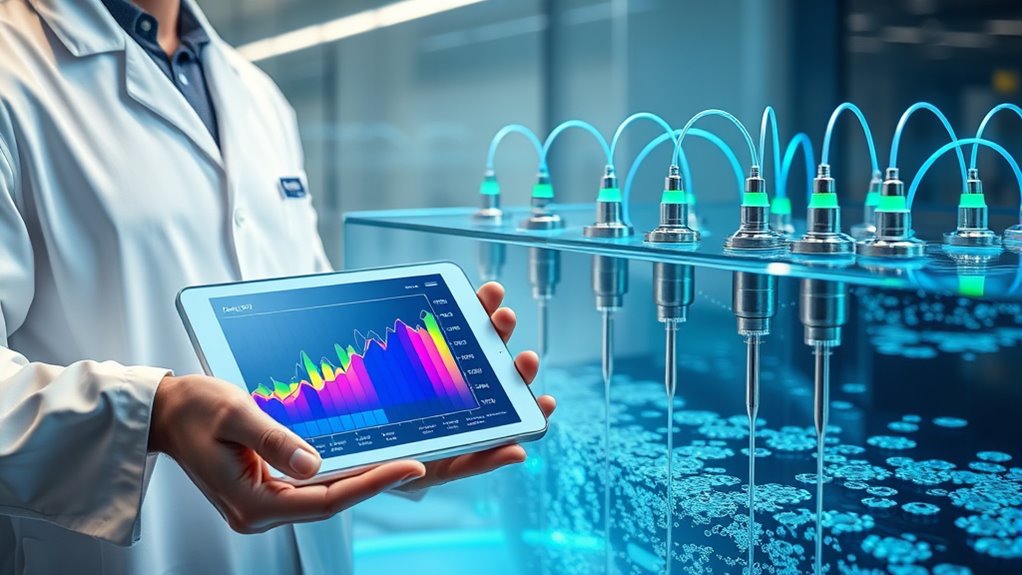

AI-powered water chemistry monitoring enhances your ability to guarantee water quality by providing real-time, accurate analysis and automatic sensor calibration. It detects issues early, predicts future changes, and streamlines operations, saving you time and costs. Visual dashboards and alerts make it easy to identify problems quickly, enabling proactive management. As these systems continuously adapt and improve, you’ll gain greater confidence in your water safety efforts—keep going to discover more about how this technology can benefit you.

Get pool and patio gear delivered free with Prime
- Fast, free delivery on millions of items
- Prime Video, Amazon Music and more included
- Member-only deals all year
Key Takeaways
- AI enhances sensor calibration accuracy by automatically detecting drift and adjusting measurements in real-time.
- Machine learning models predict water quality trends, enabling proactive management and early issue detection.
- Data visualization platforms translate complex data into intuitive dashboards for quick assessment and decision-making.
- Automated calibration and anomaly detection reduce manual effort, ensuring consistent and reliable water quality data.
- AI-driven monitoring improves response times, regulatory compliance, and overall water safety through intelligent insights.
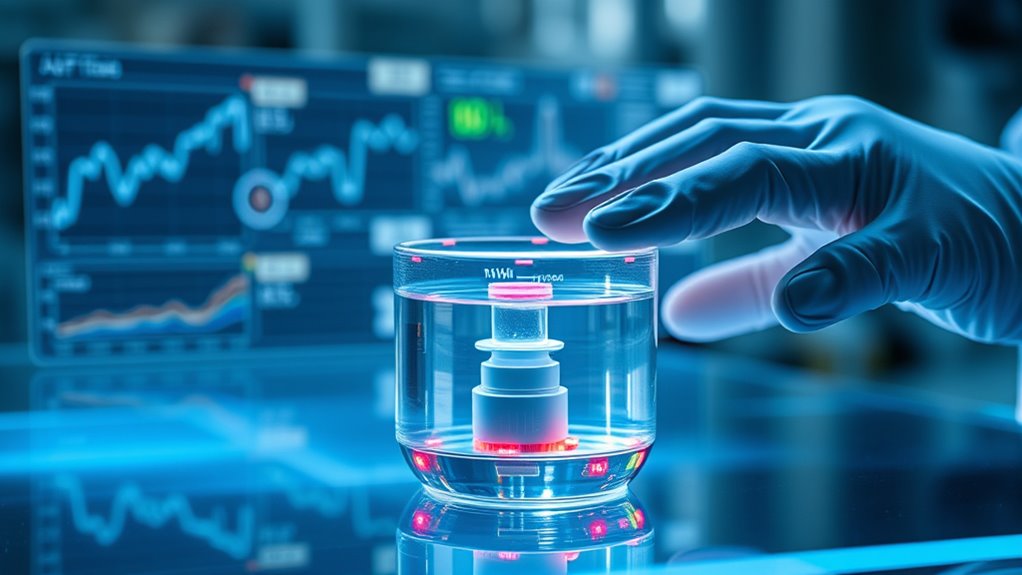
Have you ever wondered how water quality is maintained so accurately and efficiently today? Thanks to advancements in AI-powered water chemistry monitoring, it’s possible to keep a close eye on water conditions in real-time, guaranteeing safety and compliance. At the heart of this technology are precise sensor calibration and sophisticated data visualization tools. Sensor calibration is vital because it guarantees that the sensors measuring pH levels, dissolved oxygen, turbidity, and other parameters provide accurate readings. When sensors are properly calibrated, they adapt to environmental changes and aging, maintaining their accuracy over time. This process involves comparing sensor outputs with known reference standards and making necessary adjustments, often automatically, which minimizes errors and guarantees consistent data quality. Proper calibration reduces false alarms and helps operators trust the data they rely on for decision-making, streamlining operations and reducing costs.
Once the sensors are calibrated, the data they collect is processed and displayed through advanced data visualization platforms. These platforms translate raw numerical data into intuitive graphs, charts, and dashboards that make complex water chemistry information easy to interpret at a glance. Data visualization enables operators to quickly identify trends, anomalies, or potential issues without needing to sift through endless numbers. For example, a rising pH level or sudden spike in turbidity can be immediately flagged on a visual dashboard, prompting timely intervention. This visual approach not only improves response times but also enhances overall water management strategies, helping guarantee water remains safe for consumption and meets regulatory standards.
The integration of AI further amplifies the power of these visualizations. Machine learning algorithms analyze historical and real-time data to predict future changes, allowing preemptive actions before problems escalate. AI can also optimize sensor calibration routines by detecting drift or inaccuracies and automatically recalibrating sensors as needed, reducing manual intervention. This automation means water treatment facilities can operate more efficiently, relying less on manual checks and more on intelligent systems that adapt and improve continuously. With data visualization tools, you get clearer insights, faster decision-making, and increased confidence in water quality management.
Frequently Asked Questions
How Accurate Are AI Predictions Compared to Traditional Testing Methods?
AI predictions are often more accurate than traditional testing because they analyze real-time data, reducing human error. You can trust the system’s sensor calibration to maintain precision, and data security ensures your results stay protected. While traditional methods are reliable, AI provides faster, continuous insights, helping you respond swiftly. Overall, with proper calibration and secure data handling, AI predictions can surpass traditional testing in accuracy and efficiency.
Can AI Systems Detect All Types of Water Contaminants?
AI systems can’t detect all types of water contaminants because of contaminant diversity. Some contaminants, especially emerging or rare ones, may not be recognized by existing models. However, with sensor integration, you can improve detection capabilities by combining multiple sensor types. This enhances the system’s ability to identify a broader range of contaminants, but continuous updates and data collection are essential to address new threats effectively.
What Are the Costs Associated With Implementing Ai-Powered Monitoring?
Implementing AI-powered monitoring is like planting a seed—you’ll face upfront costs but reap long-term benefits. The costs include equipment, software, and training, which require thorough cost analysis. You might encounter implementation challenges like integrating systems or data management issues. However, investing now can save money by preventing costly water quality problems later. Be prepared for initial expenses, but know that the system’s efficiency can outweigh the investment over time.
How Do AI Systems Handle Sensor Malfunctions or Data Gaps?
You rely on AI systems that handle sensor malfunctions and data gaps by using sensor redundancy, ensuring backup sensors kick in when one fails. Anomaly detection algorithms identify irregularities or missing data promptly, alerting you to issues early. This combination allows your system to maintain accurate water chemistry monitoring, minimizing downtime and ensuring continuous, reliable data for effective decision-making.
Is Specialized Training Required to Operate AI Water Monitoring Devices?
You do need specialized operator training to effectively operate AI water monitoring devices. This training boosts your user proficiency, ensuring you understand how to set up, interpret data, and troubleshoot issues. While AI systems are user-friendly, proper training helps you maximize their benefits and respond swiftly to any sensor malfunctions or data gaps. Investing in this training makes you more confident and capable of maintaining accurate water chemistry readings.
Conclusion
As you rely on AI-powered water chemistry monitoring, the future holds unexpected challenges and breakthroughs. Will these systems fully prevent water crises, or will unforeseen flaws emerge? The technology’s potential is vast, but the unknown risks lurk just beyond the horizon. Stay vigilant—what you discover next could redefine how we safeguard our most essential resource. The journey is just beginning, and only time will reveal what lies ahead.
Halloween Picks
halloween
As an affiliate, we earn on qualifying purchases.