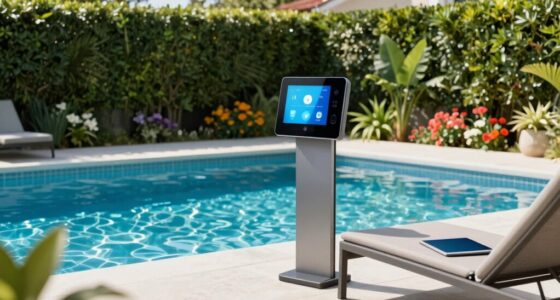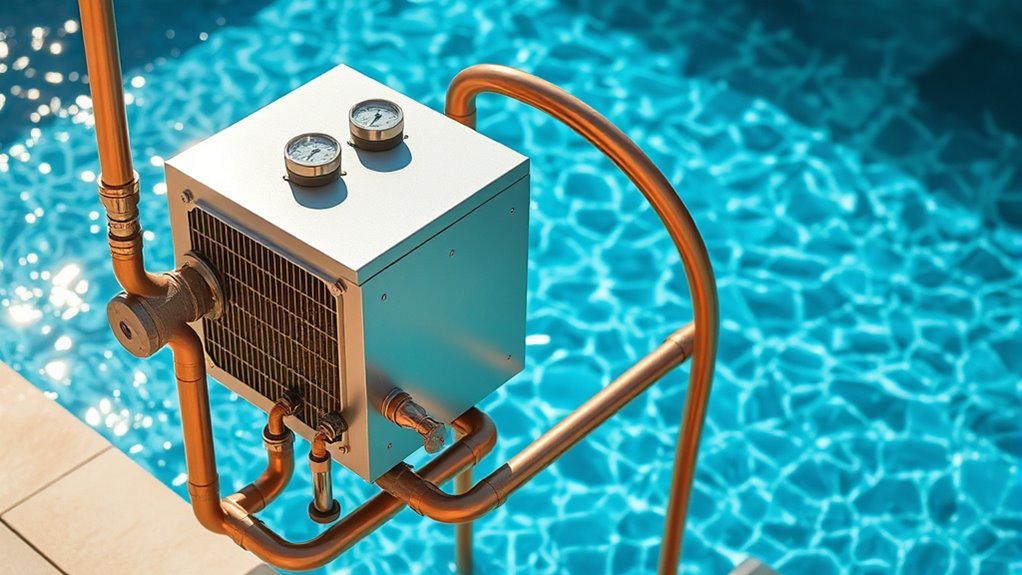

Heat recovery systems for pools capture waste heat from nearby processes, HVAC systems, or the environment and use it to preheat or warm your pool water. These systems improve energy efficiency, lowering your operational costs and reducing your carbon footprint. They often combine solar heating with waste heat reuse, making the setup more sustainable and cost-effective. By implementing these solutions, you can enjoy consistent warmth with less energy. Keep exploring to discover how these systems can work best for your pool.

Get pool and patio gear delivered free with Prime
- Fast, free delivery on millions of items
- Prime Video, Amazon Music and more included
- Member-only deals all year
Key Takeaways
- Heat recovery systems capture waste heat from HVAC, industrial processes, or environment to warm pool water efficiently.
- Solar panels enhance heat recovery by converting sunlight into thermal energy for pool heating.
- Combining waste heat capture with solar technology optimizes energy use and reduces operational costs.
- Modular, scalable systems can be customized to pool size and climate for maximum efficiency.
- These systems support sustainability, lower energy bills, and require minimal maintenance over time.
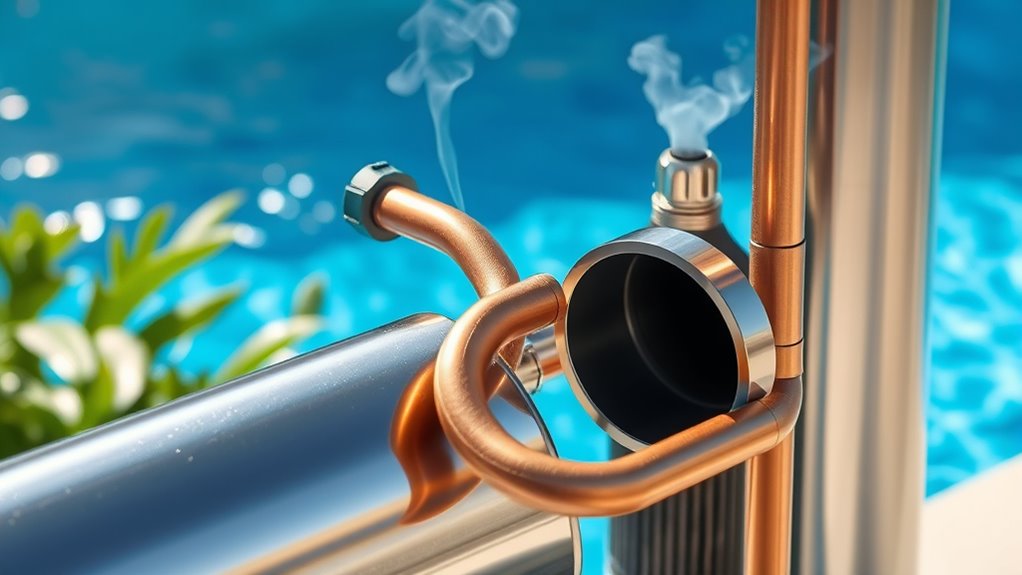
Heat recovery systems for pools are an efficient way to reduce energy costs while maintaining your desired water temperature. These systems tap into waste heat generated during other processes or from the environment, repurposing it to warm your pool water. One popular method involves solar heating, which uses solar panels to capture sunlight and convert it into thermal energy. By integrating solar heating into your pool’s heat recovery system, you markedly boost energy efficiency, harnessing free, renewable energy from the sun. This approach not only lowers your reliance on conventional energy sources but also helps you save money over time.
Using solar heating within a heat recovery system allows you to optimize energy use. Instead of letting excess heat escape or go unused, you channel it back into your pool water, reducing the need for electric or gas-based heating. This process is especially effective when combined with other heat recovery techniques, such as capturing heat from HVAC systems, industrial processes, or even waste heat from nearby equipment. The key advantage here is that you’re utilizing energy that would otherwise be wasted, making your overall system more sustainable and cost-effective.
Optimizing energy use by recycling excess heat enhances pool efficiency and sustainability.
In terms of energy efficiency, solar heating plays an essential role. It maximizes the use of natural resources, reducing your carbon footprint and lowering operational costs. Modern solar collectors are designed to work efficiently even during cloudy days, ensuring consistent heat absorption. When paired with smart controls and insulation, these systems maintain stable water temperatures with minimal energy input. As a result, you enjoy comfortable swimming conditions year-round without the high costs typically associated with traditional heating methods.
Furthermore, integrating solar heating into your pool’s heat recovery system is straightforward. Many systems are modular and scalable, meaning you can customize the setup based on your pool size, local climate, and energy needs. You’ll find that the initial investment pays off quickly through reduced energy bills and increased system efficiency. Plus, solar heating systems require minimal maintenance once installed, adding to their cost-effectiveness and reliability.
As an affiliate, we earn on qualifying purchases.
Frequently Asked Questions
What Is the Typical ROI Timeframe for Pool Heat Recovery Systems?
You can typically see a return on investment within 1 to 3 years with pool heat recovery systems. By enhancing energy efficiency and reducing energy costs, these systems deliver significant cost savings over time. Your initial investment pays off faster as you cut down on wasted heat and lower your utility bills. With proper maintenance, you’ll enjoy long-term savings and a more eco-friendly pool heating solution.
Are Heat Recovery Systems Compatible With All Pool Types?
You can’t judge a book by its cover, and that’s true for pool types too. Heat recovery systems work with most pools, but compatibility depends on factors like pool insulation and solar integration. If your pool is well-insulated and has solar features, these systems will boost efficiency. Always check with a professional to guarantee your specific pool setup supports heat recovery, making your investment worthwhile.
How Much Maintenance Do Heat Recovery Systems Require?
You’ll find that heat recovery systems generally require low maintenance, thanks to their durable design. Regularly, you should check for debris, clean filters, and inspect components to guarantee system durability. Maintenance frequency varies based on usage and environment, but typically, a quarterly check suffices. Keeping up with these simple tasks helps your system operate efficiently and lasts longer, saving you money and ensuring consistent heat recovery.
Can These Systems Be Integrated With Existing Pool Equipment?
Yes, you can integrate heat recovery systems with your existing pool equipment. Focus on improving pool cover efficiency to maximize heat capture, which can reduce overall system costs. When planning installation, consider system installation costs and compatibility with your current setup. Proper integration guarantees efficient heat transfer, saving energy and extending your pool’s usability. Consult professionals to optimize integration and ensure seamless operation with your existing pool components.
What Environmental Benefits Do Heat Recovery Systems Provide?
You might think heat recovery systems don’t make a big environmental difference, but they do promote energy conservation and reduce your carbon footprint. By capturing waste heat from pool equipment, these systems lower energy consumption, cutting down on greenhouse gas emissions. This means you’re not only saving money but also helping protect the planet. It’s a smart way to enjoy your pool while making a positive environmental impact.
As an affiliate, we earn on qualifying purchases.
Conclusion
Implementing heat recovery systems for your pool can remarkably cut energy costs and reduce environmental impact. For example, a community pool installed a heat exchanger that captured waste heat from nearby industrial processes, warming the water efficiently. Imagine saving money on heating bills while contributing to sustainability. By harnessing waste heat, you not only extend your swimming season but also make a positive difference for the planet. It’s a smart, eco-friendly upgrade you won’t regret.
energy-efficient pool heat exchanger
As an affiliate, we earn on qualifying purchases.
As an affiliate, we earn on qualifying purchases.
modular pool heat recovery system
As an affiliate, we earn on qualifying purchases.
As an affiliate, we earn on qualifying purchases.
Halloween Picks
halloween
As an affiliate, we earn on qualifying purchases.