
TL;DR

Get pool and patio gear delivered free — and shop member deals
- Fast, free delivery on millions of items
- Access to Prime Big Deal Days deals on October 6–7
- Prime Video, Amazon Music and more included
A closet rig works best when you separate soundproofing from acoustic treatment. Use strategic placement, proper ventilation, and targeted absorption to create a quiet, functional space — without costly renovations.
Ever tried to record vocals or run a noisy AI workstation in a tiny closet? It’s a battle. The secret isn’t just slapping foam everywhere or sealing cracks. It’s about thinking smart — separating what blocks sound from what softens it inside.
Whether you’re converting a closet into a mini studio or just trying to keep noise from leaking out, understanding the difference between soundproofing and acoustic treatment makes all the difference. This guide cuts through the clutter, showing you how to maximize your space with practical tips rooted in real-world results.
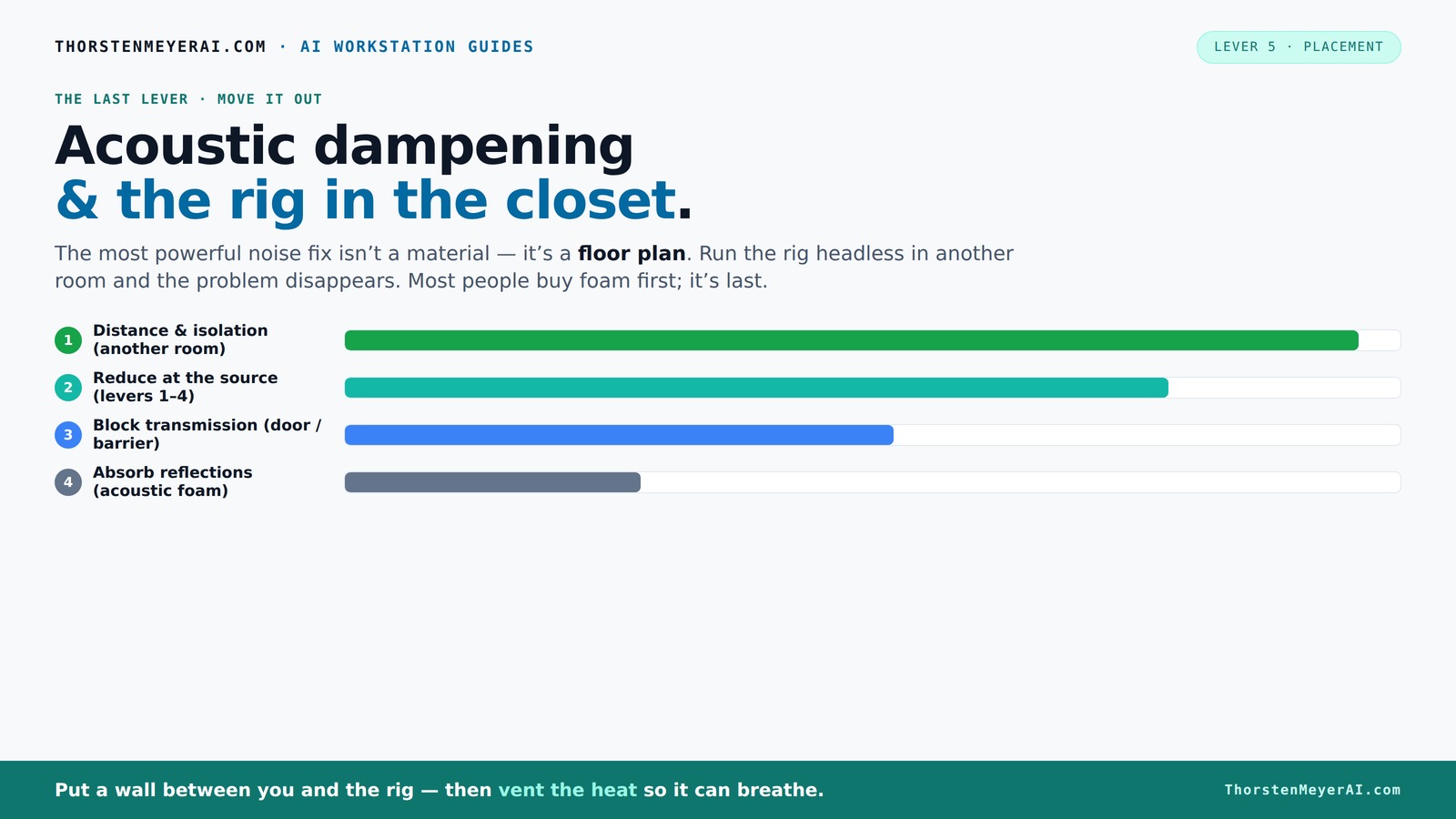
Acoustic dampening
& the rig in the closet.
The most powerful noise fix isn’t a material — it’s a floor plan. A rig you can’t hear because it’s in another room beats any amount of foam. Tap the approaches in Part 1 to see what actually works.
(another room)
(levers 1–4)
(door / barrier)
(acoustic foam)
Contain the noise, not the heat
Key Takeaways
- Sealing gaps and adding mass is the most effective way to soundproof your closet; acoustic treatment alone won't stop sound leaks.
- Target early reflection points on side walls at ear level with panels or foam for clearer recordings.
- Bass traps in corners dramatically reduce low-frequency rumble common in small, enclosed spaces.
- Proper ventilation prevents heat buildup, protecting your equipment and maintaining performance.
- Focus on treating only 20-40% of the space strategically — over-treating wastes effort and budget.
soundproofing foam panels for studio
As an affiliate, we earn on qualifying purchases.
As an affiliate, we earn on qualifying purchases.
Soundproofing vs. Acoustic Treatment: Know the Difference and Why It Matters
Soundproofing and acoustic treatment are often confused, but they serve different goals. Soundproofing’s primary purpose is to prevent sound from escaping or entering a space, which is crucial if you want to avoid disturbing neighbors or reduce external noise. Acoustic treatment, on the other hand, focuses on improving the internal sound quality by controlling reflections, echoes, and resonances that can muddy recordings or make listening less clear.
Understanding this distinction helps you allocate your efforts wisely. For example, sealing gaps around your closet door with weatherstripping and adding mass with drywall creates a barrier that reduces noise leaks, but it doesn't improve how sound behaves inside the room. Conversely, installing foam panels and bass traps won't block sound from escaping but will make recordings inside more accurate and less echoey.
The tradeoff is that investing heavily in one without the other can lead to suboptimal results. Over-treating a space with absorption materials won't stop sound from leaking out, and over-isolating without internal treatment can make the space sound dead and unprofessional. Striking a balance based on your specific needs and room characteristics is key.
As an affiliate, we earn on qualifying purchases.
Where to Put Acoustic Panels in a Closet for Best Results
Strategic placement of acoustic panels is essential for maximizing sound quality, especially in the limited space of a closet. The goal is to target the first reflection points—these are the spots where sound waves bounce directly from your speakers or microphone before reaching your ears or recording device. Properly placed panels absorb these early reflections, reducing comb filtering and echo, which can cloud clarity. You can learn more about acoustic dampening placement here.
The 'mirror trick' is a practical method: hold a mirror flat against the wall while seated at your listening or recording position. When you see the reflection of your speakers in the mirror, that’s a reflection point worth treating. Mounting panels at these points ensures that sound waves are absorbed before they bounce around the room, creating a more accurate and balanced sound environment.
In small closets, where space is tight, focus on mounting foam or fabric-covered panels at ear level on side walls, the ceiling if echoes bounce upward, and behind your microphone to minimize room coloration. For more tips, see this guide on acoustic treatment. Even modest coverage—such as a few 2x2-foot panels—at these critical points can significantly improve clarity, making your recordings sound more professional and less affected by room acoustics.
As an affiliate, we earn on qualifying purchases.
How to Manage Low Frequencies and Bass Buildup in a Tiny Closet
Low-frequency issues are particularly challenging in small rooms because bass waves naturally tend to pile up in corners, creating problematic resonances that muddy your recordings and cause monitoring inaccuracies. You might find this bass trapping guide helpful. This buildup occurs because low frequencies have longer wavelengths and are more prone to standing wave formation in confined spaces.
The most effective solution is to install bass traps in the corners, where low-frequency energy tends to concentrate. These traps act like sponges, absorbing the energy before it reflects and amplifies. For example, placing a 4-inch thick fiberglass or mineral wool trap in each corner can drastically reduce low-end rumble, resulting in clearer, more balanced sound.
Ignoring low-frequency treatment often leads to boomy, indistinct recordings that are hard to mix properly. Learn more about managing low-end issues at this resource. While it might seem like a simple fix, strategically adding bass traps in key spots addresses the root of the problem. Studies show that treating just 20–40% of the wall space with bass traps in corners can significantly tame problematic low frequencies, making your monitoring more accurate and your recordings cleaner.
As an affiliate, we earn on qualifying purchases.
Sealing the Closet Door and Gaps to Keep Noise In or Out
The biggest leak points are the door and gaps around it. Weatherstripping, door sweeps, and acoustic sealant turn a noisy door into a sound barrier. For example, adding a thick moving blanket over the door can reduce noise transmission significantly, sometimes by more than 20 dB, depending on the material and installation.
Sealing cracks around vents, electrical outlets, and windows is equally important. For detailed advice, see this article on sealing gaps. Even tiny gaps can serve as pathways for sound leaks, undermining your entire effort at soundproofing. Using weatherstripping around door frames, applying acoustic sealant to cracks, and installing draft stoppers or door sweeps are simple yet effective DIY solutions that prevent sound from escaping or entering.
This step is often overlooked but can dramatically improve your space’s isolation, especially when combined with internal acoustic treatments. The tradeoff is that perfect sealing might slightly impede airflow, so balance your need for soundproofing with ventilation requirements.
Ventilation & Heat Management in a Closet Rig
Putting a powerful, heat-generating machine in a sealed closet risks overheating, which can damage equipment and degrade performance. Proper ventilation is critical. Using a quiet exhaust fan and an intake vent allows fresh air to circulate without creating noise that leaks out or enters.
For example, a 120mm fan pulling hot air out of the closet can maintain a stable temperature, preventing overheating and noise spikes caused by thermal throttling. For a cleaner setup, consider a purpose-built soundproof cabinet with ducted airflow and integrated temperature controls. These systems are designed to balance sound isolation with effective heat dissipation, ensuring your gear stays cool and safe.
Monitoring ambient temperature is essential; if it rises above 85°F, your equipment may throttle, and the noise from cooling fans can become more noticeable. Adequate airflow not only prolongs the lifespan of your gear but also maintains consistent performance, critical for recording and mixing sessions.
Practical Tips for Turning a Closet into a Quiet, Functional Studio
- Start with sealing gaps around the door and outlets to prevent sound leaks.
- Add acoustic panels at reflection points—sides, ceiling, and behind the mic—to absorb reflections and improve clarity.
- Place bass traps in corners to tame low frequencies that tend to accumulate there.
- Use thick rugs, blankets, or moving blankets on walls and doors to soften reflections and reduce echo.
- Install a quiet ventilation system—like a ducted fan or vent—to keep the space cool without introducing noise.
- Position your microphone carefully, using the reflection point technique, before finalizing treatment placement for the best sound quality.
For example, a home musician in an apartment used foam panels, a blanket over the door, and a small fan to create a surprisingly professional-sounding vocal booth in a tiny closet.
Frequently Asked Questions
Can a closet really work as a vocal booth or mini studio?
Absolutely. With proper sealing, acoustic treatment, and ventilation, a closet can produce professional-quality sound. Many home studio owners swear by it, especially in apartments where space is tight.
What is the difference between soundproofing and acoustic treatment?
Soundproofing blocks sound from escaping or entering a space — think sealing cracks or adding mass. Acoustic treatment improves sound quality inside the room, reducing echo and reflections, but doesn't block sound transmission.
Where should I place acoustic panels in my closet?
Focus on the first reflection points — the side walls at ear level, the ceiling, and behind your microphone. Use the mirror trick to locate where reflections bounce to your ears for maximum impact.
Do I need bass traps in a tiny closet?
Yes. Bass traps in the corners absorb low-frequency buildup, which small rooms tend to amplify. Even a couple of 4-inch thick traps can make a noticeable difference.
How do I stop sound leaking through the closet door?
Seal gaps with weatherstripping, add a blanket or soundproof door cover, and consider a door sweep. These simple steps can cut noise transmission significantly, making your setup much quieter.
Conclusion
Turning a closet into a quiet studio is all about smart choices. Seal the leaks, treat the reflections, and keep it cool. Done right, your tiny space transforms into a professional-sounding refuge.
Imagine a space so soundproof and cozy that even the loudest GPU or the most passionate singer sounds crystal clear. That’s the power of strategic acoustic dampening and placement — simple, effective, and surprisingly affordable.
Fall Picks
fall essentials
As an affiliate, we earn on qualifying purchases.