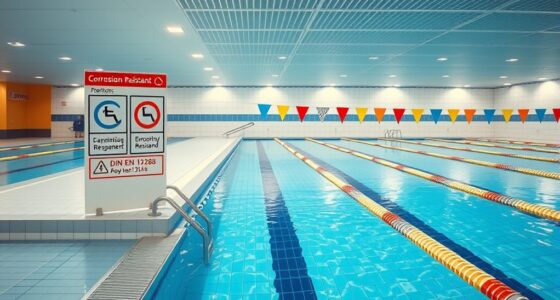
Accessibility laws for pools serving persons with disabilities require you to install and maintain features like lifts, ramps, and handrails that meet specific standards. You must guarantee these devices are sturdy, easy to operate, and regularly inspected for safety. Compliance with laws like the ADA helps you create an inclusive, safe environment while avoiding legal issues. To learn more about how to meet these requirements effectively, keep exploring the key principles behind accessible aquatic facilities.
Key Takeaways
- ADA mandates accessible features like pool lifts, ramps, and handrails in public pools to ensure barrier-free access.
- Regulations require regular inspection, maintenance, and proper placement of pool lifts to ensure safety and compliance.
- Standards specify minimum weight capacities, user controls, and clear space around lifts for diverse user needs.
- Compliance with federal and local laws promotes legal safety, prevents penalties, and demonstrates commitment to inclusivity.
- Accessibility laws aim to eliminate barriers, making pools safe, inclusive, and welcoming for persons with disabilities.
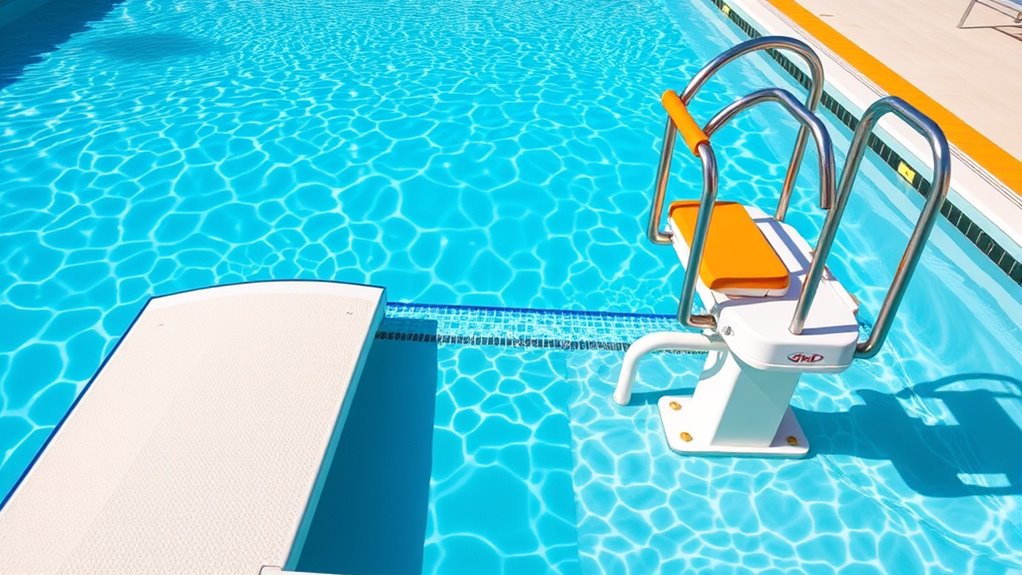
Accessible pools are crucial for ensuring that persons with disabilities can enjoy recreational swimming without barriers. When you design or manage a pool, understanding the importance of adhering to pool lift regulations and aquatic accessibility standards becomes a essential part of creating an inclusive environment. These regulations are in place to guarantee that all individuals, regardless of physical ability, have equitable access to swimming facilities. Pool lift regulations specify the requirements for installing and maintaining mechanical devices that help users with mobility challenges enter and exit the water safely. These lifts are often mandated to be sturdy, easy to operate, and positioned in locations that provide convenient access. By complying with these regulations, you not only meet legal obligations but also promote safety and independence for your patrons.
Aquatic accessibility standards serve as thorough guidelines that ensure pools are designed with inclusivity in mind. They cover a broad range of features, including ramp slopes, handrails, and poolside surfaces, but the focus on pool lifts remains central. These standards often specify the minimum weight capacity, user controls, and required clearances around the lifts to ensure they are usable by a wide range of individuals with varying needs. When you follow these standards, you create a welcoming environment that encourages participation for everyone. It’s important to regularly inspect and maintain pool lifts to ensure they operate smoothly and meet regulatory requirements. Failing to do so can lead to safety hazards and potential legal issues.
In addition, understanding and implementing the aquatic accessibility standards helps you stay compliant with the Americans with Disabilities Act (ADA) and other local regulations. These laws are designed to eliminate barriers and promote equal access, which benefits your facility’s reputation and broadens your community reach. Installing compliant pool lifts and adhering to relevant standards demonstrate your commitment to inclusivity, making your pool a preferred destination for all users. Remember, accessibility isn’t just about meeting legal requirements; it’s about fostering a welcoming atmosphere where everyone can enjoy the benefits of aquatic recreation. By prioritizing compliance with pool lift regulations and aquatic accessibility standards, you ensure that your pool remains accessible, safe, and enjoyable for persons with disabilities, ultimately enriching your community and promoting a culture of inclusivity. Incorporating spirituality and mindfulness practices can further enhance your commitment to creating a supportive environment for all patrons.
As an affiliate, we earn on qualifying purchases.
Frequently Asked Questions
Are There Specific Penalties for Non-Compliance With Pool Accessibility Laws?
If you don’t comply with pool accessibility laws, you could face legal consequences like fines or lawsuits. Enforcement measures vary depending on your location, but authorities may require you to make immediate adjustments or shut down until you meet the standards. Non-compliance not only risks legal penalties but also damages your reputation. To avoid these issues, confirm your pool adheres to all accessibility laws and stays updated on any legal changes.
How Often Are Accessibility Features Required to Be Inspected or Maintained?
You should perform regular maintenance schedules and inspection procedures for accessibility features, typically at least once every six months or more frequently if needed. This guarantees everything remains functional and safe for users. Keep records of inspections and maintenance activities, and promptly address any issues that arise. Staying proactive helps you comply with regulations and provides a safe, accessible environment for persons with disabilities.
Can Private Pool Owners Be Exempt From Accessibility Regulations?
While private exemptions exist in some cases, as a pool owner, you’re still responsible for ensuring safety and accessibility. Ownership responsibilities mean adhering to regulations that promote inclusivity, even if your pool isn’t open to the public. It’s wise to stay informed about local laws, as exemptions may vary by jurisdiction. Ultimately, prioritizing safety and accessibility benefits everyone and helps you avoid potential legal complications.
What Funding Options Are Available for Retrofitting Existing Pools?
You can access government grants and private funding to retrofit your existing pool. Start by researching local and federal programs that support accessibility improvements, such as ADA-related grants. Additionally, explore private foundations or organizations dedicated to disability access that might offer financial assistance. Applying for these funds can help cover costs for installing ramps, lifts, or other accessible features, making your pool more inclusive without straining your budget.
Do Accessibility Laws Differ Between Public and Private Pools?
Accessibility laws for pools do differ between public and private pools. You’ll find that public pools must meet strict pool accessibility standards, including ramps and lifts, under laws like the ADA. Private pools, however, often have exemptions, especially if they’re not open to the public. Always check local regulations, as some areas may have specific requirements, but generally, private pools have more flexibility and fewer mandated accessibility features.
As an affiliate, we earn on qualifying purchases.
Conclusion
By following accessibility laws for pools, you create a welcoming space for everyone. Think of it like a universal key—unlocking joy and independence for persons with disabilities. Some might say these laws are just rules, but they’re really about compassion and inclusion. When you make your pool accessible, you’re not just complying—you’re opening your doors to all, proving that everyone deserves a chance to enjoy the water.
As an affiliate, we earn on qualifying purchases.
pool accessibility inspection kit
As an affiliate, we earn on qualifying purchases.
As an affiliate, we earn on qualifying purchases.