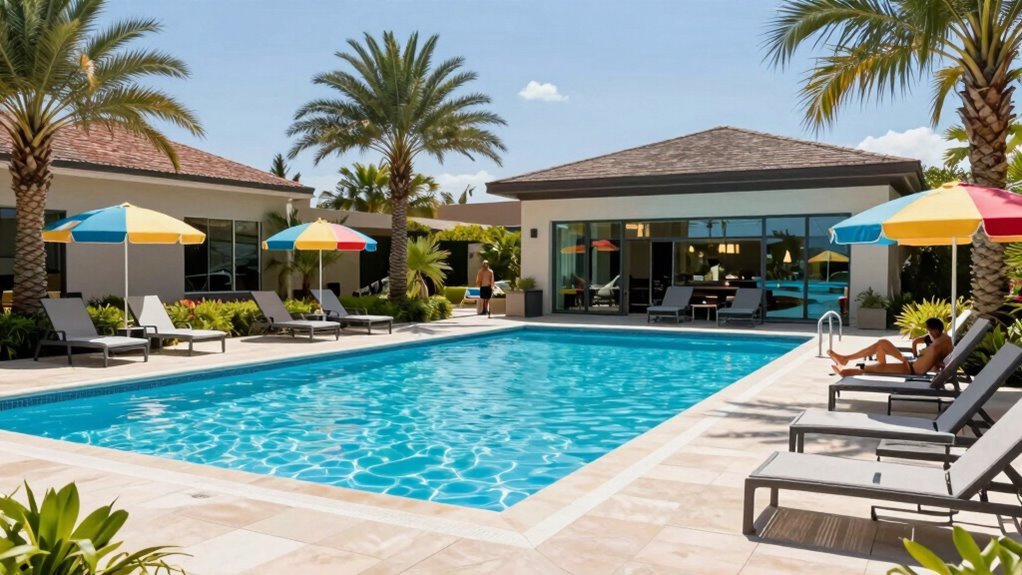

Owning a pool in an HOA community means following safety rules like fencing, alarms, and regular maintenance to prevent accidents. You’ll need to stay aware of community regulations regarding pool hours, noise, and hosting gatherings. It’s also important to understand your insurance coverage and how to protect yourself from liability. Proper upkeep and compliance help keep your pool safe and appealing. If you want to learn more about managing these responsibilities, there’s plenty to explore.
Key Takeaways
- Comply with HOA safety requirements like fencing, alarms, and covers to prevent accidents and avoid penalties.
- Understand maintenance duties such as chemical balancing, cleaning, and equipment inspections to ensure safety and longevity.
- Follow community rules on pool hours, noise, and event permits to maintain good neighbor relations.
- Review HOA insurance policies and liability guidelines to protect against damages and accidents.
- Keep the pool and surrounding area well-maintained to enhance safety, appeal, and community value.
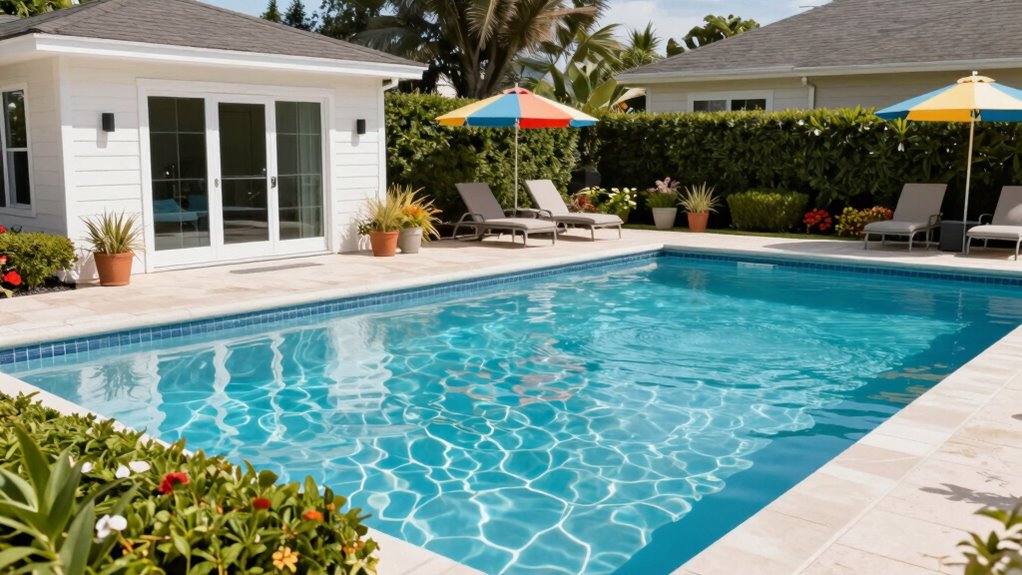
Have you ever wondered what it’s like to own a pool in an HOA community? It’s a tempting thought—your own private oasis, a place to relax and cool off during hot days. But owning a pool within an HOA isn’t just about enjoying the water; it comes with important responsibilities and rules you need to follow. One of the most vital aspects is pool safety. Your HOA likely has guidelines to guarantee the safety of all residents, which means adhering to specific fencing requirements, safety covers, and alarm systems. These measures are in place to prevent accidents, especially if you have children or guests who might not be familiar with the pool area. It’s up to you to maintain these safety features properly, making sure they’re functional and up to code. Ignoring safety protocols can lead to violations, fines, or even liability if someone gets hurt.
Along with safety, maintenance responsibilities are another key part of pool ownership in an HOA community. While some HOAs include maintenance in their fees, others expect homeowners to handle certain tasks like cleaning filters, balancing chemicals, and inspecting equipment regularly. Even if your HOA has a maintenance team, understanding what’s required of you helps guarantee the pool stays clean, safe, and operational. You’ll need to keep the water balanced—pH levels, chlorine, and alkalinity—so the water remains safe for swimming and doesn’t cause damage to the pool’s surface or equipment. Regular vacuuming, skimming debris, and checking for leaks or mechanical issues are essential tasks that keep your pool in good shape and prevent costly repairs down the line. Additionally, understanding pool safety guidelines can help you implement effective safety measures and avoid potential hazards. Knowing community rules helps you stay compliant and avoid misunderstandings with your neighbors. Staying informed about pool safety standards can also help you prevent accidents and ensure a secure environment for everyone. Moreover, familiarizing yourself with landscaping tips can enhance your backyard’s aesthetic appeal and create a more inviting space for relaxation and gatherings.
Being aware of your HOA’s rules about pool hours and noise restrictions is also vital. Many communities have quiet hours or limits on how late you can use the pool to avoid disturbing neighbors. If you’re hosting a pool party, you’ll want to coordinate with your HOA to stay within the guidelines. Additionally, some HOAs require reservations or permits for large gatherings, so being informed helps you avoid penalties. It’s also important to understand insurance requirements related to pool ownership to protect yourself financially in case of accidents or damages. Remember, the pool is a shared amenity, and respecting community rules fosters good relationships with your neighbors.
In essence, owning a pool in an HOA community offers great benefits, but it’s essential to stay on top of pool safety and maintenance responsibilities. By doing so, you not only protect yourself and your guests but also contribute to maintaining the community’s overall appeal and safety. Proper care and adherence to rules make pool ownership a rewarding experience, turning your backyard into a true sanctuary you can enjoy responsibly.

Vintage Metal Tin Notice Sign, Swimming Pool Closed Sign, Safety Reminder for Backyard Pools Fence, HOA Hotel Spa Community Pools, Indoor/Outdoor Use, Weather Resistant, 15.7 x 3.9 Inches
Dimensions and Material: Made from high-quality metal, this 15.8×4 inches tin sign ensures long-lasting durability and vibrant multicolor…
As an affiliate, we earn on qualifying purchases.
As an affiliate, we earn on qualifying purchases.
Frequently Asked Questions
Are There Specific Safety Rules for Pool Use in HOAS?
Yes, there are specific safety rules for pool use in HOAs. You should always follow pool safety guidelines, such as no running or diving, to prevent accidents. Access restrictions are common, requiring you to use key cards or passes to enter the pool area. These rules help keep everyone safe and guarantee proper use of the community pool. Always check and adhere to your HOA’s posted safety rules and access policies.
Who Is Responsible for Pool Maintenance and Repairs?
In most HOA communities, the homeowners’ association is responsible for pool maintenance and repairs. You should expect the HOA to handle pool cleaning, ensuring the water stays clear and safe, and equipment upkeep, like filters and pumps. However, it’s good to review your community’s rules, as some HOAs might require residents to maintain certain aspects or share responsibilities. Always stay informed about your specific community’s policies.
Can Residents Install Personal Pool Accessories or Features?
You can usually add personal pool accessories or features, but you need to get accessory approval from your HOA first. Personal customization is often allowed to some extent, but restrictions exist to maintain community standards. Always check your HOA’s rules before installing anything like new lighting, slides, or fountains. Following proper approval processes guarantees your upgrades won’t lead to disputes or fines, making your pool experience more enjoyable.
What Are the Typical HOA Fees Related to Pool Maintenance?
HOA fees for pool maintenance typically cover essentials like pool security, regular cleaning, and equipment upkeep. You might also pay for membership requirements, which grant access and guarantee residents follow community rules. These fees vary depending on the community size and amenities offered. By paying your share, you help keep the pool safe, clean, and enjoyable, making it easier for everyone to relax and socialize without worrying about maintenance issues.
Are There Restrictions on Pool Hours or Usage Times?
Yes, there are restrictions on pool hours and usage times in HOA communities. Typically, you’ll find pool party regulations that specify noise limits and maximum guest numbers, guaranteeing everyone’s enjoyment. Guest access policies often restrict non-residents during certain hours, so you should check your HOA’s rules. These restrictions help maintain a safe, peaceful environment, and following them guarantees you avoid fines or conflicts with neighbors.

Daily Dose Automatic Pool Chemical Dispenser — 30-Day Hands-Free Pool Care, Patented SunSmart Technology, No Batteries Required, Up to 20,000 Gallons
30 days of effortless pool care — zero effort required Drop the Daily Dose in your pool, insert…
As an affiliate, we earn on qualifying purchases.
As an affiliate, we earn on qualifying purchases.
Conclusion
Owning a pool in an HOA community can be a great way to enjoy summer, but it’s important to stay informed about rules and maintenance. Did you know that homes with pools tend to sell for about 8% more than those without? By understanding community regulations and responsibilities, you can maximize your investment and enjoy your backyard oasis worry-free. Embrace your pool ownership journey and make the most of your relaxing retreat!

Pool Alarm for Inground & Above Ground Pools,Adjustable Sensitivity Water Detection Alarms Covers 20x40ft,85dB+ Safety Alert for Kids,Pets & Accidental Entry,Weatherproof UV&Corrosion Resistant BU&GR
【Pool Safety Alarm for Kids & Pets】Designed to provide an extra layer of protection around residential pools, this…
As an affiliate, we earn on qualifying purchases.
As an affiliate, we earn on qualifying purchases.

VEVOR Solar Pool Cover, 40 x 20 ft Rectangle Solar Cover 16 mil for Pools, Inground Above Ground Swimming Pool Solar Blanket with Bubble, Heat Retaining Solar Covers Blue
Withstands Sun Exposure: Our solar pool cover is made of durable 16mil PE material. It features excellent tensile…
As an affiliate, we earn on qualifying purchases.
As an affiliate, we earn on qualifying purchases.