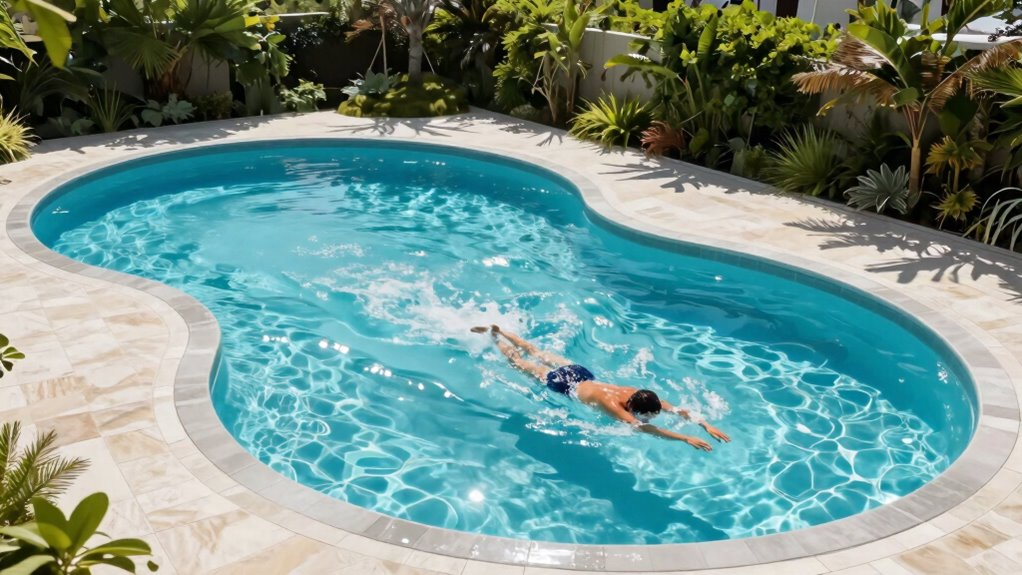

The shape of your pool impacts how smoothly you can move and how effective your workout is. Rectangular pools offer predictable water flow and uniform resistance, making your exercises easier and more efficient. Irregular shapes, like kidney or freeform designs, create curves and angles that can increase difficulty and target different muscles. Understanding how shape influences resistance and hydrodynamics helps you optimize your routine. Keep exploring to learn how to design the perfect pool for your fitness goals.

Get pool and patio gear delivered free with Prime
- Fast, free delivery on millions of items
- Prime Video, Amazon Music and more included
- Member-only deals all year
Key Takeaways
- Rectangular pools provide predictable movement flow and uniform water resistance for consistent workouts.
- Irregular-shaped pools create variable resistance and complex movement patterns, affecting exercise intensity.
- Proper hydrodynamic design reduces turbulence, enhances efficiency, and minimizes fatigue during water exercises.
- Larger, open pools support continuous movement, ideal for aerobics and resistance training, while smaller shapes may limit range.
- The pool shape influences workout effectiveness, motivation, injury risk, and the ability to target specific fitness goals.
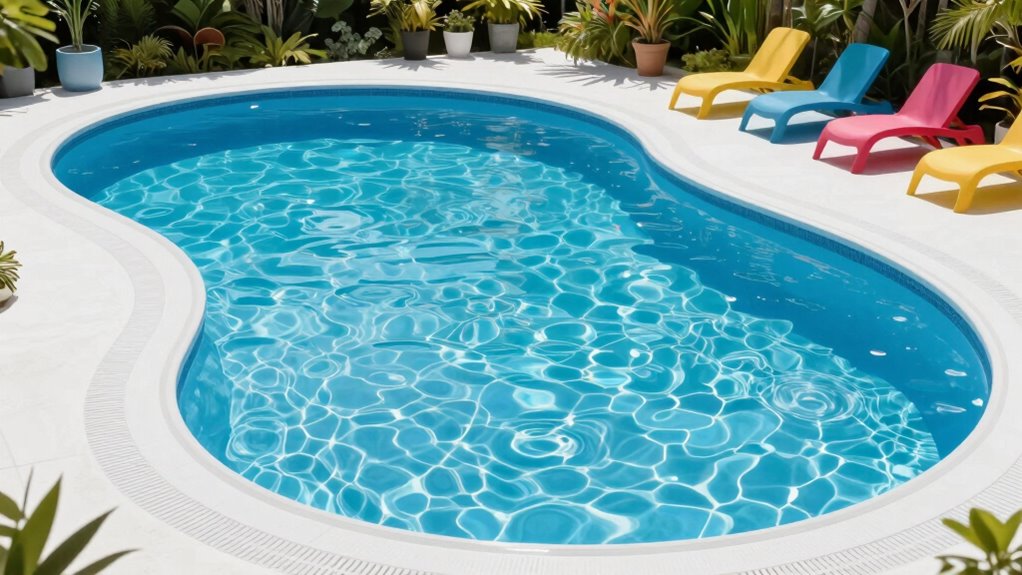
The shape of your pool can considerably impact your workout efficiency, making certain exercises easier and more effective. When designing or choosing a pool, understanding how its shape influences water resistance and movement flow is essential. These factors directly affect how smoothly you can perform exercises and how challenging your workout feels. For example, a rectangular pool offers a straightforward, predictable movement flow, allowing you to focus on maintaining consistent pace and technique. This shape minimizes sharp turns or awkward angles, reducing unnecessary resistance and helping you glide through water more effortlessly.
A rectangular pool provides smooth, predictable movement flow for more efficient and focused workouts.
In contrast, irregularly shaped pools, such as freeform or kidney-shaped designs, introduce varied water resistance levels due to their curves and angles. These differences can make certain movements more strenuous, especially when steering tighter corners or narrow sections. While this can add variety and challenge to your workout, it might also cause uneven strain on muscles or joints. If your goal is to maximize efficiency, a shape that promotes smooth movement flow—like a lap pool—is often best. The consistent flow helps you maintain momentum, reduces fatigue, and makes exercises like swimming laps or water jogging more effective.
The shape also influences the way water resistance works during your workout. In a rectangular pool, water resistance tends to be more uniform, allowing you to develop a steady rhythm. This steady resistance helps build endurance and strength without unexpected spikes that can occur in irregular shapes. On the other hand, pools with turns, curves, or varying widths create fluctuating resistance levels. These variations can be beneficial if you want to target different muscle groups or add intensity, but they might also slow down your progress if you’re aiming for a straightforward, efficient workout. Recognizing how different shapes affect water flow can help you tailor your routine more effectively. Additionally, understanding how the hydraulics of your pool work can further optimize your workout by reducing drag and improving movement efficiency. Properly designed hydrodynamics can minimize turbulence, making your exercises more consistent and less tiring.
Furthermore, the size and shape of your pool can affect how well you can perform specific exercises. For instance, if you’re into water aerobics or resistance training, a larger, open area with minimal obstructions supports continuous movement and better flow. Conversely, smaller or more complex shapes might limit your range of motion, requiring you to adapt your routines accordingly. Incorporating hydrodynamic principles into your pool design can help maximize efficiency and minimize fatigue during your workout. The right pool shape can also influence ventilation and circulation, ensuring a comfortable and safe environment during your workouts. The key is choosing a shape that aligns with your fitness goals—whether it’s steady, endurance-building laps or varied, high-intensity workouts with fluctuating resistance.
Ultimately, the right pool shape enhances your workout by promoting smooth movement flow and consistent water resistance. It helps you stay motivated, reduces injury risk, and allows you to focus on your form and performance. Think about what kind of exercises you prefer and how you want your water resistance to feel, then select a shape that complements those needs. With the proper design, your pool becomes a powerful tool for reaching your fitness goals efficiently and comfortably.
rectangular pool for water exercise
As an affiliate, we earn on qualifying purchases.
As an affiliate, we earn on qualifying purchases.
Frequently Asked Questions
How Does Pool Shape Affect Water Circulation and Filtration?
The shape of your pool considerably impacts water flow and filtration efficiency. A well-designed shape promotes even water circulation, preventing stagnant areas where debris can accumulate. For example, rectangular pools usually have better water flow, making filtration more effective. On the other hand, irregular shapes might create dead spots, reducing filtration efficiency. You should consider pool shape carefully to guarantee ideal water circulation, keeping your pool cleaner and healthier.
Are Certain Pool Shapes Better for Specific Exercise Types?
Certain pool shapes are better suited for specific exercises, enhancing your workout. For example, rectangular pools are ideal for lap swimming, offering straight lines for streamlined strokes, while freeform pools provide more space for water aerobics and playful activities. Think of your pool as a versatile canvas—your choice of shape influences your fitness routine and adds to the pool’s aesthetics and design versatility, making workouts more enjoyable and effective.
Can Pool Shape Influence Safety and Injury Prevention?
Yes, pool shape can influence safety and injury prevention. An aesthetically appealing design with clear lines and designated zones helps you navigate safely, reducing accidents. A shape offering design versatility, like a freeform pool, can better accommodate safety features such as shallow areas or handrails. Properly planned shapes improve visibility, prevent collisions, and create a safer environment, allowing you to enjoy your swim while minimizing injury risks.
What Maintenance Considerations Are Unique to Different Pool Shapes?
Different pool shapes require tailored maintenance to keep them pristine and safe. For custom cleaning, you’d need specialized equipment or techniques, especially with irregular or freeform designs that trap debris more easily. Additionally, maintaining their aesthetic appeal involves regular brushing and chemical balancing, which can be more complex for intricate shapes. Proper upkeep guarantees your pool remains inviting, safe, and visually appealing, regardless of its unique shape.
How Does Pool Shape Impact the Overall Cost of Installation?
Your pool’s shape directly affects installation costs, with more complex designs like freeform or custom shapes typically costing more due to increased materials and labor. However, choosing a shape that matches your aesthetic appeal and offers design flexibility can enhance your outdoor space. Simple, geometric pools often save money, while intricate shapes may require additional excavation or customization, impacting your overall investment.
As an affiliate, we earn on qualifying purchases.
Conclusion
Choosing the right pool shape can boost your workout efficiency and make exercise more enjoyable. Did you know that rectangular pools typically encourage more consistent laps, increasing workout intensity? By selecting a shape that suits your goals and space, you can maximize your fitness results and stay motivated. So, consider your exercise needs when picking a pool—it’s a simple way to turn your backyard into a more effective and fun fitness zone.
As an affiliate, we earn on qualifying purchases.
As an affiliate, we earn on qualifying purchases.
Fall Picks
fall essentials
As an affiliate, we earn on qualifying purchases.