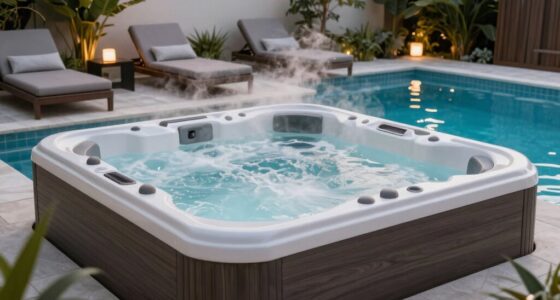
When designing pools for seniors, prioritize accessibility with smooth, wide pathways and easy-entry options like zero-entry or shallow steps with contrasting colors. Focus on comfort by including shaded areas, adjustable water temperatures, and non-slip surfaces. Incorporate safety features like sturdy handrails and pool alarms to prevent falls. Creating a welcoming environment encourages regular use and improves well-being. For more tips on crafting the perfect senior-friendly pool, keep exploring the essential design elements.

Get pool and patio gear delivered free with Prime
- Fast, free delivery on millions of items
- Prime Video, Amazon Music and more included
- Member-only deals all year
Key Takeaways
- Incorporate zero-entry or beach-entry designs for easy, gradual water access.
- Ensure wide, slip-resistant pathways to accommodate mobility aids safely.
- Install sturdy handrails and contrasting step markings to enhance stability and visibility.
- Provide comfortable seating areas and shaded rest zones around the pool.
- Use warm water temperatures and gentle hydrotherapy jets to promote relaxation and ease of movement.
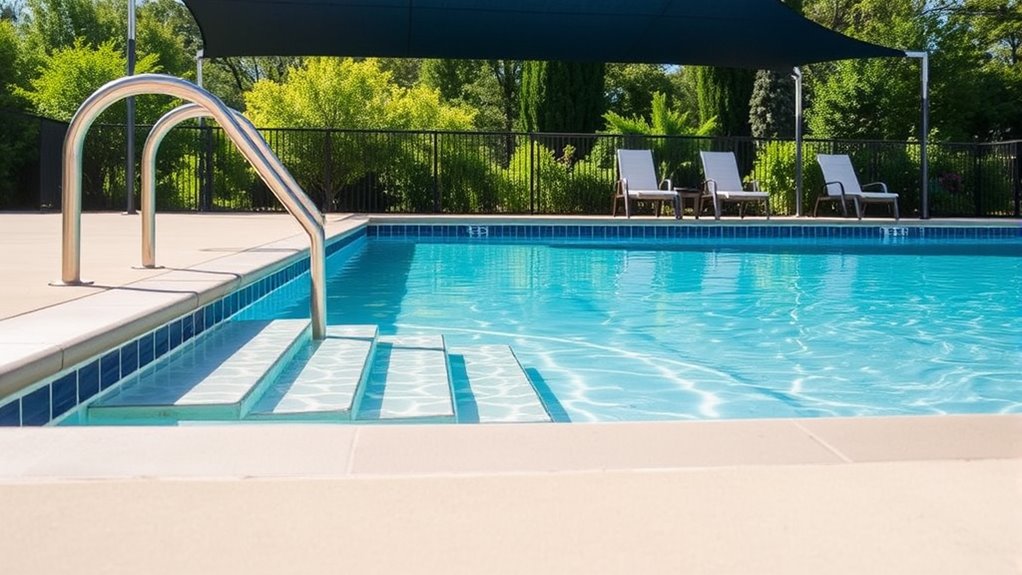
Designing pools for seniors requires careful planning to guarantee safety, accessibility, and comfort. When you focus on creating a space that promotes health and well-being, hydrotherapy benefits often come to mind. Hydrotherapy can markedly improve mobility, reduce pain, and enhance circulation, making it a valuable feature in pools designed for older adults. To maximize these benefits, you should incorporate features that allow seniors to enjoy gentle, therapeutic water exercises. For instance, adjustable water jets, warm water temperatures, and dedicated areas for low-impact activities encourage regular use and support recovery from various ailments. But beyond hydrotherapy, prioritizing pool safety features is essential. You need to take into account non-slip surfaces around the pool to prevent falls and guarantee stable footing, especially since balance can decline with age. Handrails are indispensable; install sturdy, easy-to-grip bars along the pool’s perimeter and at entry points to provide support when entering or exiting the water. Steps should have wide, shallow treads with contrasting colors for better visibility, reducing the risk of missteps. You might also want to incorporate a zero-entry or beach-entry design, which allows for gradual water access without the need for ladders or steps, making entry and exit safer and more accessible for seniors with mobility challenges. Adequate lighting is another safety feature you shouldn’t overlook. Well-lit pools improve visibility, helping seniors see potential hazards and feel more confident while moving around the pool area. Additionally, you should think about installing pool alarms or sensors that alert staff or caregivers if someone enters the water unexpectedly. Comfort plays a significant role in encouraging regular use, so guarantee the pool environment is inviting and user-friendly. Seating areas with waterproof chairs or benches around the pool can help seniors rest comfortably between activities. Temperature control is also essential; warm water (around 88-92°F or 31-33°C) not only enhances hydrotherapy benefits but also makes the experience more relaxing and less shocking to sensitive joints. Accessibility extends beyond just the pool itself — pathways leading to the pool should be smooth, wide enough for mobility aids, and free of obstacles. Shade structures or umbrellas provide relief from sun exposure, making the pool area comfortable throughout the day. When you combine these thoughtful safety features with hydrotherapy benefits, you create a pool environment that’s both safe and therapeutic, encouraging seniors to enjoy water activities confidently and comfortably. Properly designed pools can markedly improve quality of life for older adults, promoting physical health and emotional well-being in a safe, accessible, and welcoming setting.
Frequently Asked Questions
What Safety Features Are Essential for Senior Pools?
You should include vital safety features like sturdy handrails and non-slip surfaces to prevent falls. Make sure proper algae prevention to keep the pool clean and safe, reducing slip hazards. Good pool lighting is essential for visibility, especially during evening swims, helping you see clearly and avoid accidents. Installing easy-to-access steps and clearly marked shallow areas also enhances safety, making your pool a secure and enjoyable space for seniors.
How Can Pool Entry Be Made Easier for Seniors?
You can make pool entry easier for seniors by installing adjustable ramps that gently slope into the water, providing stable support. Encourage the use of water-resistant footwear to prevent slips and promote confidence. These features guarantee safe, comfortable access, reducing the risk of falls. By combining adjustable ramps with water-resistant footwear, you create an inclusive environment that encourages seniors to enjoy the pool with greater independence and safety.
Are Heated Pools Beneficial for Seniors’ Health?
Heated pools offer great hydrotherapy benefits for seniors by easing joint pain and improving circulation. The controlled temperature helps with temperature regulation, making it more comfortable and safer to stay in the water longer. You can enjoy less muscle stiffness and enhanced relaxation, which supports overall health. So, if you’re looking for a gentle exercise option, heated pools are a valuable addition to your wellness routine.
What Maintenance Considerations Are Unique to Senior Pools?
A stitch in time saves nine, so when maintaining senior pools, you must prioritize balanced chemicals and algae prevention. Regularly test and adjust chemical levels to avoid irritation and maintain water clarity. Clean filters often and monitor water pH to prevent algae growth. These steps ensure safety and comfort, making the pool inviting for seniors. Proper maintenance reduces costly repairs and keeps the pool environment healthy and enjoyable.
How Does Pool Design Impact Senior Mobility and Independence?
Your pool design directly impacts senior mobility and independence by incorporating features like shallow zones for water aerobics and easy entry points for aquatic therapy. You enable seniors to practice safe movement, improve strength, and regain confidence. Thoughtful design encourages regular activity, boosts independence, and supports overall well-being. By prioritizing accessibility and comfort, you create an environment where seniors feel empowered to enjoy the benefits of aquatic therapy and water aerobics.
Conclusion
By designing pools that prioritize accessibility and comfort, you’re creating more than just a space for exercise—you’re fostering independence and joy. Remember, like the timeless flow of a gentle river, a well-designed pool adapts to your needs, offering serenity and vitality. When you build with empathy, you’re not just shaping a pool; you’re shaping moments of happiness and health that ripple through generations. Let your design be a legacy of care and connection.
Columbus Day / Indigenous Peoples' Day Picks
long weekend sales
As an affiliate, we earn on qualifying purchases.