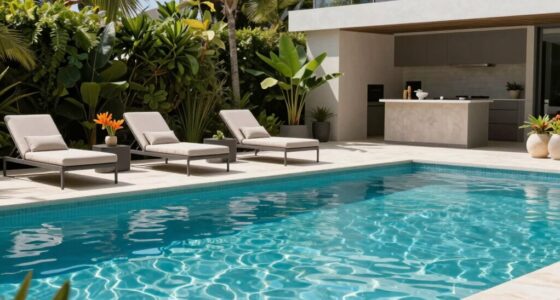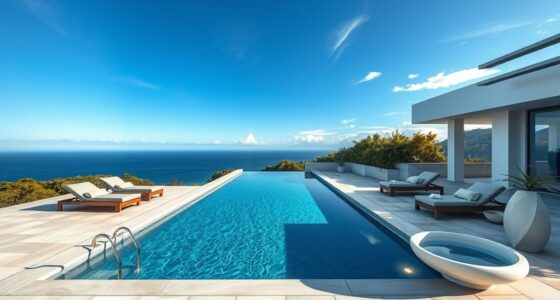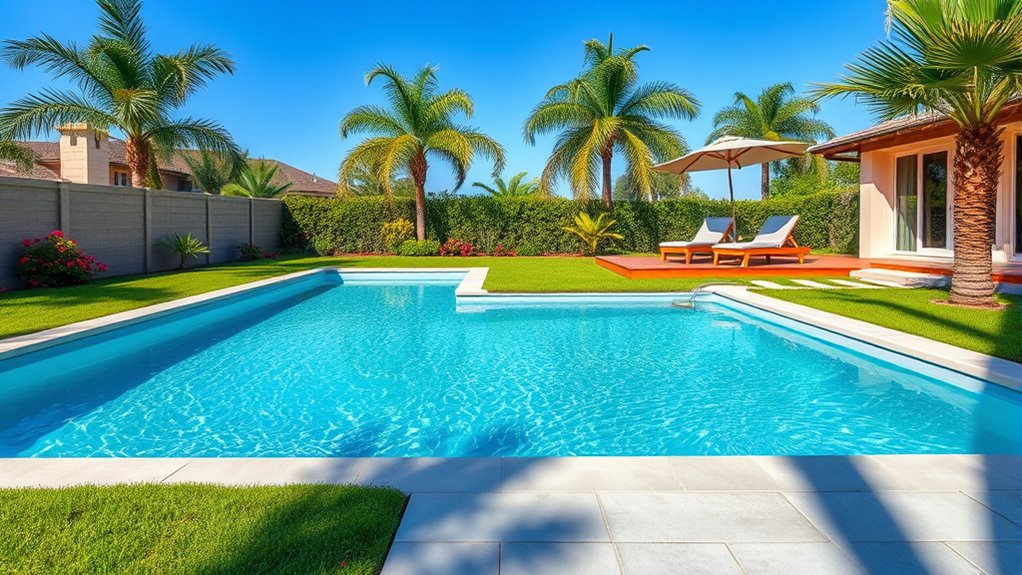

When choosing the perfect pool shape for your backyard, consider your budget, space, and how you plan to use the pool. Simple shapes like rectangles or kidney pools are easier and cheaper to install and maintain, making them practical choices. If you want a unique look and more social space, freeform or irregular shapes can add style but may cost more. To create a pool that balances beauty, function, and cost, explore these options further.

Get pool and patio gear delivered free — and shop member deals
- Fast, free delivery on millions of items
- Access to Prime Big Deal Days deals on October 6–7
- Prime Video, Amazon Music and more included
Key Takeaways
- Consider your budget and installation complexity; simple shapes are more cost-effective and quicker to install.
- Match the pool shape to your backyard’s size and layout to maximize space efficiency and visual harmony.
- Choose a shape that suits your primary activities, like lap swimming or social gatherings.
- Evaluate long-term maintenance needs; simpler designs generally require less ongoing upkeep.
- Reflect on your aesthetic preferences—whether a classic, clean look or a natural, freeform style—to complement your landscape.
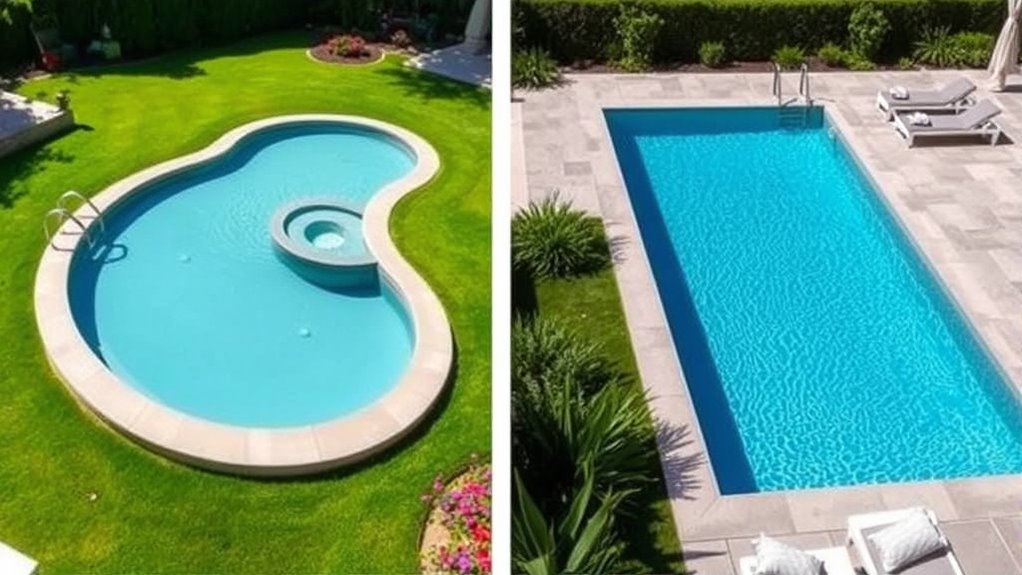
Selecting the right pool shape is essential to creating a backyard oasis that fits your space and lifestyle. When choosing, you want to contemplate options that are not only visually appealing but also cost-effective options that align with your budget. The shape of your pool can considerably influence installation costs, material requirements, and long-term maintenance considerations. For instance, simpler shapes like rectangular or kidney pools often have lower initial costs because they require fewer custom materials and less complex construction. These shapes tend to be straightforward to install, which can save you money upfront.
Choosing a simple pool shape can reduce costs and simplify installation.
On the other hand, more intricate shapes, such as freeform or custom designs, might appeal to your aesthetic sensibilities but can come with higher costs. These shapes often involve more complex excavation, additional materials, and custom finishing, which can drive up expenses. It’s important to weigh the upfront costs against your long-term maintenance considerations. Larger or irregularly shaped pools may have more surface area exposed to the elements, leading to increased cleaning, chemical balancing, and potential repairs over time.
Additionally, the shape impacts how you use your pool. If you’re interested in lap swimming or water aerobics, a narrow, elongated rectangular pool might be your best choice, offering a practical solution that also tends to be more cost-effective options in terms of both construction and maintenance. For family fun and social gatherings, a freeform or irregular shape can create a more inviting, natural look, but keep in mind that these may require more frequent cleaning around curved or hard-to-reach areas, increasing maintenance considerations.
Another factor to ponder is space efficiency. If your backyard is limited, choosing a compact, simple shape can maximize your available area without making your yard feel crowded. Conversely, larger, more elaborate shapes might require more extensive landscaping and could increase your overall costs—not just for the pool itself but for surrounding features like decking and fencing.
Furthermore, understanding your long-term maintenance requirements can help ensure your investment remains manageable over time. Ultimately, the shape you pick should balance your aesthetic desires with your practical needs and budget constraints. Evaluating cost-effective options and understanding maintenance considerations will help you make an informed decision. Think about how you plan to use your pool most often, how much time and money you want to devote to upkeep, and how the shape complements your backyard’s layout. When you choose wisely, your pool will become a stunning, functional centerpiece that fits seamlessly into your outdoor space.
Frequently Asked Questions
How Much Does Each Pool Shape Typically Cost to Install?
You’ll find that round pools usually cost between $20,000 and $40,000 to install, while rectangular pools tend to range from $30,000 to $50,000. Cost comparison depends on size, materials, and installation factors like site prep and permits. Custom shapes can push prices even higher. To get an accurate estimate, consider consulting with local pool contractors who can assess your yard and provide detailed quotes.
Which Pool Shape Requires the Least Maintenance?
You’ll find that a rectangular pool generally requires the least maintenance because its shape offers easier cleaning and shape durability. With automatic cleaning systems, you can keep the pool spotless with less effort. The simple, straight lines reduce debris buildup and make maintenance more straightforward. Plus, its durability means fewer repairs over time, saving you money and effort in the long run.
Are Certain Pool Shapes Better for Small Yards?
If you have a small yard, certain pool shapes can surprise you. Compact designs like plunge pools or narrow rectangular shapes maximize space while maintaining aesthetic appeal. These shapes fit snugly without overwhelming your yard, giving you a luxurious feel without sacrificing room for other outdoor features. So, don’t settle for less—opt for a shape that enhances your space and keeps your backyard looking stylish and inviting.
How Does Pool Shape Affect Energy Efficiency?
Your pool shape impacts energy efficiency by influencing factors like solar heating and wind resistance. A rectangular or elongated shape maximizes solar heat absorption, reducing energy costs. Rounded or irregular shapes may have more surface area exposed to wind, increasing heat loss and making solar heating less effective. Selecting a shape that minimizes wind resistance and optimizes solar exposure helps you save on energy bills and keep your pool warmer naturally.
Can I Customize a Pool Shape Beyond Standard Options?
Absolutely, you can customize your pool shape beyond standard options! Imagine turning your backyard into a masterpiece with unique designs that reflect your style—like a lagoon, an infinity edge, or even a freeform masterpiece. With endless customization options, you’re not limited to traditional shapes. You can work with designers to create a truly one-of-a-kind pool that perfectly fits your space, lifestyle, and vision, making your backyard truly spectacular.
Conclusion
Ultimately, selecting the right pool shape transforms your backyard into a personalized oasis. For instance, imagine a family who chose a freeform pool to complement their lush garden, creating a natural retreat perfect for relaxation and entertaining. By considering your space, lifestyle, and aesthetic preferences, you can make a smart choice that enhances your outdoor living. When you pick the right shape, your pool becomes a stunning centerpiece that reflects your unique style and elevates your home’s appeal.
Fall Picks
fall essentials
As an affiliate, we earn on qualifying purchases.