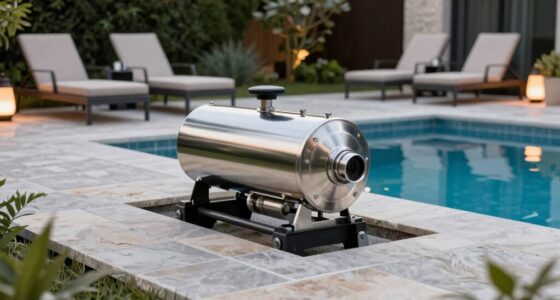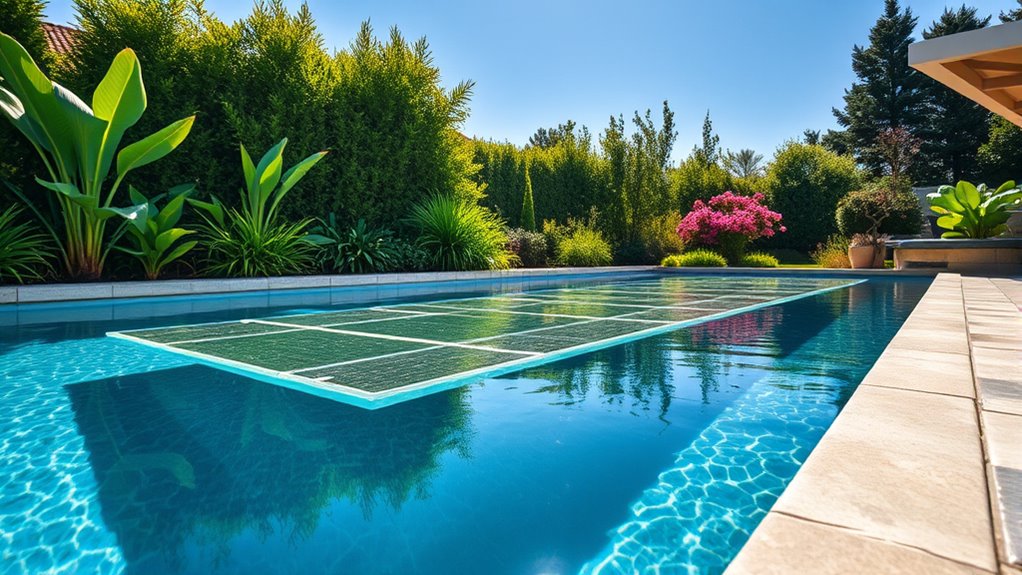

To design an eco-friendly pool, choose sustainable materials like reclaimed wood, natural stone, or eco-friendly composites for decking and surrounds. Incorporate solar heating systems on your roof or nearby structures to harness renewable energy, and opt for natural filtration methods using beneficial bacteria and plants to maintain water quality without chemicals. Selecting non-toxic, biodegradable pool liners also helps reduce environmental impact. Continuing further, you’ll discover how to combine these systems effectively for a greener backyard oasis.

Get pool and patio gear delivered free with Prime
- Fast, free delivery on millions of items
- Prime Video, Amazon Music and more included
- Member-only deals all year
Key Takeaways
- Use solar collectors for pool heating to harness renewable energy and extend swimming seasons.
- Implement natural filtration systems with plants, beneficial bacteria, and mineral media to reduce chemical use.
- Select sustainable, non-toxic materials such as recycled wood, natural stone, and biodegradable liners for pool surrounds and lining.
- Design with energy efficiency and long-term cost savings in mind, integrating renewable systems and eco-friendly materials.
- Prioritize upfront planning to ensure the integration of solar heating, natural filtration, and sustainable materials for maximum eco-friendliness.
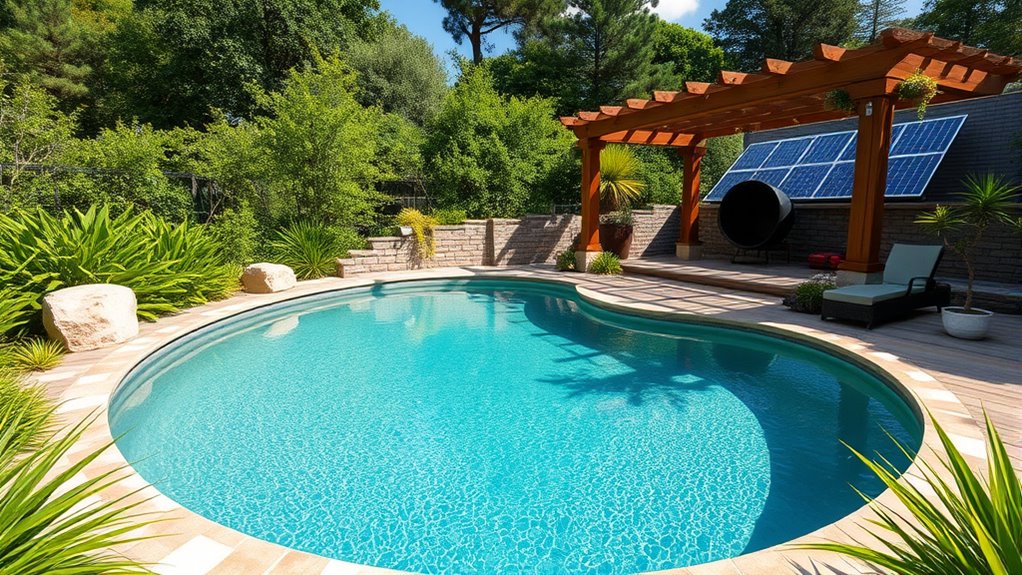
Creating an eco-friendly pool isn’t just about style; it’s about making sustainable choices that benefit both your backyard and the environment. One of the most effective ways to reduce your pool’s carbon footprint is by integrating solar heating. Unlike traditional gas or electric heaters, solar panels harness the sun’s energy to warm your pool naturally, cutting down on energy consumption and lowering utility bills. You can install solar collectors on your roof or nearby structures, directing sunlight to heat the water as it circulates through the system. This setup not only extends your swimming season but also minimizes greenhouse gas emissions, making your pool more environmentally friendly.
Solar heating reduces energy use and extends your pool season sustainably.
In addition to solar heating, natural filtration plays a *vital* role in designing a sustainable pool. Instead of relying solely on conventional chemical treatments and sand filters, you can opt for biological or natural filtration systems. These systems use beneficial bacteria, plants, and mineral media to purify water, reducing or eliminating the need for harsh chemicals like chlorine or bromine. For example, integrating a constructed wetland or bio-filtration system allows water to be naturally cleaned through biological processes, which are gentler on the environment and safer for swimmers. This approach also helps maintain healthier water quality without the toxic side effects associated with traditional chemical treatments. Incorporating water quality management strategies can further enhance the sustainability of your pool.
When selecting materials for your eco-friendly pool, focus on sustainable and non-toxic options. Use recycled or locally sourced materials for pool decking and surrounds to minimize environmental impact. Consider natural stone, reclaimed wood, or composite materials that have a lower carbon footprint. For the pool liner, look for options made from non-toxic, biodegradable materials that won’t leach harmful substances into the water or environment. These choices not only reduce your pool’s overall environmental impact but also contribute to a healthier backyard ecosystem.
Designing your pool with energy-efficient systems and sustainable materials requires some upfront planning, but the long-term benefits are significant. You’ll save on operational costs, reduce your carbon footprint, and create a healthier space for your family and the environment. Incorporate solar heating to make the most of renewable energy, and choose natural filtration methods to keep your water clean without chemicals. By making these conscious choices, you’re not just creating a beautiful backyard feature—you’re also contributing to a more sustainable future.
Products Worth Considering

Dyson Ball Animal 2 Plus Corded Vacuum

Samsung 48-Inch S90H OLED 4K Smart TV (2026)
Philips Hue Festavia Globe Outdoor String Lights, 32 Bulbs, 91 ft
As an affiliate, we earn on qualifying purchases.
Frequently Asked Questions
What Are the Cost Differences Between Eco-Friendly and Traditional Pool Designs?
Eco-friendly pools often cost more upfront due to sustainable materials and advanced systems, but your budget considerations pay off over time with long-term savings. While initial expenses are higher, you’ll save on energy, water, and maintenance costs. Traditional pools may be cheaper initially, but eco-friendly options reduce ongoing expenses and environmental impact, making them a smarter investment for your wallet and the planet in the long run.
How Long Does Eco-Friendly Pool Equipment Typically Last?
Eco-friendly pool equipment typically lasts between 10 to 20 years, depending on maintenance and quality. Did you know that high-quality solar heaters can have a lifespan of up to 25 years? This highlights eco-friendly pool durability, often surpassing traditional equipment. Proper upkeep, like regular cleaning and system checks, can extend your equipment’s lifespan, ensuring your eco-friendly pool remains efficient and sustainable for many years.
Can Eco-Friendly Pools Be Customized to Fit Any Backyard?
Yes, eco-friendly pools can be customized to fit any backyard. You can choose the pool size that suits your space and needs, from small plunge pools to large family-sized options. Additionally, you have a variety of aesthetic options, such as natural stone finishes and eco-friendly lighting, to match your style. Customizing your eco-friendly pool guarantees it complements your landscape while maintaining sustainability and energy efficiency.
Are There Government Incentives for Installing Eco-Friendly Pools?
Think of government incentives as hidden treasures waiting to be found. You can qualify for government grants and tax incentives when you install eco-friendly pools, making your sustainable dreams more affordable. These programs encourage eco-conscious choices, helping you reduce costs and environmental impact. By exploring local regulations and incentives, you open savings and support for your green backyard upgrade. It’s a win-win for your wallet and the planet.
How Do Eco-Friendly Pools Impact Local Water Conservation Efforts?
Eco-friendly pools positively impact local water conservation efforts by promoting water recycling and drought mitigation. When you choose systems like recirculating filtration or greywater reuse, you reduce overall water use. You help conserve precious water resources, especially during droughts, by minimizing waste. Implementing such pools supports sustainable water management, encourages community resilience, and lessens the strain on local water supplies, making a real difference in environmental preservation.
Conclusion
By choosing eco-friendly materials and innovative systems, you can create a pool that’s not just beautiful but a true marvel of sustainability. Your efforts can turn your backyard into an oasis that saves water, energy, and the planet—imagine having the power to change the world one pool at a time! So go ahead, design with purpose, and watch your eco-friendly pool become the envy of everyone around. It’s your chance to make a difference—dive in!