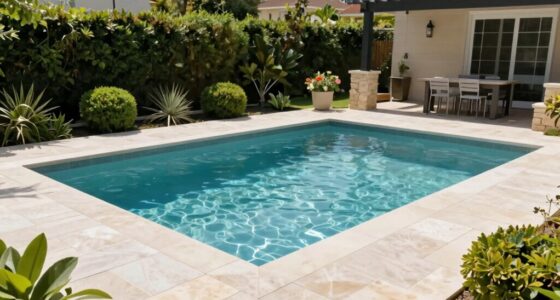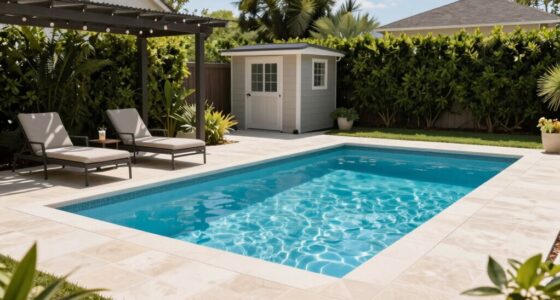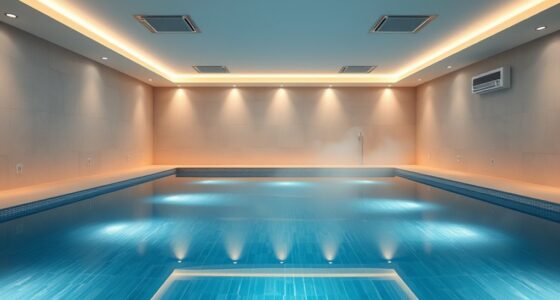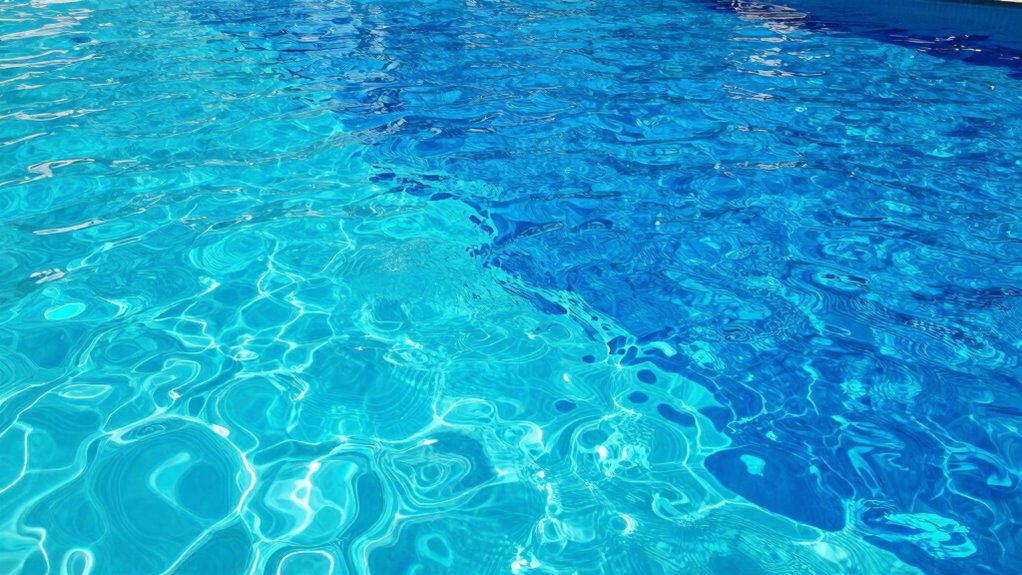

The color of your pool plaster impacts how water looks by influencing how light interacts within the pool. Light-colored plaster reflects sunlight, making water appear brighter and more transparent, while darker hues absorb more light, creating a deeper, mysterious effect. Your choice of plaster also affects how water interacts with pool lighting, both day and night. If you’re curious about how to choose the right color and keep your water looking its best, you’ll find more helpful insights ahead.

Get pool and patio gear delivered free — and shop member deals
- Fast, free delivery on millions of items
- Access to Prime Big Deal Days deals on October 6–7
- Prime Video, Amazon Music and more included
Key Takeaways
- Bright plaster colors reflect more sunlight, making water appear clearer and more inviting.
- Darker plaster hues absorb light, creating a deeper, more mysterious water appearance.
- Underwater lighting interacts with plaster color, enhancing or dimming the water’s visual effect.
- Water chemistry can cause staining or discoloration, altering the intended water color.
- Proper maintenance preserves plaster color, ensuring consistent and attractive water appearance over time.
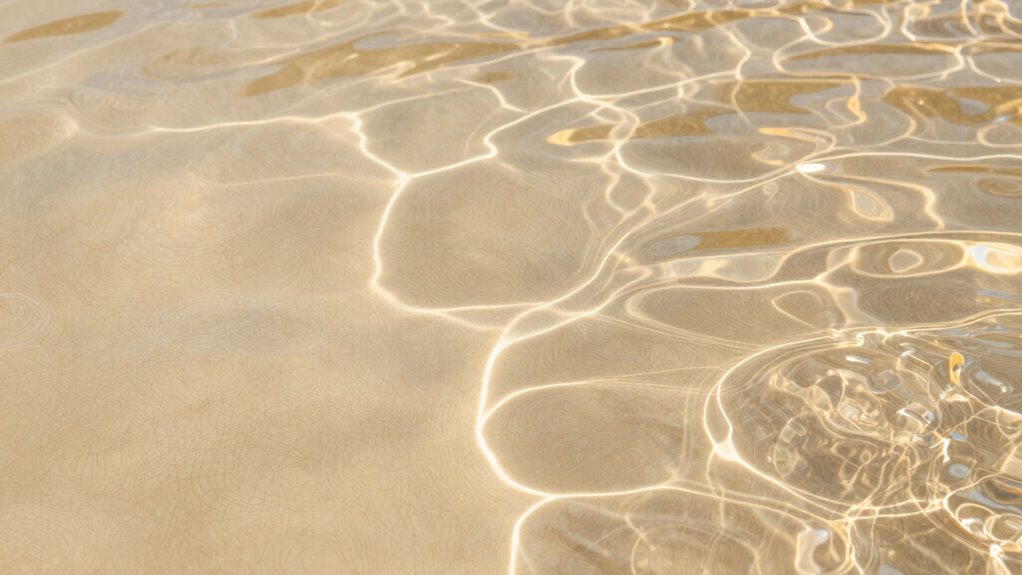
Choosing the right pool plaster color can profoundly influence the water’s appearance, creating the desired ambiance and aesthetic. When selecting a plaster hue, you’re not just thinking about looks—you’re also shaping how the water interacts with pool lighting and water chemistry, which together impact the overall visual effect. The color you choose can make your pool look brighter, darker, more inviting, or more exotic, depending on your preferences.
Pool lighting plays a significant role in how water appears. Different plaster colors reflect and absorb light differently, affecting how the water looks during the day and night. For example, a light-colored plaster, like white or light beige, reflects more sunlight, making the water seem brighter and more transparent. On the other hand, darker plasters, such as midnight blue or slate, absorb more light, giving the water a deeper, more mysterious hue. When you add pool lighting—whether underwater LEDs or exterior fixtures—the plaster color influences how the light interacts with the water, creating shimmering effects or a soothing glow. The right combination of plaster color and lighting can turn your pool into a stunning visual centerpiece. Additionally, understanding how water chemistry interacts with plaster colors can help prevent long-term damage and preserve your pool’s beauty. For example, certain water imbalances can accelerate staining or discoloration, which can alter the appearance of your chosen color over time. Proper water testing and chemical adjustments are essential in maintaining the desired aesthetic and preventing issues that compromise the pool’s appearance.
Pool lighting enhances water appearance by highlighting plaster color, creating shimmering effects and transforming your pool into a stunning focal point.
Water chemistry also impacts how your chosen plaster color appears over time. Proper water balance is essential because imbalanced water—whether too acidic or too alkaline—can cause staining or discoloration on the plaster surface. For instance, if your water is overly chlorinated or contains metals like copper or iron, it can lead to staining that alters the original color of your plaster. This, in turn, affects how the water looks, often dulling or clouding its clarity. Maintaining balanced water chemistry guarantees that the plaster’s true color stays vibrant and that the water remains crystal clear. Regular testing and appropriate chemical adjustments help prevent unwanted staining, allowing your selected plaster hue to shine through and give your pool the intended aesthetic appeal. Proper maintenance of water chemistry is crucial for preserving the longevity of pool finishes, ensuring your pool remains beautiful for years to come.
As an affiliate, we earn on qualifying purchases.
Frequently Asked Questions
How Does Plaster Color Affect Water Temperature?
Your pool plaster color affects water temperature by influencing how much heat is absorbed or reflected. Darker colors, like deep blue or black, absorb more heat, raising water temperature and enhancing pool aesthetics with a sleek, modern look. Lighter colors, such as white or light gray, reflect heat, keeping water cooler. This interplay impacts both the pool’s visual appeal and your comfort, aligning with color psychology to create a relaxing or energetic atmosphere.
Can Plaster Color Influence Algae Growth in the Pool?
While plaster color doesn’t directly influence algae growth, it can play a subtle role in algae suppression and your pool’s visual appeal. Light-colored plaster reflects more sunlight, which can help deter algae by creating less favorable conditions. Darker hues may absorb heat and promote algae growth if not properly maintained. So, choosing a plaster color that balances aesthetics with effective algae control can keep your pool cleaner and more inviting.
Does Plaster Color Impact Water Chemical Balance?
Yes, plaster color impacts water chemical balance because darker shades absorb more heat, which can increase evaporation and affect chemical levels. Lighter colors reflect sunlight, helping maintain stable pH and chlorine levels. When you choose a plaster color for your pool, you’re influencing its aesthetics and how easily you manage water chemistry. Opting for a color that suits your desired look can also help keep water balanced and clear.
How Durable Are Different Plaster Colors Over Time?
In the grand scheme of pool aesthetics, you’ll find that different plaster colors vary in durability. Lighter shades tend to fade more quickly, especially with sun exposure, leading to noticeable color fading over time. Darker hues generally hold their vibrancy longer, maintaining their visual appeal. While modern formulations are more resilient, all plaster colors will eventually wear, so choosing a high-quality finish helps preserve your pool’s timeless beauty.
Are Certain Plaster Colors Better for Saltwater Pools?
Certain plaster colors are better suited for saltwater pools because they enhance pool aesthetics and withstand the corrosive environment. Light colors like white or light blue reflect more sunlight, making your pool look brighter and more inviting. Darker shades can absorb heat and may fade faster. When considering color customization, choose plaster colors that resist salt damage and maintain their appearance longer, ensuring your pool stays beautiful over time.
As an affiliate, we earn on qualifying purchases.
Conclusion
Just as a master painter chooses colors to evoke mood and emotion, selecting your pool plaster hue shapes the water’s entire vibe. Your choice isn’t just about aesthetics—it’s about creating a sanctuary that reflects your personality and dreams. Remember, like a timeless masterpiece, your pool’s color can inspire tranquility or excitement, reminding you that even small details hold the power to transform your space into something truly extraordinary. So, choose wisely, and let your pool tell your story.
As an affiliate, we earn on qualifying purchases.
As an affiliate, we earn on qualifying purchases.
Fall Picks
fall essentials
As an affiliate, we earn on qualifying purchases.