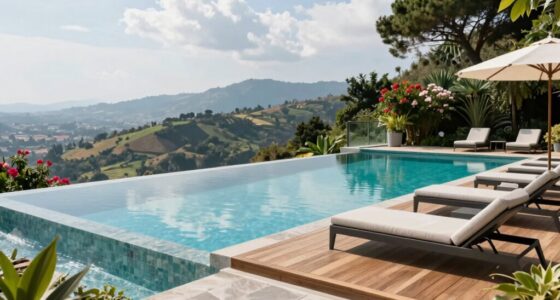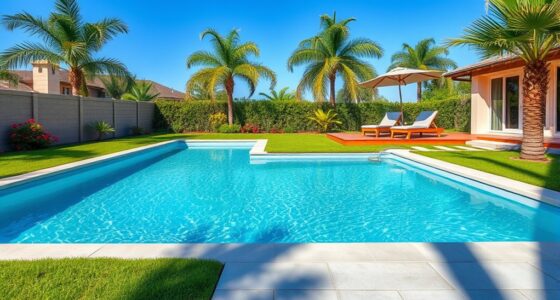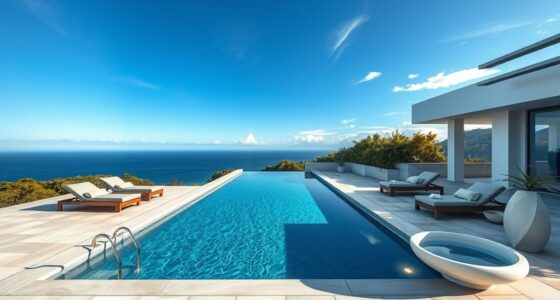
When planning sun and shade around your pool, start by positioning loungers and seating in sunny spots for perfect sunbathing. Use trees, pergolas, or umbrellas to create shaded areas for relaxing and cooling off. Consider natural drought-resistant plants to add greenery and natural shade, while adjustable shade sails or umbrellas offer flexible coverage. Combining natural and artificial shade creates a comfortable environment and enhances your outdoor space’s beauty—keep exploring for more ideas to perfect your poolside retreat.

Get pool and patio gear delivered free — and shop member deals
- Fast, free delivery on millions of items
- Access to Prime Big Deal Days deals on October 6–7
- Prime Video, Amazon Music and more included
Key Takeaways
- Position outdoor furniture in sunny areas for sunbathing and shaded spots under trees, pergolas, or umbrellas for relief.
- Use drought-resistant plants to create natural shade zones and windbreaks, enhancing comfort and eco-friendliness.
- Incorporate adjustable shade options like umbrellas and shade sails for flexible sun control throughout the day.
- Group drought-resistant plants strategically to provide visual interest and natural, eco-friendly shaded areas.
- Plan the layout considering sun paths to optimize sun exposure and shade coverage for different times of the day.
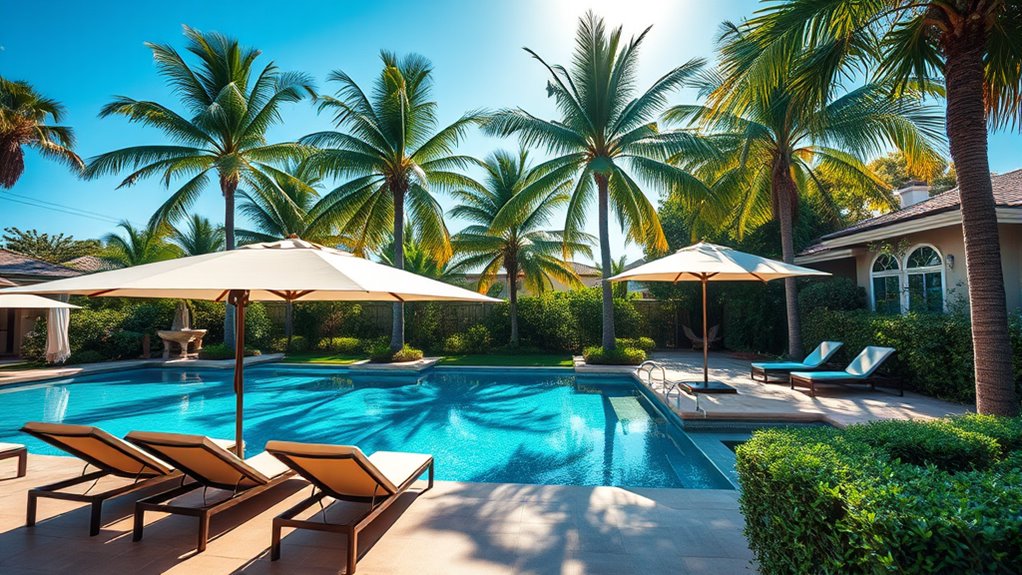
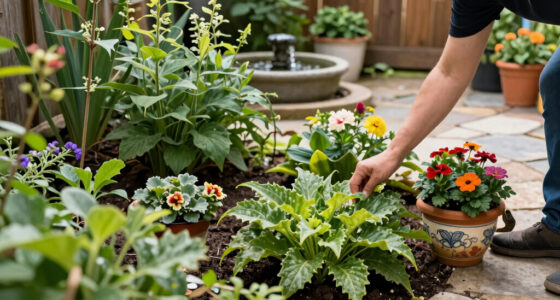
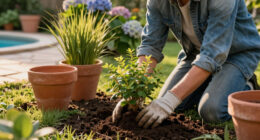
Have you ever wondered how to create the perfect balance of sun and shade around your pool? Achieving this harmony isn’t just about aesthetics; it’s about comfort, functionality, and sustainability. Start by considering the placement of drought-resistant plants, which can thrive in your landscape without demanding constant watering. These plants, such as succulents, ornamental grasses, or lavender, can be strategically positioned to provide natural shade and visual interest. They also help reduce water consumption, making your pool area more eco-friendly. When planning your landscape, think about grouping these drought-resistant plants in specific zones, creating natural barriers that cast dappled shade and soften the overall environment. This way, you can enjoy shaded spots without relying solely on man-made structures.
Strategically place drought-resistant plants to create natural, eco-friendly shade around your pool area.
Next, focus on outdoor furniture placement. Your furniture should support both relaxation and practicality, so position loungers and chairs in areas that catch the sun for those who want to soak up the rays. Conversely, place shaded seating under trees, pergolas, or umbrellas to offer refuge from direct sunlight during the hottest parts of the day. When arranging your outdoor furniture, consider the flow of sunlight throughout the day, ensuring that you have comfortable shaded spots available at all times. Use natural elements like drought-resistant plants as part of your furniture layout, creating cozy corners that blend seamlessly into the landscape. This not only enhances the visual appeal but also provides functional shaded retreats where you can relax without the risk of sunburn or overheating. Additionally, incorporating anti-aging effects like hyaluronic acid in shaded areas can help maintain skin health while you enjoy the outdoors.
In addition to natural shade and plant placement, incorporate adjustable features like umbrellas or shade sails, which give you control over sun exposure. Position these portable shades near your outdoor furniture so you can easily move them as the sun shifts. This flexibility allows you to enjoy the warmth of the sun when desired and retreat into shade when needed. Combining natural elements with movable shade options creates a dynamic environment that adapts to your needs and the changing sun patterns. Keep in mind that the placement of drought-resistant plants can also serve as windbreaks, offering additional comfort by reducing wind chill and creating a more inviting area for lounging.
Ultimately, planning sun and shade around your pool involves thoughtful placement of drought-resistant plants, strategic outdoor furniture positioning, and flexible shading options. This approach ensures you’ll have a beautiful, functional poolside space that’s comfortable year-round, eco-friendly, and tailored to your lifestyle. When you carefully consider these elements, you’ll create an outdoor oasis that’s perfect for relaxing, entertaining, and enjoying the sun without sacrificing comfort.
Frequently Asked Questions
How Does Seasonal Sun Movement Affect Shade Planning?
Seasonal sun movement notably impacts shade planning by altering solar angles throughout the year. As the sun’s position changes, shade duration varies, affecting how long shaded areas receive relief from direct sunlight. You’ll want to take these shifts into account to optimize shade structures, ensuring they provide adequate cover during peak sunlight periods in summer and allow more sunlight in winter. Proper planning helps create a comfortable, functional outdoor space year-round.
What Plants Provide Natural Shade Without Obstructing Pool Access?
You can choose trees with a broad canopy to provide natural shade without guaranteeing access to your pool. Consider fast-growing trees like live oaks or maples that offer ample shade, or use vine-covered trellises to create flexible shade solutions. These options allow you to enjoy the coolness of natural shade while keeping pathways and pool access open. Strategically placing these plants ensures comfort without sacrificing convenience or style.
How Can I Balance Sun Exposure for Pool Heating and Shade?
Did you know that just 30% shade can reduce pool water evaporation by up to 70%? To balance sun exposure for heating and shade, position poolside furniture strategically to maximize sunlight during cooler mornings and shade during peak heat. Incorporate outdoor lighting under shaded areas for ambiance. Use adjustable umbrellas or pergolas to fine-tune sun and shade, ensuring a comfortable, energy-efficient pool environment year-round.
What Materials Are Best for Durable, Shaded Pool Areas?
You should choose durable materials like teak, aluminum, or resin for your shaded pool areas, as they withstand weather and wear. Incorporate sturdy outdoor furniture with these materials for comfort and longevity. Add well-placed poolside lighting to enhance safety and ambiance. These choices ensure your shaded space remains inviting and resilient, providing a perfect retreat for relaxing and entertaining, all while withstanding the elements over time.
How to Incorporate Privacy Screening With Sun and Shade Planning?
You can incorporate privacy screens by strategically placing tall, dense plants or installing decorative fencing that complements your sun and shade setup. Use planting strategies like evergreen shrubs or fast-growing trees to create year-round privacy, while allowing sunlight to filter through at specific times. Position screens thoughtfully to block neighboring views without obstructing your desired sunlight, ensuring a cozy, private pool area that balances shade and openness perfectly.
Conclusion
Now that you know how to plan sun and shade around your pool, you’re ready to create a perfect outdoor oasis. Think about how the right balance of sunlight and shelter can make your space more enjoyable and functional. Will you prioritize sunny lounging spots or shady retreats? With some thoughtful planning, you’ll craft a backyard that’s ideal for relaxing, entertaining, and soaking up every sunny day—aren’t those backyard dreams worth making real?
Fall Picks
fall essentials
As an affiliate, we earn on qualifying purchases.