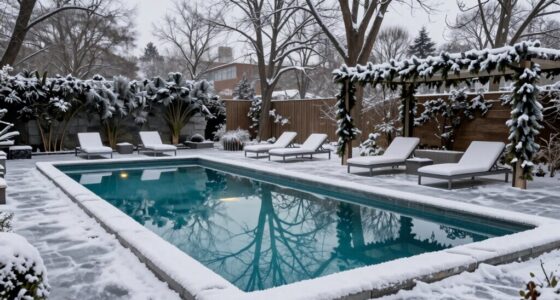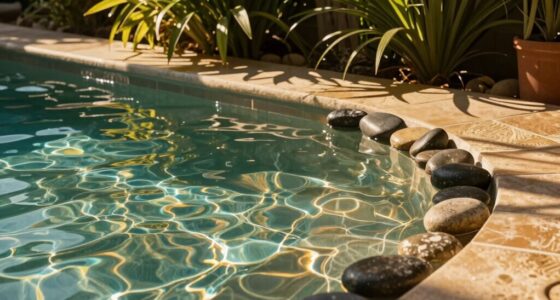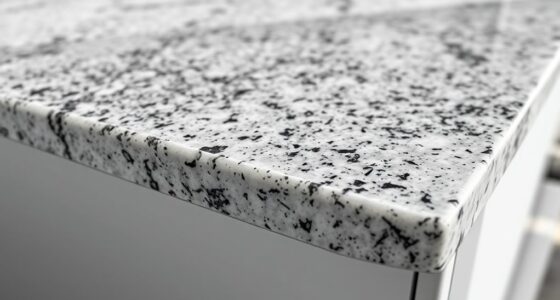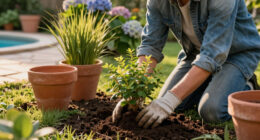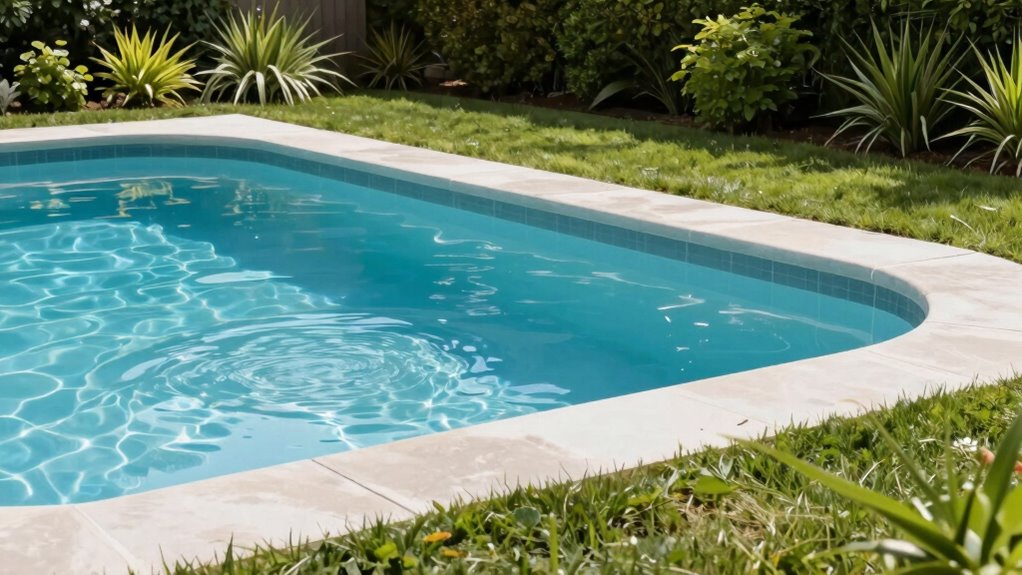

To reduce friction between your pool design and yard maintenance, you should choose natural, low-maintenance landscaping that blends with the pool area. Use durable, weather-resistant materials like permeable pavers or textured concrete for pathways and surfaces. Plan your layout to keep debris away from the pool and guarantee easy access for cleaning. Incorporating these strategies creates a seamless, manageable space. Keep exploring to discover how these tips can transform your yard and pool area effortlessly.

Get pool and patio gear delivered free — and shop member deals
- Fast, free delivery on millions of items
- Access to Prime Big Deal Days deals on October 6–7
- Prime Video, Amazon Music and more included
Key Takeaways
- Integrate natural landscape features to minimize clearing and reduce debris accumulation near the pool area.
- Use durable, low-maintenance materials that resist weathering and simplify cleaning routines.
- Design pathways and access points that facilitate easy maintenance tasks like skimming and filter cleaning.
- Incorporate effective drainage and erosion control to prevent dirt and debris from entering the pool.
- Plan the layout to position the pool away from garden beds and lawn areas to reduce debris and ease upkeep.
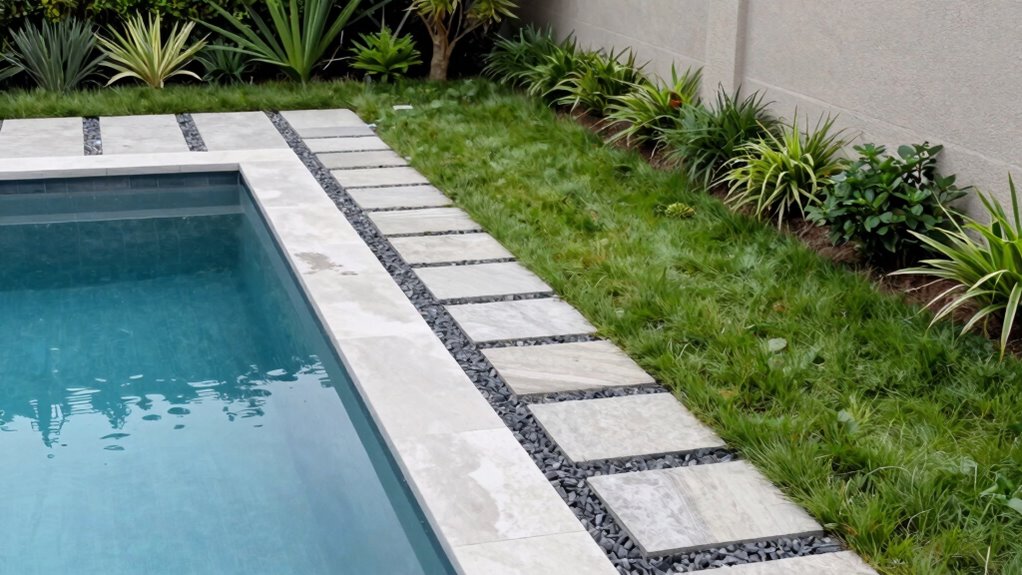
Designing your pool and maintaining your yard can sometimes lead to conflict, especially when choices in one area impact the other. To reduce friction, you need to focus on how well your pool integrates with your existing landscape. Landscaping integration isn’t just about aesthetics; it’s about creating a seamless flow between the pool area and the rest of your yard. When planning, consider the natural features of your space—trees, shrubs, slopes—and design around them. For example, placing the pool where it complements existing plant life can minimize the need for extensive clearing or reshaping, which often complicates ongoing maintenance.
Integrate your pool seamlessly with your landscape to simplify maintenance and enhance your yard’s natural beauty.
Material selection plays a critical role in smooth yard maintenance. You want durable, low-maintenance materials that withstand weather and wear but also blend aesthetically with your landscape. Opt for permeable surfaces around the pool, like pavers or textured concrete, which are easy to clean and prevent water runoff issues. Avoid materials that trap debris or require frequent sealing, as they can become maintenance headaches. Selecting non-slip, weather-resistant finishes can also enhance safety and reduce the effort needed for upkeep.
When designing, think about the proximity of the pool to your garden beds and lawn areas. A well-planned layout minimizes the need for constant trimming or debris cleanup. Incorporate features like built-in planters or natural barriers—such as shrub borders—that act as buffers, reducing debris that can end up in the water. Additionally, consider how your yard’s grading affects pool usability and maintenance. Proper slope and drainage solutions can prevent water pooling and soil erosion, which can cause dirt and leaves to enter the pool and increase cleaning efforts. Incorporating proper grading techniques can significantly improve overall maintenance efficiency. Planning your landscape with erosion control in mind can help maintain a clean, safe pool environment over time.
Another way to reduce friction is to plan for easy access points and pathways. Creating clear, unobstructed routes around the pool area makes maintenance tasks like cleaning filters or skimming the water more straightforward. Use materials that resist staining and are easy to sweep or hose down, saving time and effort.
Lastly, think long-term. Choose landscaping elements and materials that grow and age gracefully, requiring minimal intervention. Regularly assess your yard’s design to ensure it continues to support your pool’s maintenance needs. When you approach your yard and pool as a cohesive system—balancing landscaping integration with practical material choices—you’ll find it much easier to enjoy your outdoor space without constant conflict between design and upkeep. Incorporating vetted deals on durable, low-maintenance pool materials can further streamline this process and save costs over time.
As an affiliate, we earn on qualifying purchases.
Frequently Asked Questions
How Can I Prevent Roots From Damaging My Pool Structure?
To prevent tree roots from damaging your pool, plant trees away from the pool area, ideally at least 10-15 feet, to avoid root intrusion. Regularly check soil stability around your yard, especially near existing trees, and consider installing root barriers underground. This creates a physical barrier that directs roots away from your pool, helping maintain soil stability and preventing roots from causing structural damage.
What Materials Reduce Friction Between Pool Surface and Yard Ground?
To reduce friction between your pool surface and yard ground, opt for smooth surface coatings like epoxy or specialized pool paints, which create a slick, even layer that minimizes resistance. Additionally, install ground padding or foam mats underneath the pool to provide a cushioned barrier, preventing direct contact and reducing surface wear. These materials help guarantee easier maintenance, protect your pool’s integrity, and keep your yard looking neat.
How Often Should I Inspect for Potential Yard-Pool Conflicts?
You should inspect for potential yard-pool conflicts at least once a month to guarantee pool safety and ideal water circulation. Regular checks help identify issues like uneven ground, overgrown vegetation, or debris that could interfere with water flow or create hazards. Staying proactive prevents costly repairs, maintains safety, and keeps your pool in top condition. Don’t wait for problems—consistent inspections safeguard your investment and enhance your backyard experience.
Are There Specific Landscaping Tips to Minimize Pool Maintenance?
You can minimize pool maintenance by choosing low-maintenance plants that don’t shed much debris, like succulents or ornamental grasses. Incorporate landscape lighting to highlight key areas, reducing the need for frequent upkeep. Arrange outdoor furniture away from the pool’s edge to prevent debris from falling in and to make cleaning easier. Regularly trimming plants and using mulch can also reduce debris, keeping your pool cleaner longer and easing overall maintenance efforts.
What Are the Best Ways to Manage Runoff Near the Pool Area?
Oh, managing runoff near your pool? Just ignore water drainage and soil erosion, right? Nope! You should install proper drainage systems, like French drains or swales, to direct water away. Planting ground cover helps reduce soil erosion, and grading your yard guarantees water flows naturally away from the pool. Regularly check gutters and add barriers if needed. These steps keep your pool area dry, safe, and hassle-free.
weather-resistant outdoor pathway materials
As an affiliate, we earn on qualifying purchases.
As an affiliate, we earn on qualifying purchases.
Conclusion
To keep your pool area enjoyable and low-maintenance, focus on thoughtful design choices that minimize friction with yard upkeep. Incorporate durable, low-maintenance materials and plan for easy access to cleaning zones. Did you know that properly designed pools can reduce weekly maintenance time by up to 30%? By prioritizing seamless integration between your pool and yard, you’ll save time, money, and stress—making your outdoor space more relaxing and enjoyable all year round.
low-maintenance landscaping for pools
As an affiliate, we earn on qualifying purchases.
As an affiliate, we earn on qualifying purchases.
non-slip textured concrete for patios
As an affiliate, we earn on qualifying purchases.
As an affiliate, we earn on qualifying purchases.
Fall Picks
fall essentials
As an affiliate, we earn on qualifying purchases.