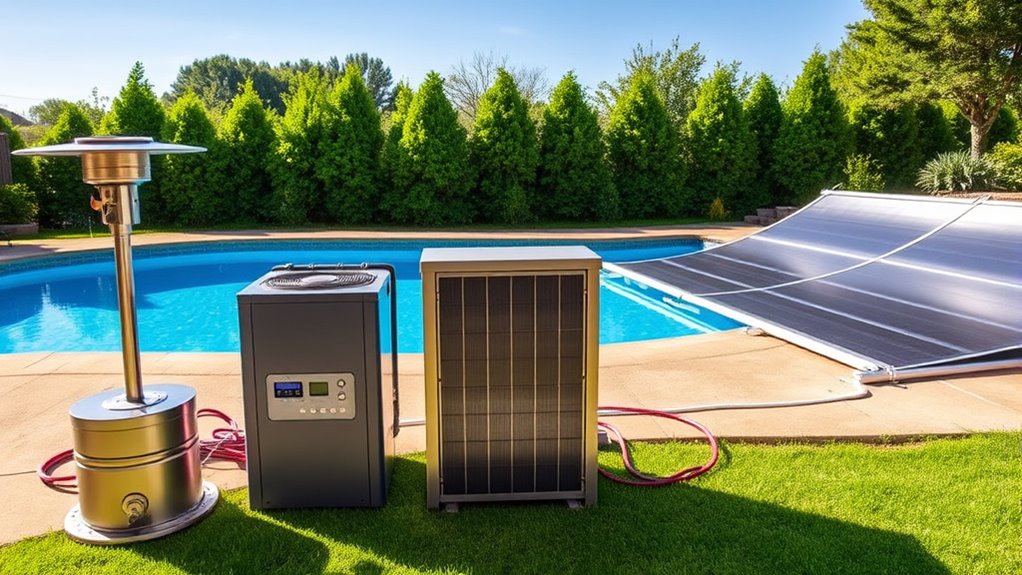

To choose the right pool heating system, consider your climate, budget, and energy goals. Gas heaters warm pools quickly and work well in colder areas, while electric systems offer precise control and easy installation. Solar solutions are cost-effective and eco-friendly in sunny regions, especially for shorter swimming seasons. Balancing upfront costs with long-term savings is key—keep in mind that the best choice aligns with your specific needs and circumstances. Exploring options further can help you find the perfect fit.
Key Takeaways
- Consider climate and seasonal temperatures to select a system that heats efficiently and suits your swimming season.
- Evaluate upfront costs versus long-term operational expenses to find a cost-effective, sustainable option.
- Gas systems heat quickly and work well in cooler climates, while solar is ideal for sunny, short-season areas.
- Electric systems offer precise temperature control and easy installation, suitable for moderate climates.
- Prioritize energy efficiency and environmental impact to choose a system that minimizes ongoing costs and ecological footprint.

When selecting a pool heating system, it’s vital to take into account your climate, budget, and how often you plan to swim. These factors directly influence which option will work best for you, especially when considering aspects like energy efficiency and installation costs. If you live in a cooler climate, you’ll want a system that heats quickly and maintains warmth efficiently, but if your swimming season is short, a more cost-effective or solar solution might suffice. Your budget will also play a substantial role, as some systems require higher upfront investment but offer long-term savings through lower operating costs, while others are cheaper to install but might be more expensive to run over time. Additionally, evaluating the energy efficiency of each system can help reduce ongoing expenses and minimize environmental impact.
Frequently Asked Questions
Which Pool Heating System Is Most Cost-Effective Long-Term?
You’ll find that solar pool heating is the most cost-effective long-term option, especially if you have good pool insulation. It uses free sunlight, reducing energy bills over time. Plus, many areas offer energy rebates for solar systems, making them even more affordable initially. Electric heaters can be efficient but cost more to operate, while gas heaters have higher ongoing expenses, so solar with proper insulation usually wins for long-term savings.
How Do Climate Conditions Influence Heating System Efficiency?
Climate impact greatly influences your pool heating system’s efficiency. Cold, cloudy, or windy weather lowers solar and electric system performance, making gas a more reliable option in such conditions. Conversely, warm, sunny climates boost solar efficiency and reduce energy costs. Understanding these efficiency factors helps you choose a system that aligns with your climate, ensuring comfortable swimming seasons and ideal energy use year-round.
Are There Safety Concerns With Electric or Gas Pool Heaters?
Yes, there are safety concerns with electric and gas pool heaters. Electric heaters pose electrical hazards if not properly installed or maintained, risking shocks or fires. Gas heaters can leak carbon monoxide or natural gas, leading to poisoning or explosions. Always guarantee professional installation, regular inspections, and proper ventilation to minimize these risks and keep your swimming environment safe.
What Maintenance Is Required for Solar Pool Heating Systems?
You should regularly maintain your solar pool heating system by inspecting the solar panels for durability issues and cleaning them to maximize efficiency. Keep an eye out for debris, dirt, or algae buildup that can block sunlight. It’s also wise to check the piping and connections for leaks or damage. Proper upkeep ensures your system functions at its best, extending its lifespan and keeping your pool comfortably warm all season.
Can Multiple Heating Systems Be Combined for Better Efficiency?
Think of your pool’s heating as a symphony, where each instrument plays a crucial role. Yes, you can combine multiple systems into a hybrid setup, creating harmony and maximizing energy savings. By blending gas, electric, and solar options, you optimize efficiency and guarantee consistent warmth. This approach lets you adapt to weather changes and usage patterns, making your pool both eco-friendly and cost-effective.
Conclusion
Ultimately, choosing the right pool heating system depends on your budget, climate, and how often you swim. Whether you opt for gas, electric, or solar, make sure it fits your needs and keeps your pool inviting year-round. Remember, you don’t want to put all your eggs in one basket, so consider all options carefully. With the right choice, you’ll be swimming in comfort without breaking the bank. Happy swimming!