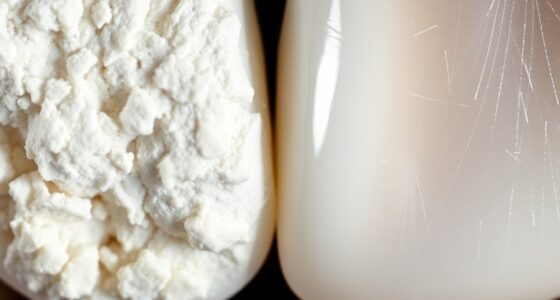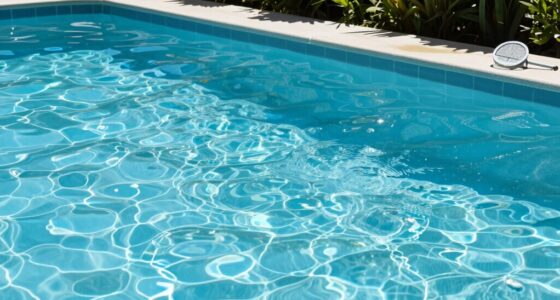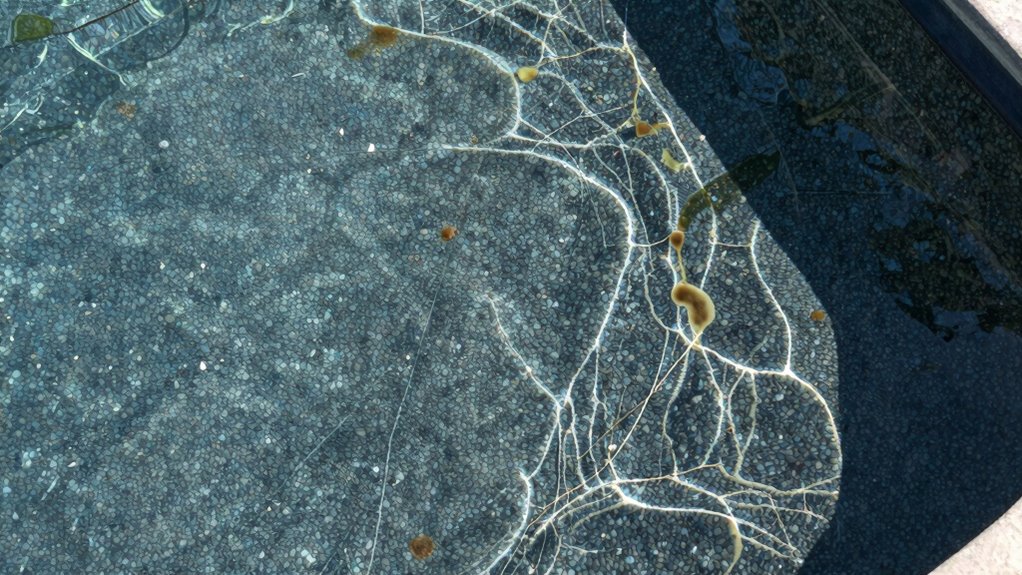

You’ll notice that rough or textured pool finishes trap dirt, algae, and mineral deposits more easily, making them look worn faster. These surfaces are also more prone to surface erosion, which creates tiny crevices where debris settles and accelerates wear. Smooth finishes, on the other hand, resist stains, dirt, and damage better, aging more gracefully over time. To discover what factors truly affect how your pool looks and holds up, keep exploring these details.

Get pool and patio gear delivered free with Prime
- Fast, free delivery on millions of items
- Prime Video, Amazon Music and more included
- Member-only deals all year
Key Takeaways
- Rough or textured finishes trap dirt, algae, and mineral deposits more easily than smooth surfaces.
- Surface erosion creates crevices where debris can settle, increasing visible dirt and wear.
- Finishes prone to chemical reactions degrade faster, making stains and discoloration more apparent.
- Smoother finishes resist staining and are easier to clean, reducing dirt accumulation over time.
- Surface aging and erosion expose imperfections, accelerating the appearance of wear and dirt visibility.

When choosing a pool finish, it’s important to understand that not all surfaces age or stain the same way. Some finishes are more prone to showing dirt, algae, and wear because of how they react chemically over time and their surface textures. For example, some finishes can develop discoloration or etching due to ongoing chemical interactions, making dirt and algae more noticeable. A surface that’s prone to chemical reactions that weaken its integrity will be more susceptible to staining and wear. That’s why choosing a finish with stable chemical properties can help your pool maintain its aesthetic longer and resist stains more effectively. Additionally, surface erosion** can accelerate the deterioration of rougher finishes, further increasing their susceptibility to visible wear and dirt buildup. Surface textures also impact how dirt and debris accumulate and how easily you can clean your pool. Smooth finishes tend to be less hospitable to dirt and algae because their slick surfaces don’t allow particles to cling easily. Conversely, rough or textured surfaces can trap dirt, algae, and mineral deposits, making cleaning more difficult and increasing the likelihood of visible wear over time. For example, a pebble or aggregate finish offers a textured surface that can hide minor imperfections but may also trap debris, requiring more frequent maintenance. A plaster finish, which is typically smoother, might show stains and scratches more readily but can be easier to clean if maintained properly. Furthermore, surface textures influence how the finish ages. Rougher surfaces are more susceptible to gradual erosion, which accelerates the appearance of wear and tear. This erosion can create tiny crevices where dirt and algae can settle, making your pool look worn out and dirty faster. On the other hand, smoother finishes tend to age more gracefully, showing fewer signs of wear and staining** over time.
smooth pool finish cleaning tools
As an affiliate, we earn on qualifying purchases.
As an affiliate, we earn on qualifying purchases.
Frequently Asked Questions
How Can I Prevent My Pool Finish From Showing Dirt?
To prevent your pool finish from showing dirt, regularly clean it with eco-friendly cleaning products that avoid harsh chemicals. Brush the surface weekly to prevent algae and stain buildup, and maintain proper water chemistry to reduce stains. Using a pool stain prevention product can also help safeguard the finish. Consistent maintenance keeps your pool looking fresh, and eco-friendly cleaning ensures you’re protecting both your pool and the environment.
Are Certain Pool Finishes More Durable Than Others?
Certain pool finishes are more durable than others. You’ll find that pebble and aggregate finishes, with their textured, tough textures, tend to resist wear better than smoother options. Pool color also plays a role—darker shades hide dirt and damage longer. So, when selecting a finish, consider the durability of the texture and the tint, as these factors can profoundly influence how well your pool withstands time and tarnish.
How Often Should I Clean My Pool to Maintain Its Finish?
You should clean your pool at least once a week to maintain its finish and prevent dirt from settling. Regular pool maintenance, including skimming, brushing, and vacuuming, helps keep the surface looking fresh and reduces wear. If you notice stains or rough patches, consider surface restoration to preserve the finish longer. Consistent cleaning minimizes dirt buildup, prolongs the lifespan of your pool surface, and keeps your swimming environment inviting.
Can Specific Chemicals Damage Certain Types of Pool Finishes?
Yes, certain chemicals can damage specific pool finishes. Harsh chemicals like muriatic acid or chlorine overload can trigger chemical reactions that cause finish discoloration and deterioration. Always follow manufacturer guidelines for your pool finish type, and avoid using incompatible chemicals. Regularly testing and balancing your water helps prevent damage, keeping your pool’s surface looking its best and extending its lifespan.
What Are the Signs That a Pool Finish Needs Resurfacing?
You’ll notice your pool finish needs resurfacing if the pool surface develops cracks, rough patches, or significant discoloration. Staining prevention becomes tougher as the finish deteriorates, leading to visible stains and algae buildup. If you see uneven textures or the color fading, it’s a sign that resurfacing is needed to restore your pool’s appearance and guarantee effective staining prevention. Addressing this early helps maintain your pool’s beauty and longevity.
pool surface stain prevention products
As an affiliate, we earn on qualifying purchases.
As an affiliate, we earn on qualifying purchases.
Conclusion
So, next time you choose a pool finish, remember it’s not just about looks—it’s about how it handles life’s inevitable dirt and wear. Think of your pool as a canvas; some finishes act like a delicate watercolor, showing every smudge, while others are more like a resilient oil painting, hiding the flaws. Choosing wisely means enjoying a beautiful, durable pool that stands the test of time—and that’s a masterpiece you’ll love swimming in.
As an affiliate, we earn on qualifying purchases.
textured vs smooth pool surface options
As an affiliate, we earn on qualifying purchases.
As an affiliate, we earn on qualifying purchases.
Halloween Picks
halloween
As an affiliate, we earn on qualifying purchases.