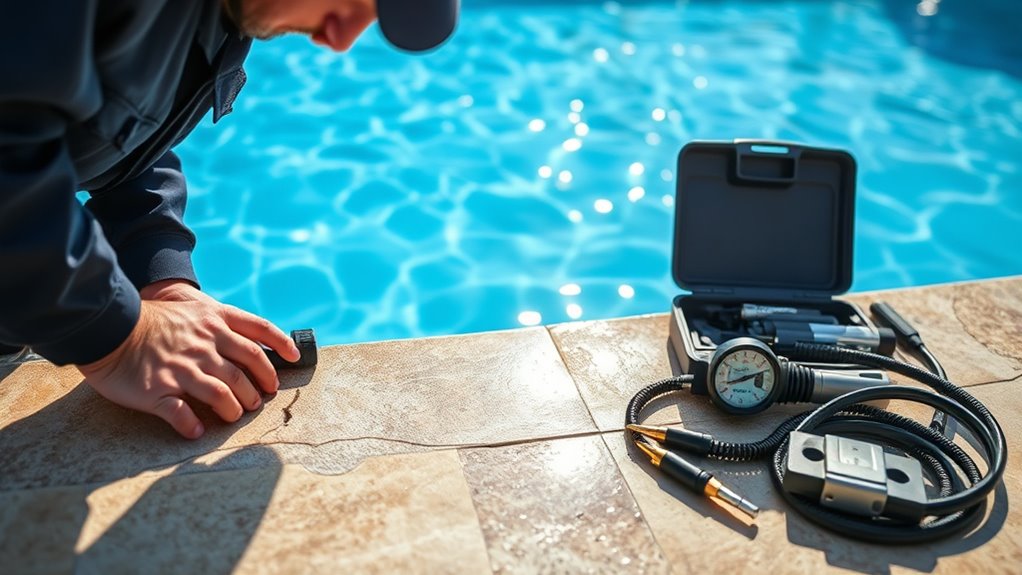

To identify and fix pool leaks, start with a simple bucket test to see if water loss exceeds evaporation. Inspect for visible signs like cracks, damaged seals, or worn fittings, and listen for hissing sounds near equipment. Use dye testing for hidden leaks and consider professional tools for underground issues. Small cracks can often be repaired with waterproof patches, but larger problems may require expert assistance. Keep exploring to learn more about effective leak prevention and repair techniques.

Get pool and patio gear delivered free — and shop member deals
- Fast, free delivery on millions of items
- Access to Prime Big Deal Days deals on October 6–7
- Prime Video, Amazon Music and more included
Key Takeaways
- Conduct a bucket test to determine if water loss exceeds evaporation, indicating a leak.
- Perform visual inspections for cracks, damaged tiles, or worn seals around fittings and jets.
- Use dye testing near suspected areas to pinpoint leak locations effectively.
- Utilize electronic listening devices or pressure tests for detecting underground or hidden leaks.
- Repair small cracks with waterproof patches and replace faulty fittings promptly to prevent further damage.
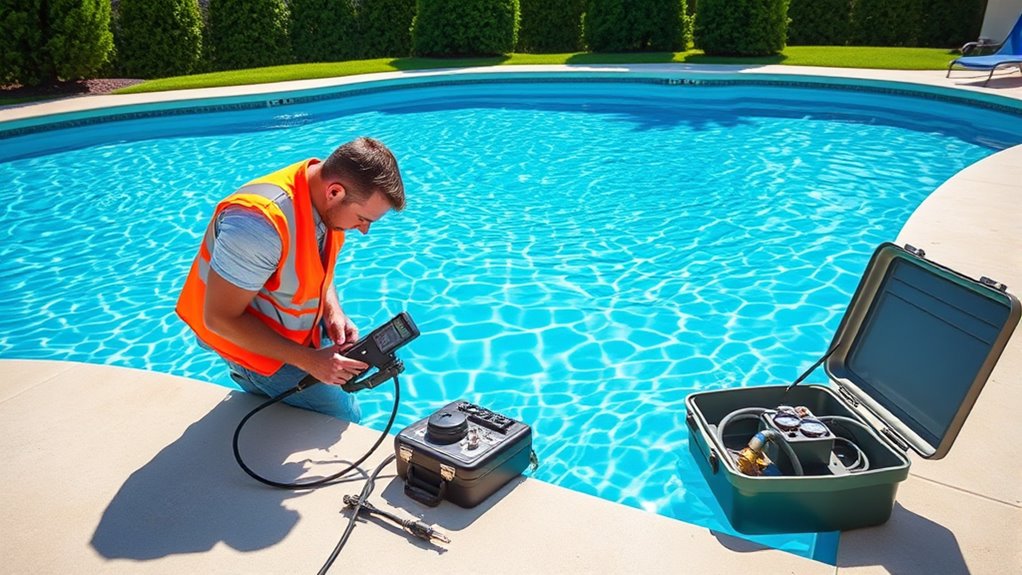
Pool leaks can be frustrating because they often go unnoticed until you see a significant drop in water level or an increase in your utility bills. When this happens, it’s essential to act quickly to identify and fix the problem. The first step is understanding that proper pool maintenance plays a crucial role in preventing leaks and catching them early. Regularly inspecting your pool’s equipment, lining, and surrounding area can help you spot small issues before they turn into costly repairs. But when you do notice a water loss, you need effective leak detection techniques to locate the source accurately.
Early detection of pool leaks saves time and money through regular inspections and prompt repairs.
Start by performing the simple bucket test. Fill a bucket with water and place it on the pool step or somewhere similar, ensuring the water level inside the bucket matches the water level outside. Mark the water levels on both the bucket and the pool. If the water in the pool drops considerably faster than in the bucket, it indicates a leak in the pool shell or plumbing. This quick test helps you determine whether the leak is ongoing or if evaporation might be be the cause. If the test suggests a leak, then you should consider more targeted leak detection techniques.
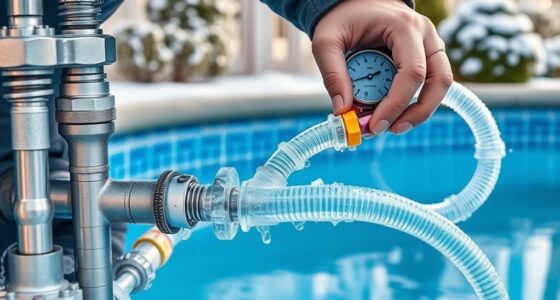
One common method involves listening carefully for sounds of escaping water, especially near fittings, jets, and the skimmer. Sometimes, a visual inspection can reveal cracks, damaged tiles, or worn-out seals that are contributing to the leak. For more precise detection, you might need to use dye testing—adding a water-soluble dye around suspected areas. If the dye is drawn toward a crack or hole, you’ve pinpointed the leak. Professional leak detection services often use electronic listening devices or pressure testing to find leaks hidden beneath the surface or within underground plumbing. Additionally, understanding the importance of regular pool maintenance**** can help prevent leaks and catch issues early, saving time and money.
Once you locate the leak, fixing it depends on its cause and severity. Small cracks or damaged seals can often be repaired with waterproof patching or replacing faulty fittings. Larger issues, like a ruptured line or extensive shell damage, might require professional intervention. Remember, the key to effective leak repair is not just fixing the problem but also maintaining your pool properly afterward. Regular pool maintenance routines, including checking equipment and cleaning filters, help prevent future leaks and prolong your pool’s lifespan.
As an affiliate, we earn on qualifying purchases.
Frequently Asked Questions
How Often Should I Check for Pool Leaks?
You should check for pool leaks during seasonal maintenance, ideally once a month, especially if you notice water levels dropping unexpectedly. Regular water level monitoring helps catch leaks early, saving you money and preventing damage. If you see a consistent decrease despite rain or evaporation, it’s time to investigate further. Staying proactive with these checks guarantees your pool stays in top condition and leaks are addressed promptly.
Can Algae Growth Indicate a Leak?
Like a garden overrun with weeds, algae growth can hint at leak signs, but it isn’t a definitive sign of a leak itself. If you notice algae thriving in spots where water levels are dropping unexpectedly, it could point to a leak. Keep an eye out for persistent algae in certain areas, as it might be your pool’s way of signaling trouble beneath the surface, prompting further inspection.
Are DIY Leak Repairs Effective Long-Term?
DIY leak repairs can be effective long-term if you properly diagnose the issue through chemical testing and thorough pool maintenance. While minor leaks might be fixed with simple patching or sealing, larger or complex leaks often require professional intervention to guarantee lasting results. Regular pool maintenance, including monitoring water levels and keeping chemicals balanced, helps prevent future leaks and maintains your pool’s integrity over time.
What Tools Are Best for Detecting Leaks?
Did you know that about 70% of pool leaks are hidden and hard to spot? To detect leaks effectively, you’ll want to use tools like pool dye testing and pressure testing. Pool dye testing is quick and reveals leaks by adding dye near suspected areas, while pressure testing helps identify leaks in pipes or fittings by monitoring pressure changes. These tools help you pinpoint exactly where the problem lies, saving time and effort.
How Does Weather Affect Pool Leak Detection?
Weather considerably impacts pool leak detection. Cold or windy days can cause evaporation, mimicking leaks, while heat from solar heating or a pool cover might reduce evaporation, making leaks easier to spot. When testing, choose calm, moderate weather to avoid false alarms. Using a pool cover or solar heating can help control evaporation, giving you a clearer view of actual leaks and ensuring accurate detection.
As an affiliate, we earn on qualifying purchases.
Conclusion
A pool leak can waste up to 1,000 gallons of water daily, costing you money and energy. By regularly inspecting your pool for signs of leaks and addressing issues promptly, you save water, reduce expenses, and extend your pool’s lifespan. Remember, catching leaks early can prevent costly repairs down the line. Stay vigilant and enjoy your pool without worry—keeping it in top shape means more fun and less stress for you!
electronic leak detector for pools
As an affiliate, we earn on qualifying purchases.
As an affiliate, we earn on qualifying purchases.
As an affiliate, we earn on qualifying purchases.
Fall Picks
fall essentials
As an affiliate, we earn on qualifying purchases.