To shock your pool safely and effectively, first test your chlorine levels and make certain they aren’t already high. Dissolve the shock treatment in a bucket of water, then pour it evenly around the pool perimeter, preferably at dusk. Keep the pump running and wait at least 8 to 12 hours before swimming again. Monitoring chlorine levels afterward helps maintain proper balance. For detailed steps and tips on maintaining your pool, keep exploring further.

Get pool and patio gear delivered free — and shop member deals
- Fast, free delivery on millions of items
- Access to Prime Big Deal Days deals on October 6–7
- Prime Video, Amazon Music and more included
Key Takeaways
- Test chlorine levels before shocking and wait if they are already high to prevent over-chlorination.
- Dissolve shock chemicals in water and apply evenly around the pool perimeter, preferably at dusk or night.
- Run the pool pump during and after shocking to distribute chemicals and enhance water clarity with filters like HEPA.
- Wait at least 8-12 hours before swimming, and regularly test chlorine levels to ensure they are within 1-3 ppm.
- Maintain proper water balance and avoid adding other chemicals immediately after shocking for safe, effective sanitation.
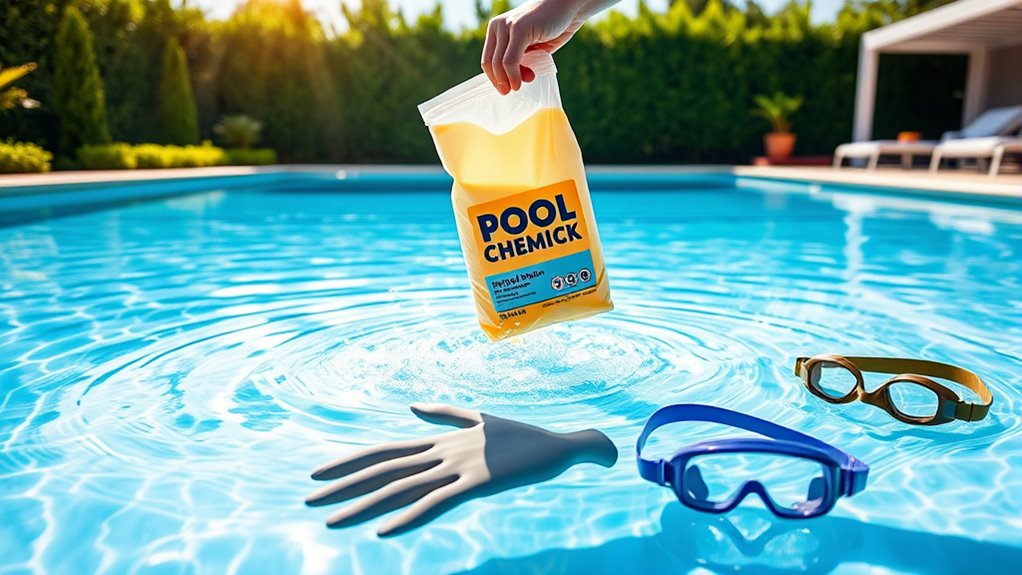
Shocking your pool is an essential step to keep the water clean and safe, but doing it improperly can cause more harm than good. The key to effective pool shocking is understanding how it impacts chlorine levels and overall pool sanitization. When you shock your pool, you’re adding a high dose of chlorine or a similar sanitizer to eliminate contaminants, bacteria, algae, and organic matter that regular chlorination might miss. Properly balancing chlorine levels after shocking is vital because too little won’t effectively sanitize, while too much can lead to skin irritation and cloudy water.
Proper pool shocking eliminates contaminants but requires careful chlorine balance to avoid harm.
Before you shock, test your pool’s current chlorine levels with a reliable test kit. If the chlorine is already high, you might need to wait until it drops before adding more shock. Typically, shocking raises chlorine levels significantly, often to 10 ppm or higher, which is necessary for thorough sanitization. After shocking, you want to maintain proper chlorine levels, usually between 1 and 3 ppm, to ensure ongoing sanitation without overexposure. Remember, the goal is to reach a level that destroys bacteria and algae without causing discomfort or damage to your pool equipment.
When choosing a shock treatment, opt for a product suited to your pool type—calcium hypochlorite or sodium dichlor are common options. Follow the manufacturer’s instructions carefully, as overdosing can lead to chlorine levels that are too high, potentially damaging your pool surfaces or causing skin irritation. Dissolve the shock in a bucket of water before pouring it evenly around the pool perimeter to prevent bleaching or staining. Run your pool pump during and after shocking to help distribute the chemical thoroughly throughout the water, ensuring consistent sanitization. Using a HEPA filter in your pool’s filtration system can enhance the removal of small particles and improve water clarity during the process.
Timing is also crucial. Shock your pool at dusk or night to avoid rapid chlorine degradation from sunlight, which can break down the sanitizer before it fully disinfects. Wait at least 8 to 12 hours before swimming again, giving the chlorine time to work and your levels to stabilize. Regular testing during this process helps you monitor chlorine levels and ensures the water remains safe and balanced.
Frequently Asked Questions
How Often Should I Shock My Pool During Peak Season?
During peak season, you should shock your pool about once a week to maintain proper pool chemistry. If you notice cloudy water, algae, or strong odors, you might need to shock more often. Always handle chemicals carefully, following instructions on the label for safe chemical handling. Regular shocking keeps your pool clean and safe, preventing bacteria growth and algae buildup, ensuring your swimming experience remains enjoyable and healthy.
Can I Swim Immediately After Shocking My Pool?
You should wait at least 24 hours after pool shock before swimming for essential swimming safety. Pool shock timing is vital to prevent skin or eye irritation and guarantee the chemicals have fully dissipated. Always test the water’s pH and chlorine levels before swimming, and follow the product’s instructions. This way, you can enjoy your pool safely without risking health issues from residual shock chemicals.
What Safety Gear Is Recommended When Shocking the Pool?
When shocking your pool, you should wear protective gloves and safety goggles to keep your skin and eyes safe from harsh chemicals. Protective gloves prevent skin irritation, while safety goggles shield your eyes from splashes and fumes. Always handle pool shock chemicals carefully, follow the instructions, and verify the area is well-ventilated. These safety gear essentials help you avoid accidents and enjoy a safe, clean swimming environment.
How Do I Store Pool Shock Chemicals Safely?
You should store pool shock chemicals in a cool, dry, well-ventilated area away from direct sunlight and moisture. Use a secure, clearly labeled container designed for chemical storage, and keep it out of reach of children and pets. Follow shock chemical safety guidelines, ensuring lids are tightly sealed after use. Avoid mixing shock chemicals with other substances, and never store them in food or drink containers to prevent accidental ingestion.
Can Shock Treatment Damage Pool Liners or Equipment?
Think of your pool like a delicate painting—shocking it improperly can cause damage. Shock treatment, if used correctly, won’t harm your pool liner integrity or equipment safety considerations. Overuse or high concentrations might lead to liner fading or corrosion, but following manufacturer instructions minimizes risks. When done properly, shock treatment keeps your pool sparkling without compromising its structure or equipment, much like a skilled artist preserves their masterpiece.
Conclusion
Shocking your pool is like giving it a fresh start, clearing away contaminants and restoring clarity. While it might seem intimidating, doing it safely guarantees you enjoy sparkling water without risks. Think of it as a delicate dance—balance and timing matter. When you follow proper steps, the process becomes seamless, transforming a murky mess into inviting, crystal-clear water. Remember, safety and effectiveness go hand in hand, making your pool a perfect oasis to relax and unwind.
Fall Picks
fall essentials
As an affiliate, we earn on qualifying purchases.