To keep your pool sparkling in summer, you need to regularly test and balance the chemicals, ensuring pH stays between 7.2 and 7.6 and chlorine levels remain between 1 and 3 ppm. Clean baskets and filter systems weekly, remove debris often, and monitor water levels to prevent circulation problems. Using a pool cover helps reduce debris and evaporation, making maintenance easier. If you want expert tips on staying ahead of the summer demand, keep exploring.

Get pool and patio gear delivered free — and shop member deals
- Fast, free delivery on millions of items
- Access to Prime Big Deal Days deals on October 6–7
- Prime Video, Amazon Music and more included
Key Takeaways
- Regularly test and adjust water chemistry to maintain proper pH (7.2-7.6) and chlorine (1-3 ppm) levels.
- Clean filters, skimmer baskets, and pool surfaces weekly to prevent debris buildup and algae growth.
- Monitor water levels and circulation to ensure consistent filtration and prevent equipment strain.
- Use pool covers when not in use to minimize debris, evaporation, and chemical demand.
- Conduct ongoing chemical balancing and equipment checks to sustain water clarity and ensure safety throughout summer.
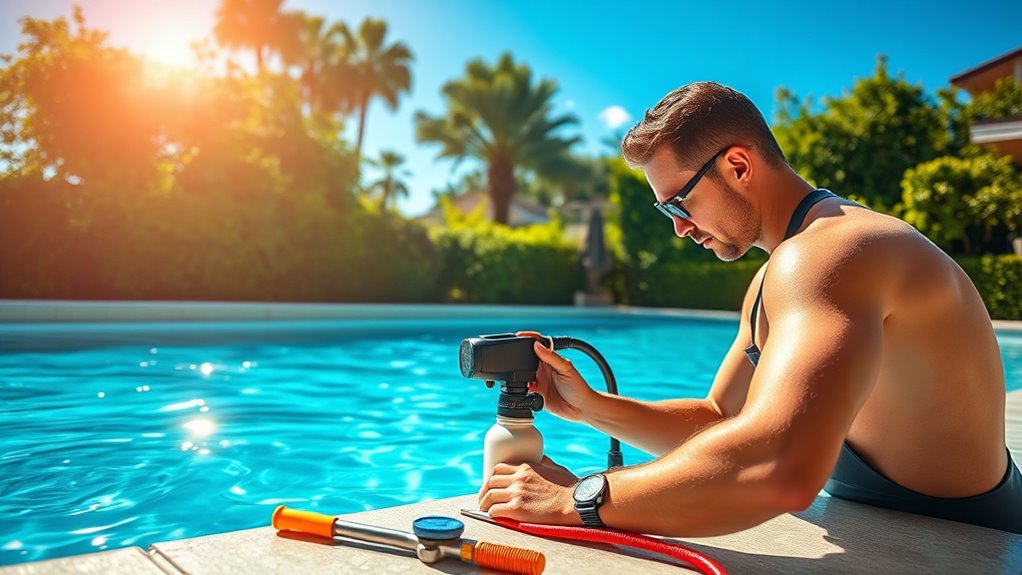
As the summer heat rises, staying hydrated is essential to enjoy rejuvenating dips all season long. But to truly make the most of your pool, you need to focus on proper maintenance. This begins with maintaining the pool chemical balance. When the chemicals are just right, your water stays clear, safe, and inviting. Test your water regularly using reliable test kits or strips, aiming for a pH level between 7.2 and 7.6. Adjust the pH if it’s too high or low, because imbalance can lead to cloudy water, algae growth, or skin irritation. Chlorine levels should also be monitored closely; keep them between 1 and 3 ppm to effectively kill bacteria and keep the water sanitized. When chlorine drops, add more or use stabilized chlorine tablets to maintain consistent disinfectant levels. Balancing chemicals isn’t a one-time task; it’s an ongoing process throughout the season to prevent issues before they start. Regular water testing helps detect imbalances early and ensures optimal chemical balance.
Maintain proper chemical balance for clear, safe, and inviting pool water all season long.
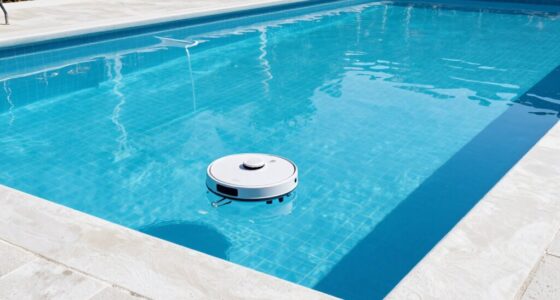
Alongside chemical balance, pool equipment care plays a critical role in summer maintenance. Your pump, filter, and skimmer work together to keep the water clean and circulating properly. Regularly inspect these components for debris, wear, or leaks. Clean the skimmer basket and pump strainer basket weekly to prevent clogs, which can strain your equipment and reduce circulation efficiency. Backwash or clean the filter according to the manufacturer’s instructions—this usually means backwashing a sand or DE filter or rinsing a cartridge filter. Proper equipment care ensures your pool remains crystal clear and reduces the risk of costly repairs down the line.
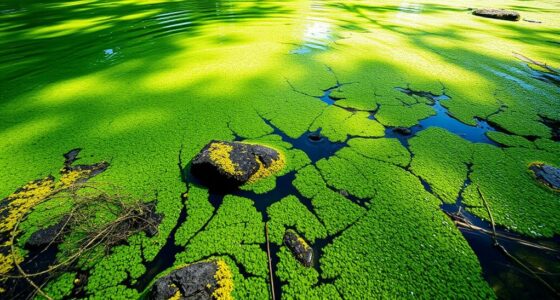
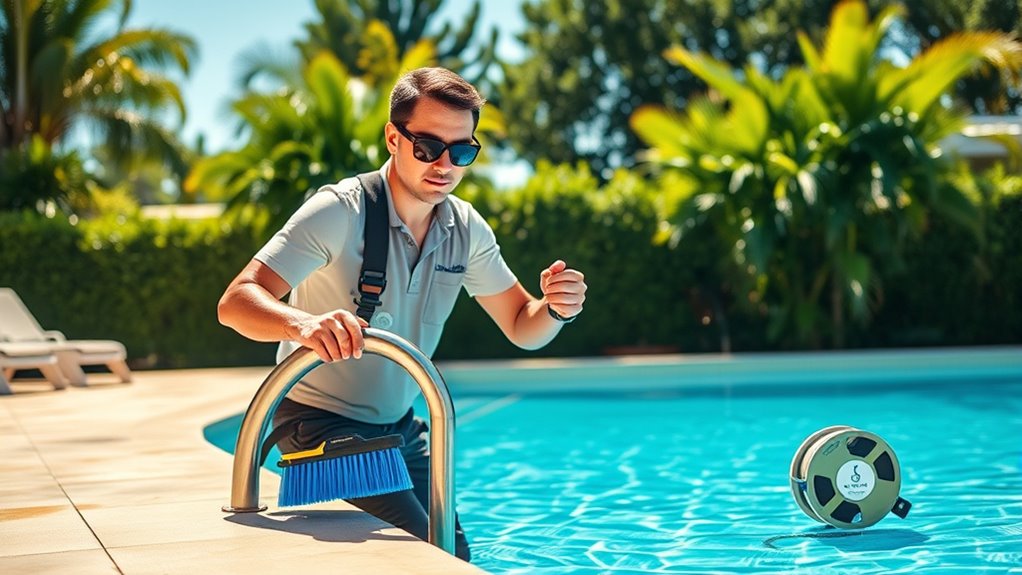
Don’t forget to check the water level often; it should be about halfway up the skimmer opening. If it drops below that, add water to maintain proper skimming and circulation. Also, keep an eye on the pool’s surface for algae or debris, removing leaves and bugs regularly to prevent contamination. Using a pool cover when the pool isn’t in use helps minimize debris accumulation and reduces water evaporation, which can concentrate chemicals and throw off balance. Always keep a pool brush on hand to scrub the walls and floor weekly, removing algae and preventing buildup that can cause staining or slippery surfaces.
In essence, summer pool maintenance is about consistent care. Balancing chemicals keeps your water safe and inviting, while attentive equipment care ensures your system runs smoothly. When you stay on top of these tasks, you’ll enjoy refreshing, crystal-clear water all season long without unexpected surprises. Proper maintenance not only enhances your swimming experience but also prolongs the lifespan of your pool equipment, making summer swimming enjoyable and worry-free.
As an affiliate, we earn on qualifying purchases.
Frequently Asked Questions
How Often Should I Test My Pool’s Water Chemistry?
You should test your pool water chemistry at least two to three times a week during the summer. Regular pool water testing helps you monitor pH, chlorine levels, and other chemicals, ensuring proper chemical balancing. If you notice issues like cloudy water or algae, test more frequently. Consistent testing prevents problems, keeps your water safe, and maintains a clean, inviting pool throughout the season.
What Are the Best Algae Prevention Methods?
To prevent algae growth, you should regularly maintain proper chemical balancing and use algaecides as needed. Some people worry about chemicals, but neglecting algae prevention leads to more costly and difficult cleanup later. Keep your pool’s pH and sanitizer levels steady, and apply algaecides weekly or after heavy use. This proactive approach guarantees algae doesn’t take hold, keeping your pool crystal clear and inviting all summer long.
How Do I Handle Unexpected Pool Equipment Failures?
When unexpected pool equipment failures happen, act quickly by performing emergency repairs to minimize damage and maintain safety. Keep spare parts handy for common issues like filters or pumps, so you can replace broken components immediately. If you’re unsure, call a professional to ensure proper repair. Regularly inspect your equipment to catch potential problems early, saving you time and money during critical moments.
When Is the Ideal Time to Close My Pool for Summer?
When should you close your pool for summer? Think of it as sealing a treasure chest before winter’s storm—early fall is ideal. You’ll want to select the right pool cover options and perform off-season cleaning to prevent debris buildup. Closing your pool at the right time guarantees easier maintenance later, preserves equipment, and keeps your backyard oasis pristine. Don’t wait too long—timing makes all the difference to enjoy a smooth transition.
What Safety Measures Should I Implement During Maintenance?
During maintenance, you should prioritize pool chemical safety by wearing protective gear, such as gloves and goggles, to prevent exposure to harmful chemicals. Always handle chemicals in a well-ventilated area and follow manufacturer instructions carefully. Keep chemicals stored securely away from children and pets. Regularly check for leaks or issues with pool equipment to guarantee safety. These measures help protect you and maintain a safe swimming environment.
As an affiliate, we earn on qualifying purchases.
Conclusion
As summer winds down, tending to your pool guarantees it remains a welcoming oasis for future adventures. A little effort now keeps the water sparkling and inviting, letting you enjoy the sunshine without a hitch. Think of it as giving your pool a gentle hug—care that pays off in endless invigorating dips. With consistent maintenance, your backyard retreat stays charming and ready whenever you’re craving a cool escape. Keep up the good work, and summer memories will flow effortlessly.
As an affiliate, we earn on qualifying purchases.
As an affiliate, we earn on qualifying purchases.
Fall Picks
fall essentials
As an affiliate, we earn on qualifying purchases.