
To protect your investment during winter, make certain you select a high-quality, secure pool cover suited for your pool’s size and shape. thoroughly clean the pool surface, remove debris, and balance chemicals like pH, alkalinity, and calcium hardness before covering. Lower water levels if needed, add stabilizers and algaecides, then install the cover tightly to prevent damage. Regular inspections and snow removal help maintain the cover in good condition, with more tips to keep your pool pristine through the cold months.

Get pool and patio gear delivered free — and shop member deals
- Fast, free delivery on millions of items
- Access to Prime Big Deal Days deals on October 6–7
- Prime Video, Amazon Music and more included
Key Takeaways
- Select a high-quality, secure pool cover suited for your pool’s size and shape to prevent debris entry and accidents.
- Thoroughly clean and remove debris from the pool surface before covering to maintain water quality and prevent staining.
- Balance pool chemicals, especially pH and alkalinity, to protect the surface and ensure water stability during winter.
- Lower water levels below skimmer lines if recommended, and add winterizing chemicals like stabilizers and algaecides.
- Install and regularly inspect the cover for damage or debris, removing snow buildup promptly to avoid strain and extend its lifespan.
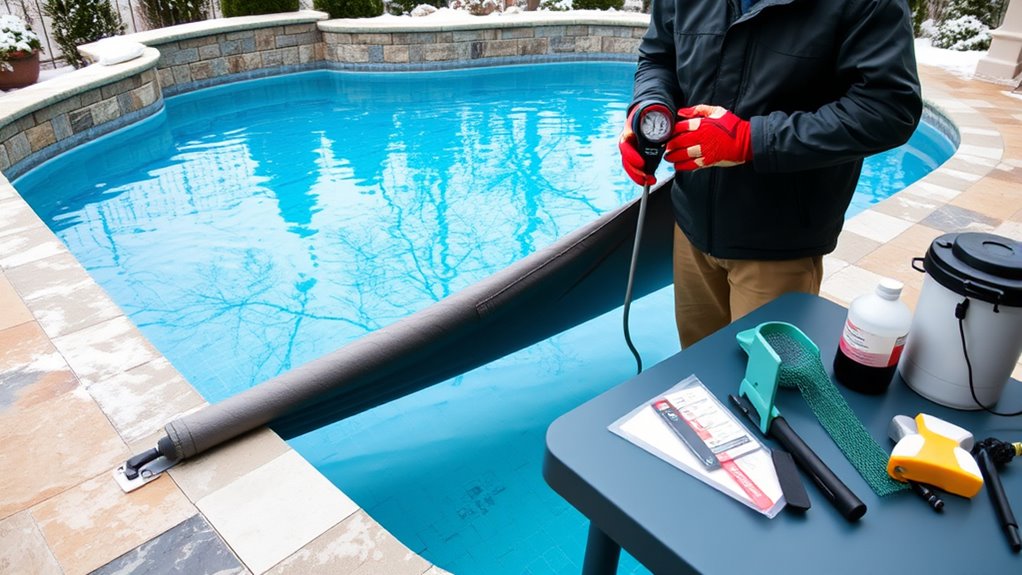
As winter approaches, preparing your pool for the cold months ahead is essential to prevent damage and keep it in good condition. One of the first steps is selecting the right pool cover. A high-quality pool cover, whether solid or mesh, acts as a shield against debris, leaves, and snow, which can cause staining or clog your filtration system. When choosing a cover, consider durability, ease of installation, and how well it fits your pool’s size and shape. A secure cover minimizes exposure to dirt and prevents animals or children from falling in, giving you peace of mind during the off-season. Before installing the cover, make sure your pool is properly cleaned and free of debris to prevent it from settling underneath and causing issues later.
Next, you need to focus on chemical balancing. Proper chemical levels are essential before covering your pool because they prevent algae growth, bacteria buildup, and corrosion during the winter months. Test your water thoroughly, ensuring your pH is within the ideal range of 7.2 to 7.6. If it’s too high or low, adjust it with pH increasers or decreasers accordingly. Alkalinity should be around 80-120 ppm to provide stability, and calcium hardness should be balanced to prevent scaling or etching of the pool surface. Chlorine levels should be maintained at proper levels, or you might consider using a winterizing algaecide to keep algae at bay. Remember, chemical balancing isn’t a one-time task; it’s an ongoing process to make sure water remains in good condition throughout the winter. Additionally, using appropriate testing methods can ensure accurate readings and proper adjustments.
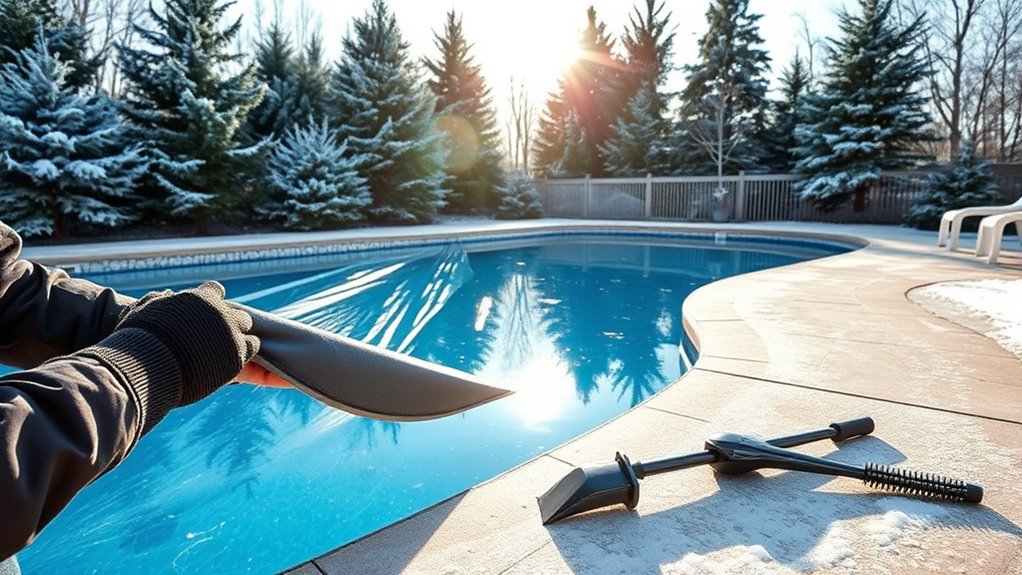
Once your pool is clean and chemically balanced, you should drain the water level to below the skimmer and returns if recommended by your pool manufacturer. This prevents freezing water from damaging the plumbing. Add a winterizing kit that includes stabilizers, algaecides, and other necessary chemicals to further protect the water quality. When installing the pool cover, ensure it’s taut and secure, with no sagging areas where water can collect. Regularly check the cover during the winter for any signs of damage or debris accumulation, and remove snow buildup carefully to prevent strain on the cover.
winter pool cover for inground pool
As an affiliate, we earn on qualifying purchases.
As an affiliate, we earn on qualifying purchases.
Frequently Asked Questions
When Is the Best Time to Close My Pool for Winter?
You should close your pool for winter when the water temperature drops below 65°F, usually in late fall. This timing allows you to complete winter preparation and off-season cleaning, preventing debris buildup and algae growth during the off season. By closing your pool early enough, you protect your investment from freeze damage and keep it in good condition for spring reopening. Don’t wait too long to guarantee a smooth winter shift.
How Often Should I Check My Pool’s Chemical Levels During Winter?
You might think winter’s a break from pool chores, but nope—winter chemical testing is essential. You should check your pool’s chemical balance every 2-4 weeks, even when it’s cold. Maintaining proper pH, chlorine, and alkalinity levels prevents algae and damage. Don’t forget, regular testing keeps your pool in top shape, so you won’t be surprised by spring’s shock treatment. Ironically, winter vigilance saves you effort later!
Can I Leave My Pool Cover on Year-Round?
Yes, you can leave your pool cover on year-round, especially if you use a solar cover to retain heat and reduce evaporation. However, it is crucial to remove it periodically to check for debris and algae growth. Before winter, add winterizing chemicals to prevent algae and maintain water quality. Regularly inspecting your cover ensures it stays in good condition, protecting your investment and keeping your pool ready for use when warm weather returns.
What Are Signs of Winter Damage to Look For?
You’ll want to watch for signs of winter damage like cracked tiles or ice damage, which can turn your pool into a frozen nightmare. If you notice cracks or tiles popping off, it’s a red flag that Mother Nature’s icy grip has taken its toll. Don’t ignore the signs, or you may find yourself repairing more than just a chilly splash come spring. Stay vigilant and protect your pool’s beauty and value.
How Do I Prevent Freezing Pipes in My Pool System?
To prevent freezing pipes in your pool system, you should insulate exposed pipes with pool insulation, especially in colder months. Make certain you drain the pool’s plumbing through the drain valve to remove water, reducing the risk of freezing and cracking. Keep the pool equipment running or use a pool heater if necessary. Regular inspections help catch issues early, safeguarding your investment and ensuring your pool stays protected during winter.
As an affiliate, we earn on qualifying purchases.
Conclusion
Now that you’ve taken the right steps to protect your pool this winter, imagine what could happen if you overlook just one detail. Will your cover hold strong against the harshest storms? Could unseen leaks quietly cause costly damage? Staying vigilant and following these tips isn’t just about maintenance—it’s about safeguarding your investment for years to come. Don’t let a small oversight turn into a big problem. The key to peace of mind is in your hands—are you ready?
automatic snow removal pool cover
As an affiliate, we earn on qualifying purchases.
As an affiliate, we earn on qualifying purchases.
As an affiliate, we earn on qualifying purchases.
Fall Picks
fall essentials
As an affiliate, we earn on qualifying purchases.