To safely handle and store pool chemicals at home, keep them in a cool, dry, ventilated area away from sunlight and heat sources. Use original, labeled containers and keep them tightly sealed when not in use. Store them out of reach of children and pets, preferably in locking cabinets. Always wear protective gear and follow manufacturer instructions to prevent accidents. Proper storage and handling safeguard your family and pool. Continuing will reveal tips to keep everything secure and effective.
Key Takeaways
- Store pool chemicals in cool, dry, well-ventilated areas away from sunlight and incompatible substances.
- Keep chemicals in their original, labeled containers, sealed tightly when not in use.
- Secure storage areas out of children’s and pets’ reach using locking cabinets or high shelves.
- Follow manufacturer instructions, wear protective gear, and never mix chemicals unless specified.
- Regularly inspect storage for leaks, damage, and clean spills promptly to prevent hazards.
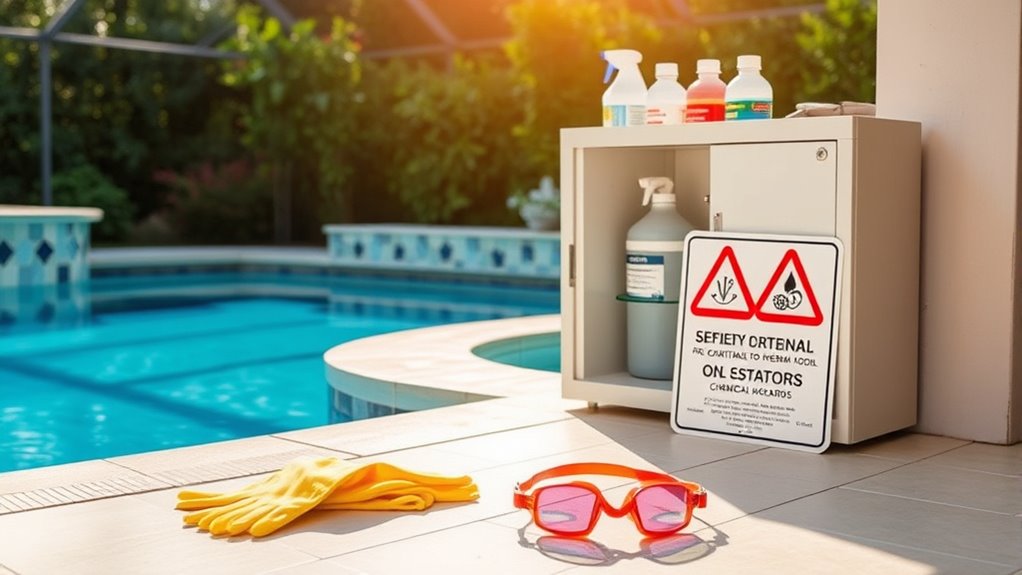
Are you confident you’re handling and storing pool chemicals safely? If not, it’s essential to understand that proper chemical safety isn’t just about following rules—it’s about protecting yourself, your family, and your property. Pool chemicals, like chlorine and pH adjusters, can be hazardous if mishandled or stored improperly. To minimize risks, you need to follow storage best practices that keep these chemicals secure and prevent accidents. Proper storage not only safeguards your home but also ensures the chemicals remain effective when you need them.
First, always keep pool chemicals in a cool, dry, well-ventilated area away from direct sunlight. Heat and humidity can cause chemical reactions or degrade the chemicals, reducing their effectiveness and increasing safety hazards. Avoid storing chemicals in areas prone to temperature fluctuations, like garages or sheds that can get extremely hot or cold. Instead, choose a dedicated storage closet or cabinet designed for chemical containment, preferably made of plastic or metal that won’t corrode or break down over time.
Chemical safety begins with proper labeling and organization. Store each chemical in its original container with clear labels intact. Never transfer pool chemicals to different containers, especially unlabeled ones, as this can lead to accidental misuse or dangerous reactions. Keep all containers tightly sealed when not in use to prevent spills and leaks. Also, store chemicals separately from other household items, particularly flammable materials, acids, or fertilizers, which could react dangerously if accidentally combined.
A critical aspect of storage best practices involves securing the area. Ensure that your pool chemicals are kept out of reach of children and pets by locking cabinets or placing the storage unit in a high or inaccessible location. Never store chemicals in the same area as food, drinks, or personal items, as contamination could occur. Regularly inspect your storage area for leaks, corrosion, or damaged containers, and promptly clean up any spills with appropriate protective gear.
Handling chemicals with care is equally important. Always follow the manufacturer’s instructions for use and wear protective gear—gloves, goggles, and masks if necessary—when mixing or pouring chemicals. Never mix different chemicals unless explicitly directed; dangerous reactions can occur. When disposing of chemicals, adhere to local regulations to prevent environmental contamination or safety hazards.
Frequently Asked Questions
How Often Should Pool Chemicals Be Checked for Expiration?
You should check your pool chemicals for expiration dating at least once every season, ideally before opening your pool. Chemical shelf life varies, but most pool chemicals remain effective for about 2-3 years if stored properly. Regularly inspecting expiration dating helps guarantee safety and effectiveness. If a chemical has expired, replace it to maintain proper water balance and avoid issues like cloudiness or algae growth.
Can Pool Chemicals Be Stored Outdoors Safely?
Yes, you can store pool chemicals outdoors, but you need to take into account outdoor storage and weather considerations. Make sure they’re in a secure, dry, and well-ventilated area, away from direct sunlight, rain, or snow. Use airtight containers to prevent moisture and contamination. Regularly check the storage area for leaks or damage, and keep chemicals out of reach of children and pets to ensure safe outdoor storage.
What Are the Signs of Chemical Overexposure?
You might not notice the signs immediately, but chemical overexposure sneaks up on you. Watch for symptoms like skin or eye irritation, coughing, or difficulty breathing. Headaches, dizziness, or nausea can also signal trouble. If you experience these chemical symptoms, it’s a clear sign of overexposure. Don’t ignore these signs—your body’s warning system is telling you to get to fresh air and seek medical help if needed.
Are There Eco-Friendly Alternatives to Traditional Pool Chemicals?
Yes, you can use eco-friendly additives and natural sanitizers as alternatives to traditional pool chemicals. These options, like mineral-based sanitizers or UV systems, reduce chemical use and are gentler on the environment. By choosing natural sanitizers, you help maintain clean, safe water while minimizing chemical runoff. Implementing these eco-friendly solutions makes your pool safer for your family and better for the planet.
How Do I Dispose of Unused or Expired Pool Chemicals Properly?
Imagine your pool chemicals turning into tiny monsters if mishandled! To prevent this chaos, always do chemical disposal at designated facilities or follow local regulations for safe storage and disposal. Never pour chemicals down the drain or onto the ground. Store unused chemicals in their original containers, tightly sealed, in a cool, dry, well-ventilated area away from children and pets. Proper chemical disposal keeps your home safe and your pool pristine.
Conclusion
By handling and storing pool chemicals with care, you’re the guardian of your family’s safety. Picture your backyard as a peaceful oasis, free from the chaos of spills or accidents. When you follow proper procedures, you turn potential hazards into a calm, safe retreat. Remember, your vigilance transforms your pool area into a sanctuary—where fun flows freely and safety shines brightly, like a guiding star illuminating every splash and smile.