To understand pool signage requirements for safety, you need to guarantee signs clearly communicate rules, hazards, and water quality standards using simple symbols and language. Placement is key—signs should be easy to see and regularly updated. They support lifeguards by reinforcing safety messages and help prevent accidents. Proper signage creates an informed environment where everyone knows how to stay safe. Keep learning how to optimize your signs to improve safety for all users.

Get pool and patio gear delivered free with Prime
- Fast, free delivery on millions of items
- Prime Video, Amazon Music and more included
- Member-only deals all year
Key Takeaways
- Use clear symbols and simple language to communicate pool rules and hazards effectively.
- Position signs strategically in visible locations to ensure all swimmers can see and understand them.
- Regularly inspect and update signs to reflect current safety protocols and water quality standards.
- Include water quality information, such as chlorination levels and pH, to promote safe swimming conditions.
- Reinforce safety messages by supporting lifeguard instructions and highlighting hazards through signage.
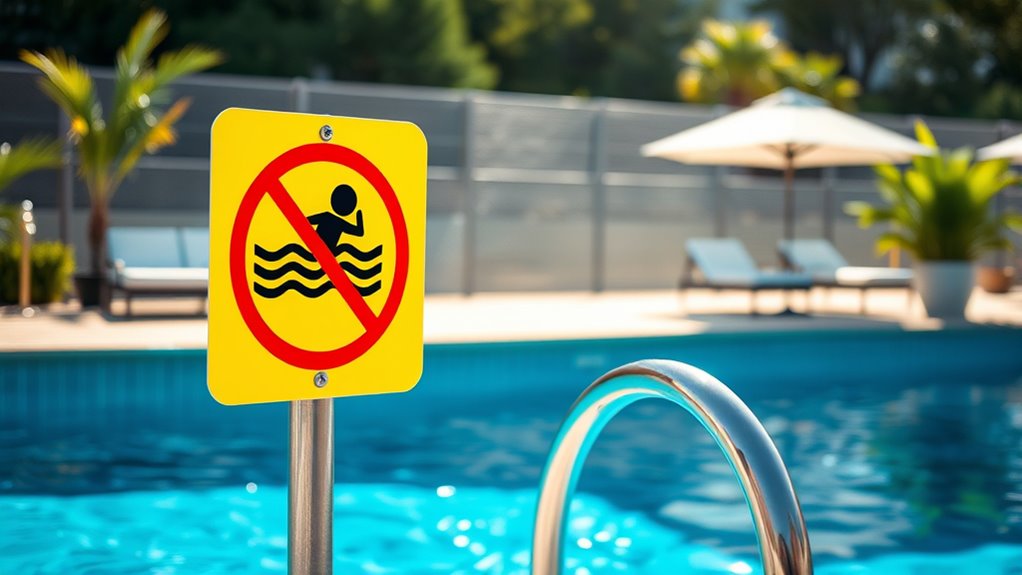
When it comes to maintaining a safe swimming environment, proper pool signage plays a crucial role. Clear, visible signs inform swimmers of rules, hazards, and safety procedures, helping prevent accidents and ensuring everyone knows what to do. One of the key aspects of effective signage is understanding the responsibilities of lifeguards and how signage supports their work. Lifeguards are tasked with watching over swimmers, but they can’t do it alone. Signage acts as a first line of communication, reinforcing their instructions and alerting bathers to specific dangers. For example, signs indicating “No Diving” or “Swim at Your Own Risk” guide swimmers to make safe choices, reducing the burden on lifeguards and allowing them to focus on their primary responsibilities, such as monitoring water activity and responding swiftly to emergencies.
Furthermore, signage must also communicate water quality standards clearly. Swimmers have the right to know that the water they’re using meets health and safety regulations. Signs should display information about water cleanliness, chlorination levels, pH balance, and any recent testing results. When swimmers see signs indicating that water quality standards are maintained, it boosts confidence and encourages responsible use of the facility. Proper signage about water quality also helps prevent health issues caused by contaminated water, which could otherwise lead to illnesses or outbreaks.
Not only should pool signs be easy to read and strategically placed, but they should also be consistent in their messaging. Use universally recognizable symbols and straightforward language. For instance, a “No Running” sign with a clear icon leaves little room for misinterpretation, regardless of language barriers. It’s essential to regularly inspect and update signage to reflect any changes in rules or water conditions. When signs are outdated or unclear, they can cause confusion and compromise safety. Additionally, understanding small appliance maintenance can help ensure that pool equipment like filtration systems remains effective, supporting water quality standards.
In addition, signage should be designed with visibility in mind. Bright colors, reflective surfaces, and appropriate lighting ensure signs are noticeable at all times, whether during daylight or at night. This visibility supports lifeguards in their responsibilities by providing continuous visual cues to swimmers, especially in crowded or low-light conditions.
Ultimately, effective pool signage isn’t just about compliance; it’s about creating a safe, informed environment. When you understand the importance of clear messaging about lifeguard responsibilities and water quality standards, you see how signage actively contributes to preventing accidents, promoting healthy water use, and supporting staff in maintaining safety standards. Proper signage acts as both a guide and a safeguard, ensuring everyone can enjoy the pool responsibly.
As an affiliate, we earn on qualifying purchases.
Frequently Asked Questions
Are Multilingual Signs Required for Diverse Community Pools?
No, multilingual signs aren’t always required, but they’re highly recommended for diverse community pools. You should prioritize multilingual communication and inclusive signage to guarantee all visitors understand safety rules and guidelines. This approach helps prevent accidents and promotes a welcoming environment. Check local regulations, but providing signs in multiple languages demonstrates your commitment to safety and inclusivity, making your pool accessible and safe for everyone regardless of language barriers.
How Often Should Pool Signage Be Inspected for Compliance?
You should inspect pool signage regularly, ideally monthly, to guarantee compliance and safety. An inspection schedule keeps your signs visible and effective, preventing mishaps. During signage maintenance, look for fading, damage, or obscurity that could confuse swimmers. Consistent checks help you catch issues early, maintaining a safe environment. Remember, well-maintained signage isn’t just a requirement—it’s a crucial part of protecting everyone who uses your pool.
Can Digital Signs Replace Traditional Safety Signs?
Digital signage can effectively replace traditional safety signs if you guarantee it meets all safety communication standards and remains clear, visible, and durable. You should regularly check that digital signs display current, accurate information and are functioning properly. Modern digital signage offers dynamic updates, which can enhance safety communication and engage swimmers better. Just make sure it complies with local regulations and provides the same level of clarity and visibility as traditional signs.
Are There Specific Size Requirements for Pool Safety Signs?
Think of pool safety signs as loud as a siren—they need to be clearly visible. While specific size requirements vary, your signs should be large enough to catch attention from a distance, ensuring signage visibility. Opt for durable sign materials that withstand sun, water, and weather, so your messages remain clear over time. Proper sizing and sturdy materials help keep everyone safe, making your pool a secure place to swim and relax.
What Are the Penalties for Non-Compliance With Signage Regulations?
If you don’t comply with signage regulations, you face liability penalties and enforcement measures that can include hefty fines or legal action. Authorities enforce these rules strictly to ensure safety, so neglecting signage requirements heightens your risk of accidents and liabilities. To avoid penalties, make sure your pool signage meets all legal standards and is clearly visible. Staying compliant protects both your safety and your finances.
water quality testing kit for pools
As an affiliate, we earn on qualifying purchases.
As an affiliate, we earn on qualifying purchases.
Conclusion
By paying attention to pool signage, you create a safe haven where laughter echoes and splashes sparkle under the sun. Clear signs act like guiding stars, steering you away from danger and towards joyful moments. When you respect these signals, you help turn the pool into a place of fun and safety for everyone. So, keep an eye on those signs—your vigilance keeps the shimmering water a fun, secure retreat for all to enjoy.
As an affiliate, we earn on qualifying purchases.
As an affiliate, we earn on qualifying purchases.
Halloween Picks
halloween
As an affiliate, we earn on qualifying purchases.