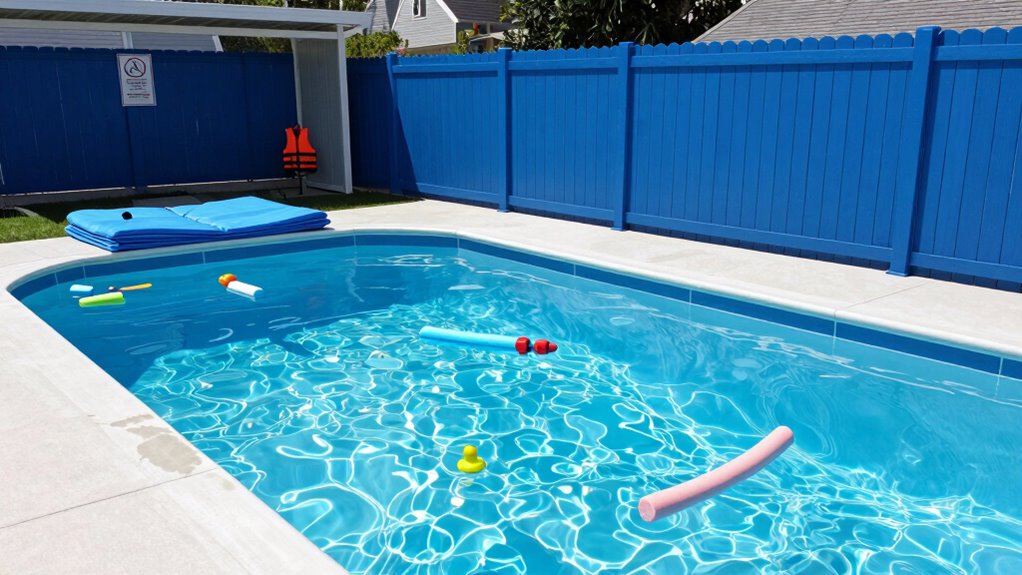

To make your pool safer for young children, you should install secure barriers like fences with self-latching gates and keep keys out of reach. Always supervise kids closely and avoid relying solely on floatation devices, choosing well-fitting, safety-approved options instead. Regularly inspect your pool cover and safety equipment for damage, and establish clear rules for pool use. If you want to discover more ways to keep kids safe around water, keep exploring the details.
Key Takeaways
- Install secure, self-latching fences and gates around the pool area.
- Use age-appropriate, properly fitting floatation devices and supervise constantly.
- Ensure pool covers are in good condition and free of damage.
- Keep pool keys and access points out of children’s reach.
- Establish and enforce clear safety rules and emergency protocols.

Having a pool can be a fun and invigorating way to enjoy the summer, but it also comes with important safety responsibilities—especially when young children are involved. To make your pool a safer environment, you need to be proactive about safety measures and maintenance. One key aspect is pool cover maintenance. Regularly inspecting your pool cover ensures it remains in good condition, free of tears or gaps that could pose risks. A secure, sturdy cover provides a reliable barrier when the pool isn’t in use, preventing children from accidentally falling in. Make it a routine to clean the cover and check its fastenings, especially after storms or heavy winds. This simple step minimizes the chances of accidental access and keeps your pool area safer. Proper gear care and regular maintenance help prolong the life of your pool accessories and safety equipment, ensuring they function correctly when needed. Additionally, ensuring your pool area has effective safety barriers such as fences and alarms can further prevent unsupervised access by children. Installing pool alarms that alert you when water is disturbed can serve as an extra layer of protection, especially during times when supervision might be momentarily distracted. Regularly reviewing and updating your safety protocols ensures you stay prepared for any unforeseen situations. Incorporating proper maintenance of all safety equipment, guided by safety standards, can significantly reduce hazards around the pool area.
Regularly inspect and maintain your pool cover to ensure safety and prevent accidental access.
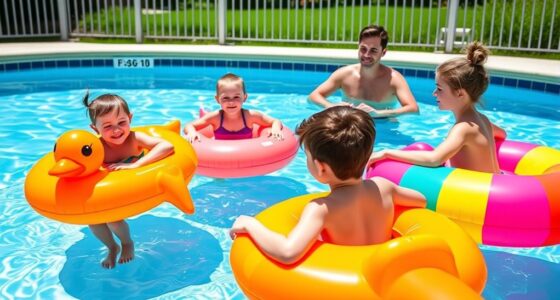
Another essential element is selecting the right floatation devices. When children are in or around the pool, always choose floatation devices that are age-appropriate and approved by safety standards. Opt for well-fitting life jackets or puddle jumpers rather than inflatable toys or floaties that can slip off or provide a false sense of security. Proper floatation devices give children buoyancy and help keep their heads above water, reducing the risk of drowning. Remember, floatation devices are not a substitute for constant supervision, but they are an indispensable tool to enhance safety when used correctly.
Beyond the equipment, maintaining a vigilant watch is essential. Never leave young children unattended in or near the pool, even if they’ve got floatation devices on. Always designate a responsible adult to supervise, and avoid distractions like your phone or reading material while children are swimming. If you have a pool fence, ensure it’s secure and self-latching, and keep gate keys out of children’s reach. These physical barriers add an extra layer of protection, especially when combined with vigilant supervision. Educating children about pool safety rules helps reinforce the importance of being cautious around water and encourages lifelong safe habits. Regularly practicing emergency response procedures can also prepare everyone to act swiftly in case of an accident.
In addition to physical safety measures, establishing clear rules for pool use helps set boundaries and expectations. Teach children about pool safety, emphasizing that they should never go near the water without an adult present. Consistency in enforcing these rules creates a safer environment and helps children understand the importance of respecting pool safety protocols. When you combine diligent pool cover maintenance, careful floatation device selection, constant supervision, and safety education, you markedly reduce the risk of accidents, making your pool a safer place for the whole family to enjoy.

Pool Fence DIY by Life Saver Self-Closing Gate Kit, Black (Pack of 1)
Easy-to-install, do-it-yourself gate kit for use with the Pool Fence DIY safety system; helps keep kids safe from…
As an affiliate, we earn on qualifying purchases.
As an affiliate, we earn on qualifying purchases.
Frequently Asked Questions
How Often Should Pool Safety Equipment Be Inspected?
You should inspect your pool safety equipment weekly to guarantee everything works properly. Regular pool maintenance helps spot issues early, like damaged safety signage or malfunctioning rescue devices. Check safety signage for visibility and clarity, replacing any faded or missing signs promptly. Consistent inspections assure your safety equipment functions correctly, creating a safer environment for young children and everyone else. Staying proactive reduces accidents and keeps your pool area secure.
What Are the Best Signs to Indicate Pool Safety Rules?
You should look for clear signs like a visible pool fence and functioning safety alarms, which are essential for pool safety. Notably, studies show that proper fencing reduces drowning risk by 83%. If these signs are in place, it indicates the pool area is well-protected. Make sure the pool fence is secure, gates are self-closing, and safety alarms are operational to keep young children safe around the water.
How Can I Teach Children Water Safety at Home?
You can teach children water safety at home by emphasizing constant child supervision whenever they’re near water. Use water safety devices like floaties or life jackets to enhance safety, but never rely solely on them. Show your kids how to swim and explain basic water rules, like never running or pushing near the pool. Reinforce these lessons regularly, and always stay attentive to create a safe environment for your children.
Are There Specific Safety Standards for Portable Pools?
Yes, there are specific safety standards for portable pools. You should always use a sturdy pool cover when the pool isn’t in use, and make certain fencing barriers surround the area to prevent unsupervised access. Regularly inspect these barriers for damage or gaps, and always supervise children when they’re near the pool. These measures help reduce the risk of accidents and keep your young children safe around portable pools.
What Should I Do if a Child Falls Into the Pool Unexpectedly?
If a child falls into the pool unexpectedly, act quickly by performing emergency response steps like calling 911 immediately and removing the child from the water. Remember, parent supervision reduces drowning risk by 85%, so stay alert and close. Keep calm, support the child’s head, and start CPR if necessary until help arrives. Your quick, calm response can make all the difference in preventing tragedy.

Pool Alarm, Floating Pool Safety Alarms for Inground & Above Ground Pools – Loud 110dB Alert, Adjustable Sensitivity, Protection for Kids & Pets (Blue)
Essential Pool Safety Protection for Kids & Pets: Keep your family safe with this floating pool alarm, designed…
As an affiliate, we earn on qualifying purchases.
As an affiliate, we earn on qualifying purchases.
Conclusion
To keep your young children safe around pools, always supervise them closely, install barriers, and teach water safety early. Did you know that drowning is the leading cause of accidental death in children aged 1-4? By taking simple precautions, you can greatly reduce this risk and create a safer environment. Remember, your vigilance and proactive measures are key to ensuring your little ones enjoy pool time safely and happily.
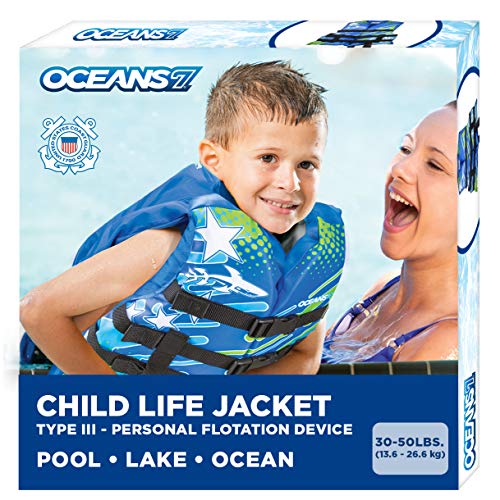
Oceans7 US Coast Guard-Approved, Type III – Kids Life Jacket – Personal Flotation Device with Comfortable Flex-Form-Fit Open-Sided Design – Blue/White
US Coast Guard-approved: Personal flotation device (PFD) passes highest USCG standards and testing; life jackets are labeled for…
As an affiliate, we earn on qualifying purchases.
As an affiliate, we earn on qualifying purchases.

31-1/2 inch Pool Cover Tool, Extra Long Pool Cover Installation Tool, Swimming Pool Safety Cover Installation and Removal Rod Tool, Suitable for All Standard Pool Cover Anchors
【Wide Compatibility】Our pool cover installation tool are suitable for most major brand pool safety covers anchors
As an affiliate, we earn on qualifying purchases.
As an affiliate, we earn on qualifying purchases.