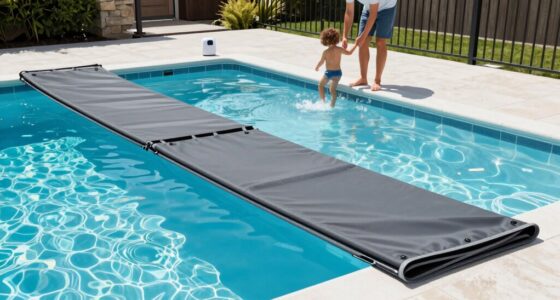
To comply with the Virginia Graeme Baker Pool Safety Act (VGB), you need to guarantee your pool has properly certified drain covers that prevent entrapment, conduct regular safety inspections, and train staff in rescue techniques. Keep detailed records of maintenance and safety checks to demonstrate ongoing compliance. Staying vigilant about equipment upgrades and safety protocols is essential. To learn more about how to meet these requirements effectively, continue exploring best safety practices and legal standards.

Get pool and patio gear delivered free — and shop member deals
- Fast, free delivery on millions of items
- Access to Prime Big Deal Days deals on October 6–7
- Prime Video, Amazon Music and more included
Key Takeaways
- Install and maintain VGB-compliant drain covers to prevent entrapment hazards.
- Conduct regular safety inspections and repair equipment as needed.
- Keep detailed records of maintenance, safety checks, and staff training.
- Ensure staff are certified in lifeguard rescue techniques and emergency response.
- Follow ongoing safety protocols and stay updated with VGB regulations and best practices.

Ensuring your pool complies with the Pool Safety Act is essential for protecting everyone who uses it. The Virginia Graeme Baker Pool Safety Act (VGB) sets forth crucial safety standards that you must follow to prevent accidents, injuries, and drownings. One of the key requirements is ensuring that pool facilities, especially public and commercial pools, are properly maintained and supervised. This means investing in thorough pool maintenance routines that regularly check and repair equipment, such as drain covers and filtration systems, to prevent entrapment and other hazards. Regular inspections help identify potential safety issues before they become dangerous, keeping your pool a safe environment for all users.
Proper maintenance and supervision are essential for VGB compliance and pool safety.
Another critical aspect of compliance involves properly training your staff, specifically lifeguards. Lifeguard training is not just about teaching water rescue techniques; it also covers recognizing potential hazards, enforcing safety rules, and responding swiftly to emergencies. Well-trained lifeguards are vital because they serve as the first line of defense against accidents. By ensuring your lifeguards undergo certified training programs, you’re actively reducing risks and enhancing the overall safety of your pool. Properly trained staff can identify unsafe behaviors, respond effectively in emergencies, and help prevent incidents from escalating.
Pool maintenance is equally important for VGB compliance. Maintaining proper chemical levels, ensuring clean water, and keeping all safety equipment in working order are non-negotiable tasks. Failing to perform regular maintenance can lead to equipment malfunctions or unsafe water conditions, which pose serious health and safety risks. For example, a broken or missing drain cover can cause entrapment hazards, which the VGB Act explicitly aims to eliminate. That’s why routine checks and scheduled maintenance are essential parts of your compliance plan. They not only protect your patrons but also help you avoid costly fines and legal issues associated with non-compliance.
In addition, you need to keep detailed records of pool maintenance activities, lifeguard certifications, and safety inspections. These records demonstrate your commitment to safety and can be useful during inspections or in the event of an incident. Compliance isn’t a one-time effort; it’s an ongoing process that requires diligence and attention to detail. Implementing a comprehensive safety plan that includes ongoing staff training, diligent maintenance routines, and adherence to VGB requirements will help safeguard your pool users and ensure your facility remains in good standing.
Furthermore, utilizing advanced safety equipment such as modern drain covers and alarms can significantly enhance compliance and safety. Ultimately, following the VGB Pool Safety Act isn’t just about meeting legal obligations—it’s about prioritizing safety and demonstrating your commitment to protecting everyone who enjoys your pool. Proper pool maintenance and trained lifeguards form the backbone of a safe swimming environment. By staying vigilant and proactive, you create a space where swimmers can relax and have fun, knowing their safety is your top priority.
As an affiliate, we earn on qualifying purchases.
Frequently Asked Questions
Are There Penalties for Non-Compliance With VGB Act?
Yes, there are penalties for non-compliance with the VGB Act. Penalty enforcement can include hefty fines, legal consequences, and potential closure of your pool if safety standards aren’t met. You might also face liability issues if an accident occurs due to non-compliance. To avoid these consequences, verify your pool equipment and safety measures adhere to the law’s requirements and stay updated on any regulation changes.
How Often Should Pool Drain Covers Be Inspected?
Imagine a pool without a safe drain cover—danger lurks beneath the surface. You should inspect your drain cover regularly, at least once every three months, to guarantee proper drain cover maintenance and safety. Frequent inspections help catch any damage or wear early, preventing accidents. Staying diligent with inspection frequency keeps your pool safe, secure, and compliant, giving everyone peace of mind while enjoying the water.
Does the VGB Act Apply to Residential Pools?
Yes, the VGB Act applies to residential pools, emphasizing the importance of pool safety. It mandates that homeowners make certain drain covers are compliant and properly installed to prevent entrapment hazards. You should regularly inspect your residential pool’s drain covers for damage or wear, and replace them if needed. Following these safety standards not only keeps your family safe but also helps you stay compliant with federal regulations.
What Training Is Required for Pool Staff Under VGB?
You need to get lifeguard certification and emergency response training that covers VGB requirements. Picture yourself as the guardian of the pool, prepared for any crisis. This training ensures you know how to operate safety devices, respond swiftly to emergencies, and understand the latest safety standards. By completing this, you become the ultimate protector, prepared to keep everyone safe and prevent accidents with confidence and skill.
Are There Exemptions for Certain Pool Types or Sizes?
You might qualify for exemptions based on exemption criteria if your pool meets specific conditions, such as certain pool size regulations. Small residential pools under a certain size may be exempt, but it is crucial to review local and federal guidelines to confirm. Always check if your pool’s size and type meet exemption criteria, and guarantee you’re compliant with all safety standards to protect swimmers and avoid penalties.
lifeguard rescue training certification
As an affiliate, we earn on qualifying purchases.
As an affiliate, we earn on qualifying purchases.
Conclusion
By following the Virginia Graeme Baker Pool Safety Act, you’re not just ticking boxes—you’re becoming a guardian of safety, much like a modern-day knight protecting a precious treasure. Remember, the little details make all the difference in preventing tragedy. Stay vigilant, stay compliant, and turn your pool into a safe haven for everyone who swims there. Like a lighthouse guiding ships home, your commitment guarantees safety shines bright for all who enjoy your pool.
As an affiliate, we earn on qualifying purchases.
pool maintenance record keeping software
As an affiliate, we earn on qualifying purchases.
As an affiliate, we earn on qualifying purchases.
Fall Picks
fall essentials
As an affiliate, we earn on qualifying purchases.