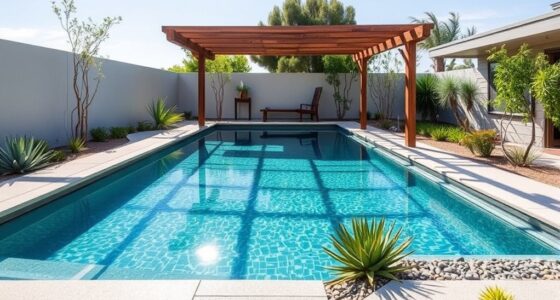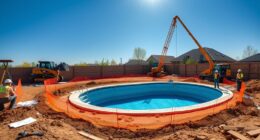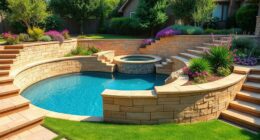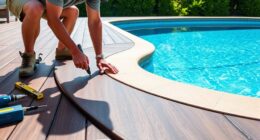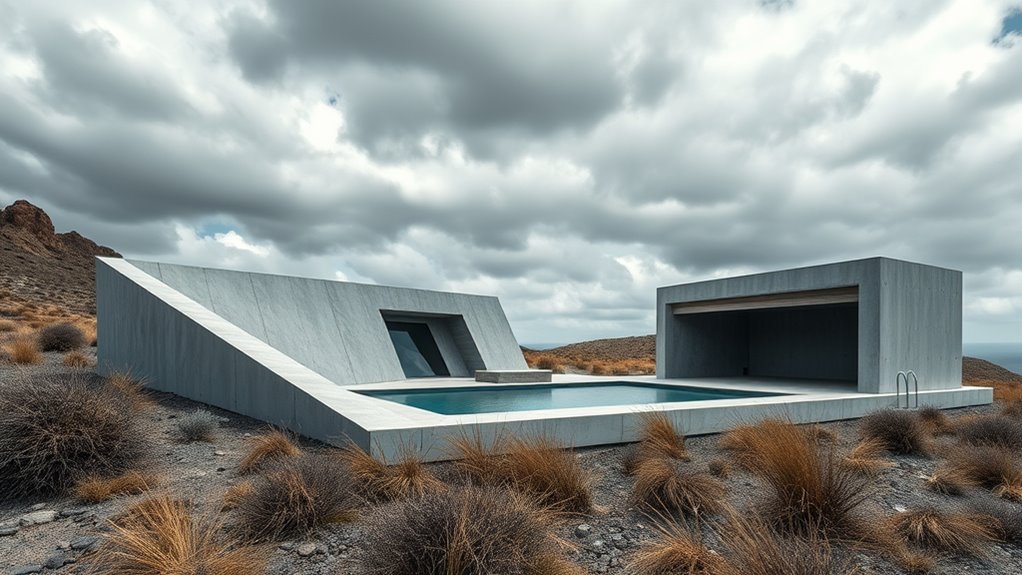

When building a pool in a high-wind zone, you need to prioritize strong structural requirements like reinforced concrete and steel framework to withstand turbulent forces. Deepened footings, proper anchoring, and wind-resistant design features help prevent shifting or damage during storms. Incorporating windbreaks and aerodynamic shapes further enhances stability. Ensuring these essentials are in place is vital for safety and longevity. Stay with us to discover more about designing resilient pools for challenging weather conditions.
Key Takeaways
- Use reinforced concrete and steel for durable, wind-resistant pool structures.
- Deepen footings and anchor structures securely to prevent shifting during high winds.
- Incorporate rounded or curved design features to reduce wind pressure and prevent damage.
- Install windbreaks or hedges around the pool area to minimize wind impact.
- Consult experienced engineers to ensure compliance with safety standards and proper construction techniques.

Have you ever wondered how to safely build a pool in areas prone to high winds? When constructing a pool in such zones, guaranteeing proper structural requirements is essential to keep it safe and durable. The first step is understanding how critical pool safety is and how it depends heavily on the right construction materials. High winds can exert significant force on your pool and its surrounding structures, so choosing materials capable of withstanding these forces is crucial. You can’t just settle for standard pool materials; instead, you need to select options specifically designed to endure strong gusts and turbulent weather.
Reinforced concrete and steel are often the best construction materials for high-wind zones. They provide the necessary strength and stability, preventing walls from cracking or collapsing under pressure. Using a combination of rebar and concrete creates a resilient framework that resists movement caused by wind uplift and impact. Furthermore, steel supports and reinforcements can be embedded within the structure to bolster its integrity. These materials may cost more initially, but they drastically improve pool safety and longevity, reducing the risk of structural failure during storms.
In addition to choosing the right materials, you should pay attention to construction techniques that enhance stability. Deepened footings and properly anchored support systems help keep your pool securely in place. For example, anchoring the pool’s perimeter to a stable foundation prevents shifting or tipping, especially during high wind events. The use of proper sealing and waterproofing materials also plays a role in maintaining the integrity of the structure, preventing leaks that could weaken the overall build. Proper construction methods are essential to withstand the forces exerted by turbulent weather conditions.
Another key aspect is considering the pool’s design. Rounded or curved shapes tend to withstand wind forces better than sharp, angular structures because they allow wind to flow more smoothly around them. Incorporating wind-resistant features like windbreaks or hedges around your pool area can further reduce wind pressure and protect the structure. When planning the construction, consult with engineers or builders experienced in high-wind zones to ensure that your pool’s design and materials meet all safety standards.
Ultimately, building a pool in high-wind areas requires careful planning, the right construction materials, and techniques geared toward durability. Prioritizing pool safety means selecting materials that can endure the harshest weather conditions and implementing structural strategies to prevent damage. With the proper approach, you can enjoy your pool without worry, knowing it’s built to withstand the forces of nature.
Frequently Asked Questions
What Are the Most Common Wind-Related Damages to Pools?
You often face wind-related damages like torn pool covers and bent fencing. Strong gusts can compromise pool cover durability, causing tears or dislodging covers entirely. Additionally, high winds can weaken fencing if it’s not reinforced properly, leading to potential collapse or safety hazards. To prevent these issues, make certain your pool’s fencing is reinforced and use durable covers designed to withstand high winds. Regular maintenance helps keep your pool safe and intact.
How Do Wind Speeds Influence Pool Design Choices?
You might think wind speeds don’t matter, but they seriously influence your pool design choices. Higher wind loads mean you need to prioritize wind load considerations in your pool enclosure design, ensuring structures can withstand strong gusts. This affects material selection, anchoring, and overall stability. Ignoring wind speeds risks damage or failure, so always incorporate wind load considerations early in your planning for a safe, durable pool in high-wind zones.
Are There Specific Materials Recommended for High-Wind Zones?
In high-wind zones, you should choose storm-resistant materials like reinforced concrete or steel that withstand strong gusts. Use windproof construction techniques such as reinforced anchoring and aerodynamic design to prevent damage. These materials and methods help guarantee your pool remains stable and safe during storms, reducing risks and costly repairs. Prioritize durability and strength to create a resilient pool that endures harsh wind conditions effectively.
What Maintenance Is Required After a Major Storm?
After a major storm, you should perform storm debris removal and a thorough structural inspection of your pool. Think of it as tending to a ship after a storm at sea—you need to clear debris and check for damage. Remove any fallen branches or debris around the pool area, then inspect the structure for cracks or loose fittings. Address issues promptly to make certain of safety and longevity of your pool.
How Can Homeowners Improve Pool Safety in High-Wind Areas?
To improve pool safety in high-wind areas, you should secure loose items, reinforce fencing, and choose landscaping that minimizes debris. Enhance aesthetics by selecting wind-resistant plants, and consider installing pool lighting options with protective covers. Regularly inspect and maintain pool equipment to prevent hazards. These steps help prevent accidents and keep your pool area safe during storms, ensuring both safety and visual appeal in high-wind zones.
Conclusion
Building pools in high-wind zones demands more than just sturdy materials; it’s about crafting a sanctuary resilient enough to dance with the fiercest storms. Think of your pool as a delicate boat on turbulent seas—strong enough to weather the storm’s rage and gentle enough to invite serenity once it passes. By following these structural requirements, you’re not just constructing a pool—you’re forging a resilient oasis that stands as a demonstration to your foresight and strength against nature’s unpredictable whims.