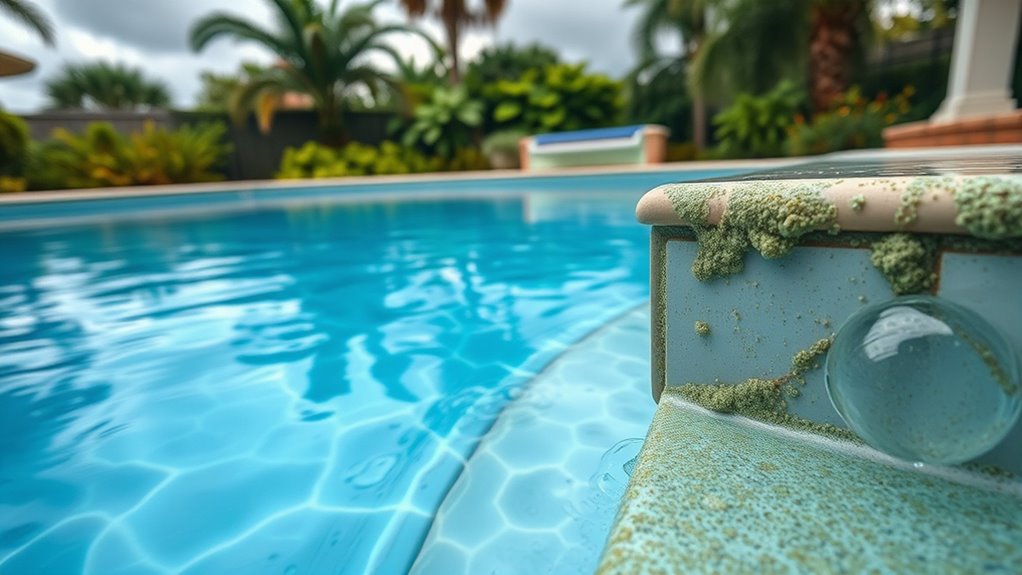

In humid climates, maintaining your pool is challenging due to constant algae growth, chemical imbalances, and equipment wear caused by moisture and temperature swings. You need to regularly brush, skim, and apply algaecides, while constantly testing and adjusting chemicals to keep water clear and balanced. Proper circulation and filtration are essential to prevent stagnation and algae buildup. Staying vigilant and consistent in your maintenance will help keep your pool safe and inviting—more tips await to help you master these challenges.
Key Takeaways
- Humid climates promote rapid algae growth, requiring frequent cleaning and chemical treatments.
- High moisture levels disrupt water chemistry balance, leading to cloudy water and algae proliferation.
- Elevated humidity accelerates evaporation, causing fluctuating chemical levels and challenging water maintenance.
- Consistent filtration and circulation are essential to prevent stagnant areas where algae thrive.
- Ongoing vigilance and prompt responses are crucial to manage algae outbreaks and maintain water quality.
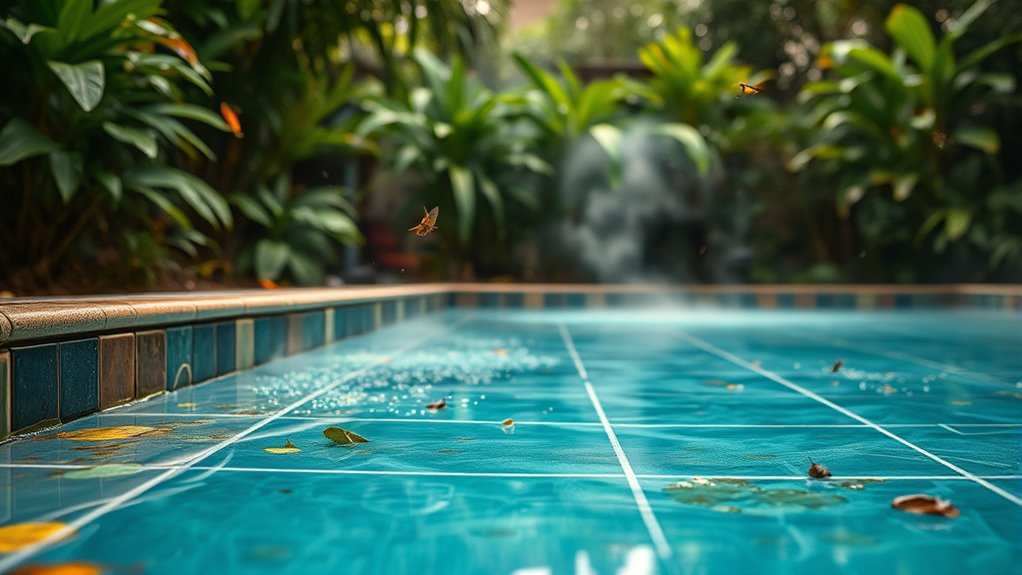
Maintaining a pool can be more challenging than it seems, especially when unexpected issues arise. In humid climates, the high moisture levels create a perfect environment for algae to thrive, making algae control a constant struggle. When you’re trying to keep your pool inviting and clean, dealing with algae isn’t just about aesthetics; it’s about maintaining the health of your water and ensuring it’s safe to swim in. You’ll need to be proactive with your algae prevention strategies, such as regular brushing, skimming, and using algaecides. But even with these measures, algae can still appear unexpectedly, especially if you neglect your routine or if the weather suddenly becomes more humid. That’s why staying vigilant and promptly addressing algae outbreaks is key to avoiding larger, more difficult issues later on.
In humid climates, vigilant algae prevention is essential for a healthy, sparkling pool.
Another big challenge in humid climates revolves around maintaining a proper chemical balance. Excess moisture can throw off your pool’s pH, alkalinity, and sanitizer levels, which are all critical for keeping the water clear and safe. If the chemical balance isn’t right, you’ll see cloudy water, increased algae growth, and a greater risk of bacteria buildup. You need to test your water frequently—at least weekly—and adjust chemicals accordingly. This means adding pH adjusters, sanitizers, and stabilizers in precise amounts to prevent conditions that promote algae and bacteria. Failing to keep the chemical balance in check not only makes algae control more difficult but also accelerates the deterioration of your pool’s equipment and surfaces.
Humid conditions also accelerate the evaporation rate, which can lead to fluctuating chemical levels and temperature inconsistencies. These fluctuations make your pool more susceptible to algae growth and other contaminants. To combat this, you should consider installing a cover when the pool isn’t in use and using a good filtration system to keep water circulating effectively. Regularly cleaning your filter is essential to prevent algae and debris from settling and multiplying. Additionally, keeping your pool’s water levels consistent helps ensure your chemical treatments work efficiently and reduces the chance of algae blooms. Implementing a high-quality filtration system can significantly improve water circulation and reduce algae development.
In essence, managing a pool in a humid climate demands constant attention. You can’t just set it and forget it; it requires diligent monitoring of chemical levels, prompt algae control actions, and proper circulation. While the challenges are real, addressing them proactively can save you from costly repairs and make your swimming experience much more enjoyable. With the right routine and vigilance, you’ll keep your pool sparkling clean and algae-free, even amidst the humidity.
pool algaecide for humid climates
As an affiliate, we earn on qualifying purchases.
As an affiliate, we earn on qualifying purchases.
Frequently Asked Questions
How Often Should I Test My Pool Water in Humid Climates?
You should test your pool water at least 2 to 3 times a week in humid climates. Regular pool water testing helps you monitor the chemical balance and guarantee proper sanitation. Humidity can cause quick changes in pH and chlorine levels, so consistent testing is essential. By staying on top of chemical balance monitoring, you’ll keep your pool clean, safe, and enjoyable all season long.
What Types of Algae Are Most Common in Humid Environments?
In humid environments, green algae often takes hold like an unwelcome guest, while black algae lurks stubbornly in cracks. To keep these invaders at bay, focus on algae prevention through proper chemical stabilization and regular chlorination. By maintaining balanced water chemistry, you thwart algae’s growth, ensuring your pool stays clear and inviting. Consistent testing and treatment are your best defenses against these common culprits in humid climates.
Are Standard Pool Covers Effective in High Humidity Areas?
Standard pool covers can be effective in high humidity areas, especially if you choose solar pool covers that help reduce evaporation and heat loss. However, you should also incorporate winterization techniques to prevent algae growth and moisture buildup. Make sure to regularly remove debris and check for mold or algae underneath the cover. Proper maintenance guarantees your pool stays clean and in good condition despite the humid climate.
How Does Humidity Affect Pool Chemical Balance Over Time?
Did you know that humidity can cause chemical fluctuations in your pool by up to 30%? High humidity speeds up evaporation rates, leading to water loss and concentration changes in chemicals like chlorine and pH. This makes it harder to maintain a stable chemical balance over time. You’ll need to test your water more frequently and adjust chemicals accordingly to keep your pool safe and inviting.
What Are the Best Methods to Prevent Mold Around the Pool?
To prevent mold around your pool, use effective pool cover strategies like automatic covers or breathable mesh covers to block moisture and debris. Regularly clean and inspect the area for mold growth, and promptly address any signs with mold prevention techniques such as applying mold-resistant treatments and ensuring proper ventilation. Keeping the surrounding area dry and well-ventilated minimizes mold spores, helping you maintain a clean, safe pool environment.
As an affiliate, we earn on qualifying purchases.
Conclusion
Just like tending a delicate garden in a storm, maintaining your pool in a humid climate requires constant attention and adaptability. The humidity acts as an unpredictable wind, pushing you to stay vigilant against algae, corrosion, and cloudy water. With perseverance and the right strategies, you become the gardener who prunes and nurtures, ensuring your pool remains a clear, inviting oasis despite the relentless weather. Embrace the challenge, and your efforts will flourish like a resilient, thriving landscape.
high efficiency pool filtration system
As an affiliate, we earn on qualifying purchases.
As an affiliate, we earn on qualifying purchases.
pool cover for evaporation control
As an affiliate, we earn on qualifying purchases.
As an affiliate, we earn on qualifying purchases.