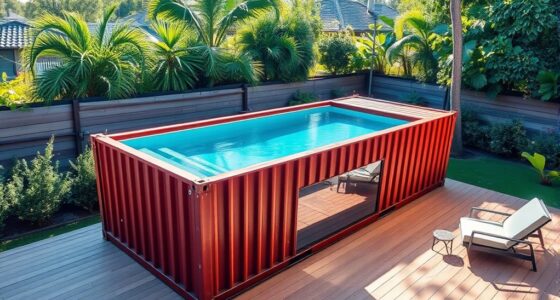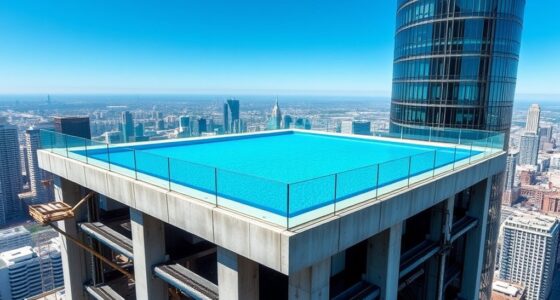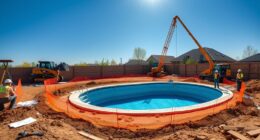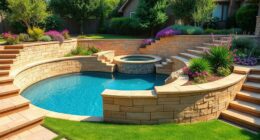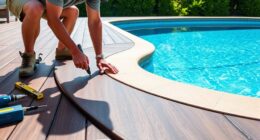
All-season pools let you enjoy swimming both indoors and outdoors year-round. By combining features like heated water, safety covers, and retractable enclosures, you can turn your pool into a versatile space that works in any weather. This setup lets you flood your outdoor area with sunlight or stay cozy inside during cold months. Want to discover how these features work together seamlessly? Keep exploring to learn more about creating the perfect all-season pool experience.
Key Takeaways
- Installing retractable enclosures or glass walls allows seamless transition between indoor and outdoor swimming experiences.
- Pool heating and safety covers enable year-round use regardless of weather conditions.
- Combining indoor and outdoor pools maximizes benefits like sunshine, fresh air, and consistent water temperatures.
- Versatile pool designs can be protected and heated for all-season enjoyment in both environments.
- Integrating features enhances safety, energy efficiency, and the overall functionality of combined indoor-outdoor pools.
All-season pools are revolutionizing how homeowners enjoy their outdoor spaces year-round. No longer do you have to wait for summer to take a revitalizing swim or worry about chilly breezes ruining your outdoor experience. With the right features, you can extend your swimming season well beyond the typical months. Pool heating plays an essential role here, allowing you to maintain a comfortable water temperature regardless of the weather. Modern pool heaters are efficient and quick to respond, so you can start swimming in warm water whenever you want, even in early spring or late fall. This means you get more use out of your pool and more value from your investment.
In addition to pool heating, safety covers are an indispensable component of all-season pools. These covers do much more than keep debris out of your water; they also enhance safety by preventing accidental falls, especially if you have children or pets. Heavy-duty safety covers are designed to withstand weight and harsh weather conditions, making them a dependable barrier during off-season months or when the pool isn’t in use. They’re easy to install and remove, giving you quick access to your pool when you want to swim and peace of mind when you don’t. Safety covers also help retain heat, which reduces energy costs by minimizing heat loss. This synergy between safety and efficiency makes them a smart addition to any all-season pool setup.
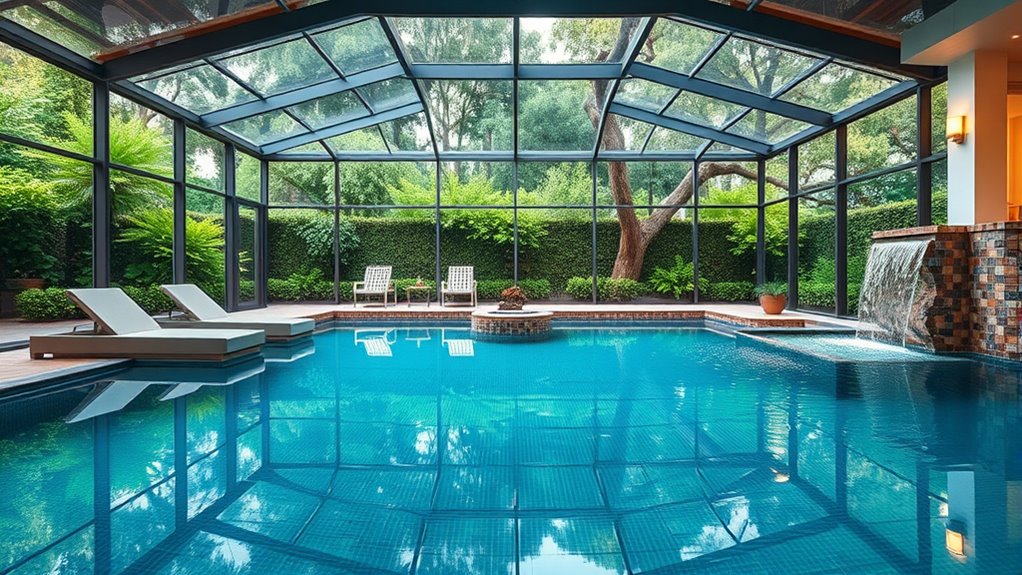
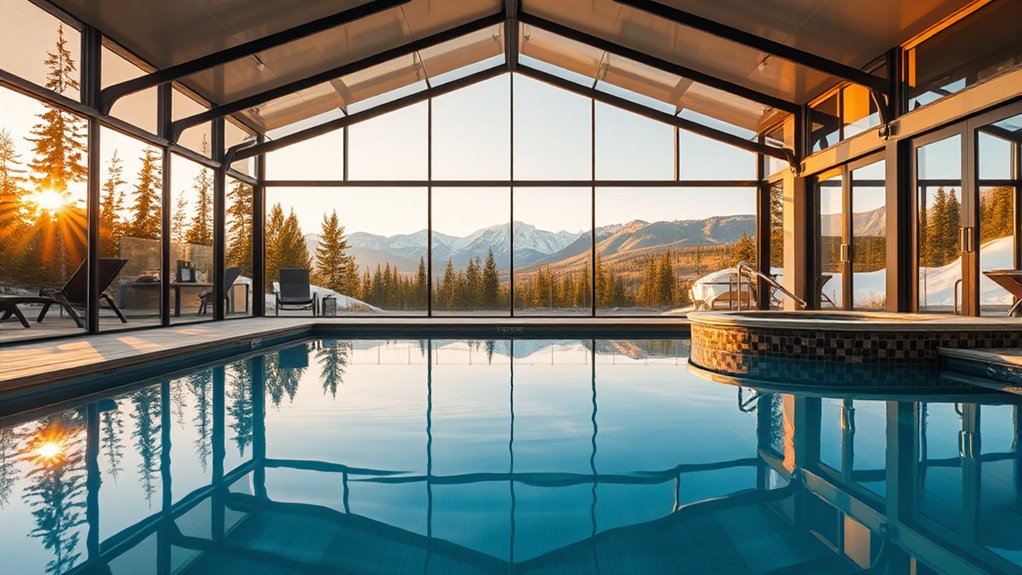
What makes all-season pools even more appealing is their versatility in use. You can choose to keep your pool outdoors with added protection and heating, or opt for an indoor pool that offers year-round swimming without worrying about weather changes. Some homeowners combine both options by installing retractable enclosures or glass walls, allowing seamless transition between outdoor and indoor swimming. This flexibility means you can enjoy the best of both worlds—fresh air and sunshine when the weather permits, and cozy, warm water whenever you desire, regardless of outside conditions.
Ultimately, the key to a successful all-season pool lies in integrating reliable pool heating and safety covers into your setup. These features work together to extend your swimming season, guarantee safety, and improve energy efficiency. With these elements in place, you’ll find that your pool becomes a year-round retreat—an oasis you can enjoy anytime, rain or shine. Investing in the right technology and safety measures transforms your outdoor space into a versatile, functional, and enjoyable haven that truly offers all-season comfort.
Frequently Asked Questions
What Are the Cost Differences Between Indoor and Outdoor Pools?
Indoor pools generally cost more upfront due to higher pool construction costs, including building a structure that maintains climate control and humidity. Outdoor pools tend to have lower initial costs but require ongoing seasonal maintenance like winterizing and weather protection. You’ll spend more on indoor pools over time for heating and ventilation, while outdoor pools might have higher seasonal upkeep. Consider your climate, budget, and usage when choosing between them.
How Do All-Season Pools Impact Energy Consumption?
Like a well-insulated thermos, all-season pools impact your energy consumption by requiring consistent heating and climate control. You’ll see higher energy use compared to outdoor pools, but advanced insulation technology helps improve energy efficiency, reducing costs. Proper covers and heating systems minimize heat loss, making your pool more sustainable. While they do consume more energy, smart technology can optimize usage, balancing comfort with efficiency.
What Maintenance Is Required for Combined Indoor and Outdoor Pools?
You need to regularly check pool cover maintenance to keep debris out and maintain temperature efficiency. Water quality management is essential; test and balance chemicals often to prevent algae and bacteria growth. Clean filters frequently and skim the surface for leaves or dirt. For indoor sections, make certain proper ventilation to control humidity. Consistent upkeep ensures your combined indoor and outdoor pool remains safe, clean, and enjoyable year-round.
Are All-Season Pools Suitable for Small Backyard Spaces?
Yes, all-season pools can suit small backyard spaces if you choose space-saving designs. Consider compact models and smart layout options to maximize your yard’s potential. Small yard considerations include opting for foldable or inflatable pools that don’t take up much room when not in use. With the right design, you’ll enjoy year-round swimming without sacrificing valuable outdoor space, making your small yard both functional and fun.
What Safety Features Are Recommended for All-Season Pools?
You should install a sturdy pool enclosure to guarantee safety around your all-season pool, preventing accidental falls and unauthorized access. Follow chemical safety protocols by securely storing pool chemicals, maintaining proper pH levels, and using safety covers during off-hours. These measures help protect your family and guests, making your all-season pool a safe, enjoyable space year-round. Regularly check safety features and stay vigilant to prevent accidents.
Conclusion
Did you know that all-season pools can extend your swimming season by up to six months? By combining indoor and outdoor features, you get the best of both worlds—year-round enjoyment and flexibility. With the right design, you won’t have to wait for warm weather to plunge in. Invest in an all-season pool and make every season a swimming season, no matter the weather outside. Dive into comfort and convenience today!