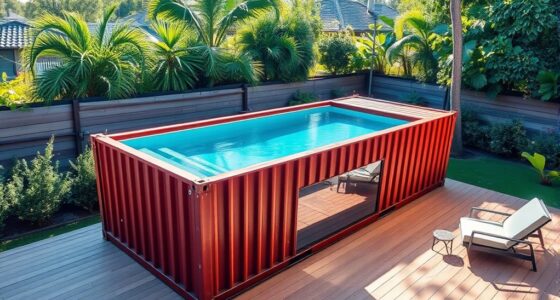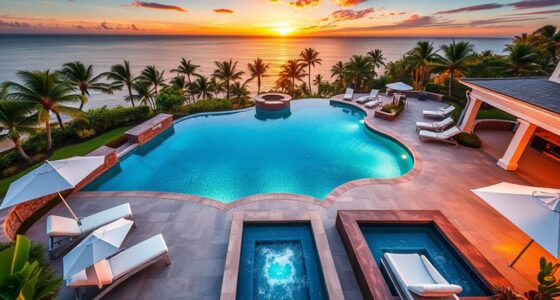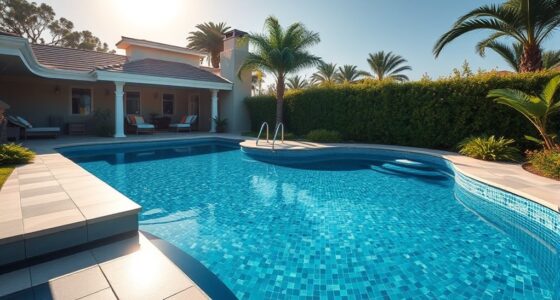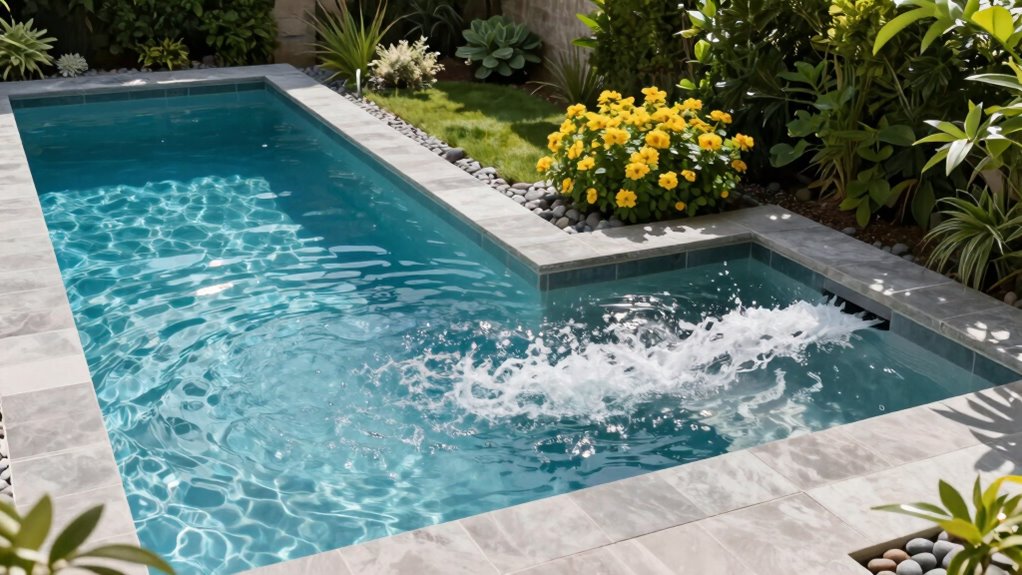
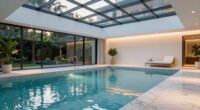
To choose between a lap pool and a plunge pool, consider how you plan to use it and your available space. If you want a dedicated workout area for swimming laps, a long, narrow lap pool is ideal, but it needs more space and higher maintenance. If you’re looking for relaxation and socializing, a smaller plunge pool is more practical and easier to care for. Keep in mind your budget and lifestyle—more details can help you make the best choice.

Get pool and patio gear delivered free with Prime
- Fast, free delivery on millions of items
- Prime Video, Amazon Music and more included
- Member-only deals all year
Key Takeaways
- Consider your primary purpose: fitness and lap swimming versus relaxation and casual use.
- Assess available space; longer pools are suitable for large yards, while smaller pools fit limited areas.
- Evaluate maintenance and operational costs; larger lap pools typically require more water treatment and energy.
- Reflect on energy efficiency preferences; plunge pools generally use less energy and are more sustainable.
- Match the pool type to your lifestyle, budget, and long-term maintenance willingness.
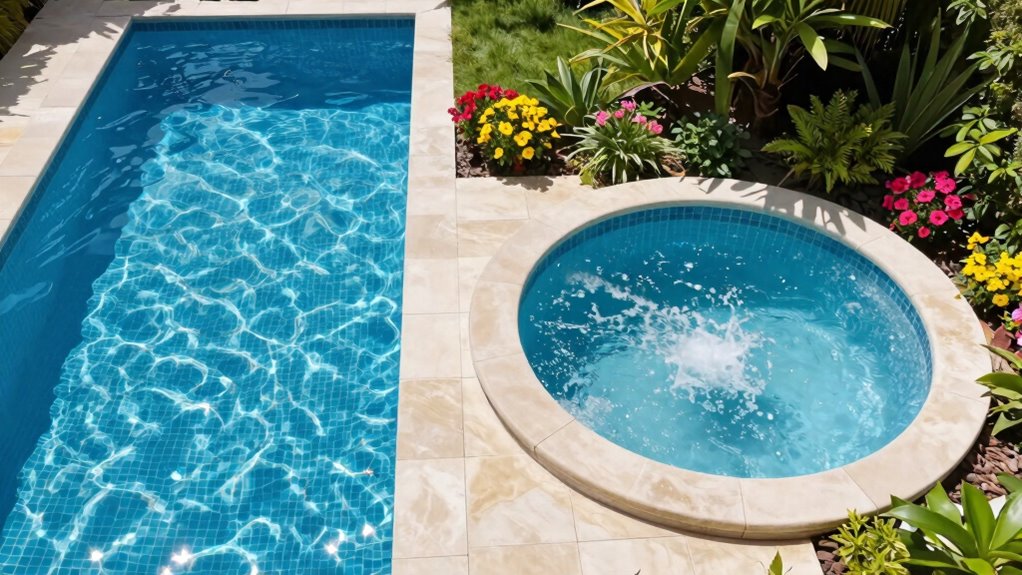
Deciding on the right pool for your home can feel overwhelming, but understanding your needs and space can make the process much easier. When choosing between a lap pool and a plunge pool, you should consider how you’ll use the pool regularly. A lap pool is designed for swimming laps and exercise, so if fitness and staying active are your priorities, this option makes sense. It typically has a longer, narrow shape, which allows for continuous swimming without turning around. On the other hand, a plunge pool is smaller and more compact, perfect for relaxing, cooling off, or socializing in a limited space. It’s ideal if your main goal is leisure rather than rigorous exercise.
Choosing the right pool depends on your space, needs, and whether you prioritize fitness or relaxation.
Your available space plays a big role in your decision. Lap pools require more length—usually at least 40 to 75 feet—so if your yard is limited, a plunge pool might be more practical. Conversely, if you have an expansive backyard, a lap pool can become a central feature for fitness routines. Think about how often you’ll use the pool, and for what purposes. If you plan to do daily laps or swim as part of your workout, a lap pool is a natural choice. For occasional dips and relaxation, a plunge pool will suffice and save space.
Pool maintenance is another key factor. Both types of pools require regular cleaning, water treatment, and equipment checks. However, a smaller plunge pool often means less water to treat and maintain, which can reduce your overall effort and costs. Energy efficiency also comes into play. Lap pools, especially longer ones, can consume more energy due to larger pumps and filtration systems needed for continuous use. But with modern energy-efficient pumps and variable-speed motors, you can keep operational costs down. Similarly, a plunge pool’s smaller size means it generally uses less energy, making it a more eco-friendly option if you’re conscious about energy consumption. Incorporating natural filtration systems can also help reduce chemical use, supporting sustainable practices. Additionally, accessibility features can be integrated into your pool design to enhance safety and ease of use, especially if children or elderly family members will be using the space. Considering pool types and their specific maintenance needs is essential for understanding the long-term costs and effort involved.
Ultimately, your choice hinges on your lifestyle, space, and budget. If fitness is a priority and you have the room, a lap pool offers a dedicated space for exercise and promotes ongoing pool maintenance to keep the water clean and clear. If relaxation and a compact footprint are more important, a plunge pool provides a quick, invigorating escape with less upkeep and energy use. Weigh these factors carefully, and you’ll find the pool that best fits your home and your lifestyle.
inflatable lap pool for backyard
As an affiliate, we earn on qualifying purchases.
As an affiliate, we earn on qualifying purchases.
Frequently Asked Questions
What Are the Maintenance Costs for Each Pool Type?
Maintenance costs are like a small garden; they require regular attention. For a lap pool, expect higher expenses due to frequent pool cleaning and precise chemical balancing, especially with larger volumes. A plunge pool’s smaller size means lower costs, but you still need to budget for routine pool cleaning and chemical adjustments. Overall, a lap pool tends to be pricier to maintain, while a plunge pool offers a more budget-friendly option.
Can I Install a Pool Indoors or Outdoors?
Yes, you can install a pool both indoors and outdoors. Indoor installation offers year-round swimming and protection from weather, but requires good ventilation and space. Outdoor options give you natural surroundings and sunlight, but depend on climate and seasonal use. Consider your climate, space availability, and maintenance preferences to decide whether an indoor or outdoor pool suits your lifestyle best.
How Long Does It Take to Install Each Pool?
Installing a lap pool typically takes 4 to 8 weeks, depending on size and site prep, while a plunge pool can be ready in 2 to 4 weeks. During installation, you’ll want to take into account pool lighting and water filtration systems, which can add time but are essential for safety and maintenance. Proper planning ensures a smooth process, so coordinate with your contractor to meet your timeline and preferences.
Are There Any Zoning or Permit Restrictions?
You need to check zoning regulations and permit requirements before installing your pool. Zoning laws determine where you can place a pool, set height limits, and outline safety features. Permit requirements guarantee your pool meets local standards for safety and construction. Contact your local building department to clarify restrictions, submit necessary paperwork, and obtain approvals. Doing so helps you avoid fines, delays, or future legal issues with your new lap or plunge pool.
Which Pool Type Increases Property Value More?
A lap pool generally increases your property value more because of its versatility and appeal to fitness enthusiasts. To maximize this, install pool lighting for safety and aesthetic appeal, and consider water temperature controls for year-round comfort. These features make your pool more inviting, boosting property value. Whether you choose a lap or plunge pool, well-designed lighting and temperature options enhance its desirability and overall impact on your home’s value.
small plunge pool for relaxation
As an affiliate, we earn on qualifying purchases.
As an affiliate, we earn on qualifying purchases.
Conclusion
Ultimately, choosing between a lap pool and a plunge pool boils down to your lifestyle and space. Imagine transforming your backyard into a personal oasis—either way, you’re creating a sanctuary that’s more invigorating than a waterfall in the desert. Trust your instincts and pick the one that excites you most. After all, this isn’t just a pool; it’s your gateway to endless relaxation and energy. Immerse yourself and make your dream a reality today!
energy-efficient pool pump for small pools
As an affiliate, we earn on qualifying purchases.
As an affiliate, we earn on qualifying purchases.
As an affiliate, we earn on qualifying purchases.
Halloween Picks
halloween
As an affiliate, we earn on qualifying purchases.