
TL;DR

Get pool and patio gear delivered free with Prime
- Fast, free delivery on millions of items
- Prime Video, Amazon Music and more included
- Member-only deals all year
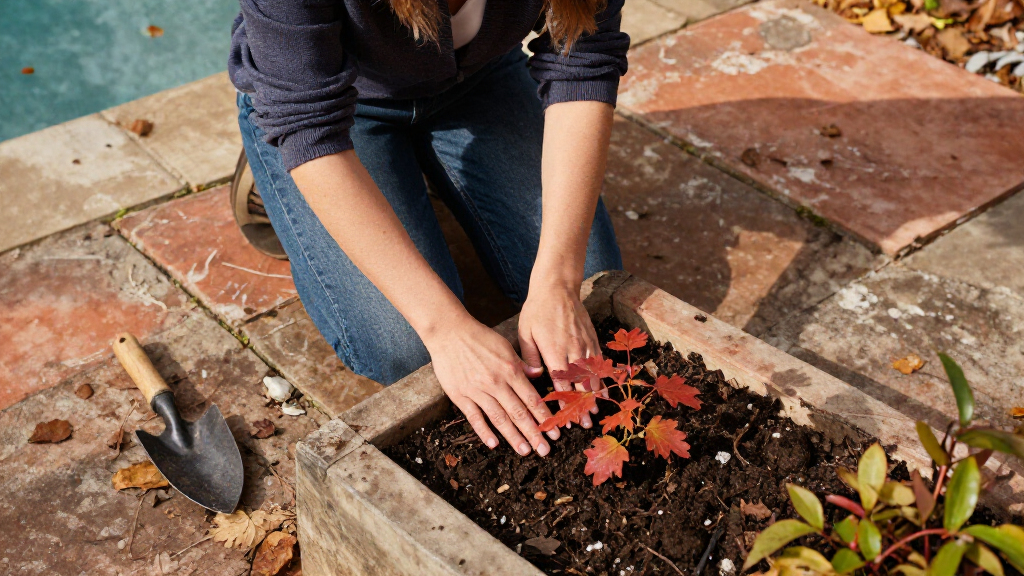
Country Living’s fall-planting guide says trees, shrubs and perennials generally benefit from about six weeks of growing conditions before the ground freezes. That is a rule of thumb, not a firm deadline: soil condition, climate and plant type can shift the window, and some plants are better planted in spring.
Fall planting does not end on one calendar date, according to a Country Living guide: gardeners should generally aim to give trees, shrubs and perennials about six weeks of growing conditions before the ground freezes. The guide says local climate, soil moisture and plant type matter more than the first autumn frost, a distinction that can help gardeners avoid planting too late—or giving up while conditions are still suitable.
The six-week recommendation is a general rule of thumb, not a guaranteed cutoff. Country Living says the useful window is typically when daytime temperatures remain in the 40s to 60s Fahrenheit, allowing roots to establish before harsher weather. A frost alone does not necessarily mean planting must stop: horticulturalist Stacey Hirvela, marketing manager for Proven Winners Color Choice Shrubs, told the publication that plants can still be planted after frost, including dormant plants that have lost their leaves.
The article offers approximate calendar guides for colder regions: mid-October in USDA Zones 3–4 and late October in Zones 5–6. In Zone 7 and warmer, it says planting may continue into early December or later. These dates are estimates, not local forecasts; frozen ground, waterlogged soil or a rapid shift to challenging weather can change whether a site is suitable.
Conditions in warmer climates also require a different calculation. The source says gardeners in the South should allow roughly six weeks before temperatures reach 90 degrees, while avoiding planting into soggy soil after heavy rain. Hirvela advises against fall planting for broadleaf evergreens such as rhododendron, holly and boxwood, as well as plants that are marginally hardy or prone to winter damage locally, including some bigleaf hydrangeas and butterfly bushes.
Soil Conditions Set the Planting Window
The guidance matters because a single frost date or zone-based calendar can give gardeners a misleading answer. Roots need time to establish, while soil that is frozen or saturated can prevent planting from going well. A gardener in a colder area may need to stop earlier than someone in a mild climate, but even a warm region can have periods when rain leaves soil too wet.
The plant itself also affects the decision. Some species are more vulnerable to winter injury, and planting a marginally hardy plant in fall may leave it exposed before it has settled in. The article’s central point is to weigh remaining growing time, soil state and plant hardiness together, rather than treating the first frost as an automatic deadline. If a plant has already been bought, Hirvela says getting it into the ground before winter is generally preferable to leaving it in its container, while recognizing that local conditions still matter.
Products Worth Considering

Roborock Robot Vacuum and Mop Combo with Self-Empty Dock

TCL 65 Inch QM8L Series SQD-Mini LED QLED 4K Smart Google TV

Bose SoundLink Plus Portable Bluetooth Speaker, Wireless Outdoor Speaker, Up to 20 Hours Battery Life, Waterproof and Dustproof, Black
As an affiliate, we earn on qualifying purchases.
Why Frost Is Not the Only Signal
In spring, frost can harm tender new growth. In fall, the source says, frost often has a different significance: plants may be dormant or nearly dormant, but that does not by itself make them unsuitable for planting. Hirvela told Country Living that a plant that has dropped its foliage after a severe frost or freeze can still be planted.
The timing question is instead about how much suitable weather remains. In cold regions, the ground freezing is the key constraint described in the guide. In warmer areas, winter planting may be possible when soil is workable, but prolonged rain and soggy ground can interfere. In the South, the approaching summer heat—not winter cold—is the major weather challenge identified by Hirvela.
““Basically what you want to try to accomplish with fall/winter planting is giving the plant the longest possible time to grow roots before challenging weather hits.””
— Stacey Hirvela, as quoted by Country Living
Local Conditions Can Change the Dates
The source does not provide a forecast or a single planting deadline that applies to every location. Its USDA-zone dates are rough estimates, and the exact time the ground freezes varies from year to year and within regions. The guidance also does not specify a soil-temperature threshold or address every plant variety.
Whether a particular plant is a good fall choice depends on its hardiness and the likelihood of winter damage in that garden. The article names examples to avoid but does not provide a complete list. Gardeners should treat the advice as general guidance and check local extension or nursery recommendations for their area and plant.
Check the Forecast and Soil
Before planting, gardeners can compare the remaining forecast with the approximate six-week establishment window, check whether the soil is workable rather than frozen or waterlogged, and confirm that the plant is suited to local winter conditions. In warm climates, the guide advises considering both heavy rain and the time remaining before temperatures approach 90 degrees.
Where local conditions remain suitable, planting may still be possible after the first frost. Where soil is saturated, a freeze is imminent, or a plant is vulnerable to winter damage, delaying until spring may be the more appropriate choice. The supplied source does not identify a specific next update or forecast; the decision remains local and weather-dependent.
Key Questions
Is it too late to plant after the first frost?
Not necessarily. Country Living’s source says fall frost alone is not a planting cutoff; dormant plants can still be planted. Soil condition, remaining growing time and plant type also matter.
How many weeks before the ground freezes should I plant?
The guide recommends aiming for about six weeks before the ground freezes to give roots time to establish. It describes this as a rule of thumb, not a fixed deadline.
What are the approximate fall planting dates by USDA zone?
The article suggests mid-October for Zones 3–4 and late October for Zones 5–6. In Zone 7 and warmer, planting may continue into early December or later if the soil and weather are suitable.
Which plants does the guide advise against planting in fall?
Hirvela recommends against fall planting for broadleaf evergreens such as rhododendron, holly and boxwood, and for plants that are marginally hardy or often suffer winter damage in the local climate. The source also names bigleaf hydrangea and butterfly bush as examples.
Can I plant when the soil is wet?
The guide cautions against planting in soggy or waterlogged soil, particularly in warmer climates with heavy rain. It does not give a precise moisture threshold, so local gardening advice may help determine whether conditions are suitable.
Source: countryliving.com