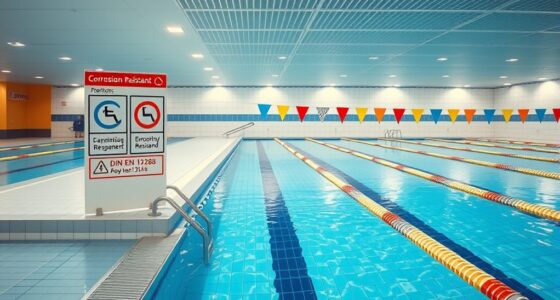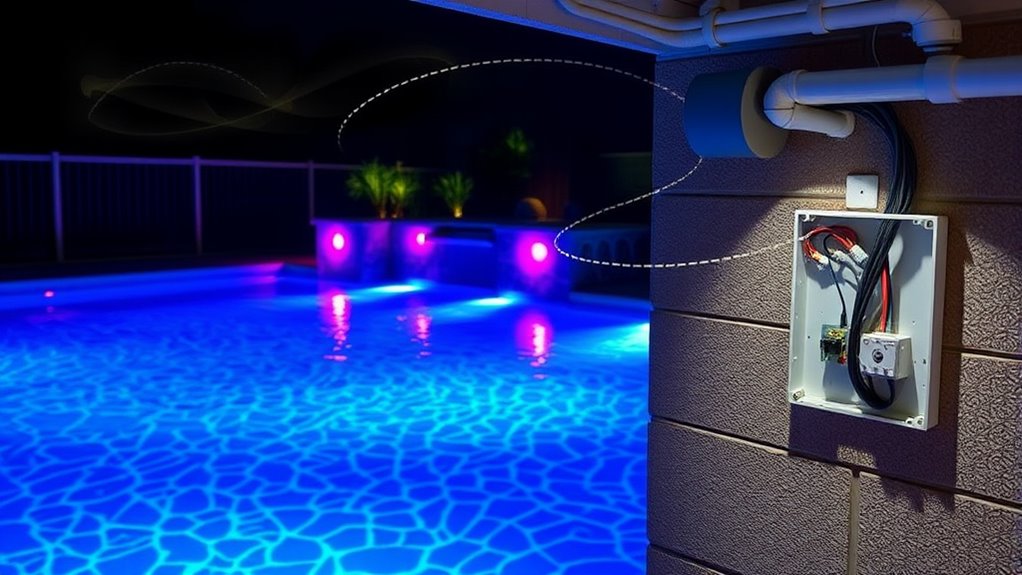

To guarantee safety and comply with electrical codes for pool lighting, you must install all outdoor outlets and lighting fixtures with ground-fault circuit interrupters (GFCIs) that are rated for wet locations. Position them at safe distances from the pool’s edge and use weatherproof covers. Follow NEC and local regulations for wiring, grounding, and fixture placement. Proper installation reduces hazards like electric shocks, so consulting a licensed electrician helps keep your pool area safe and compliant—more details await you.
Key Takeaways
- All pool lighting and electrical systems must comply with NEC requirements for outdoor and wet location installations.
- Use GFCI-protected circuits and outlets to prevent electrical shocks and ensure safety near water.
- Install outdoor lighting fixtures with weatherproof enclosures and proper sealing for moisture protection.
- Maintain safe distances between electrical components and the pool edge, following local code height and clearance standards.
- Regularly verify that wiring, grounding, and fixtures adhere to code standards, consulting licensed electricians for compliance.
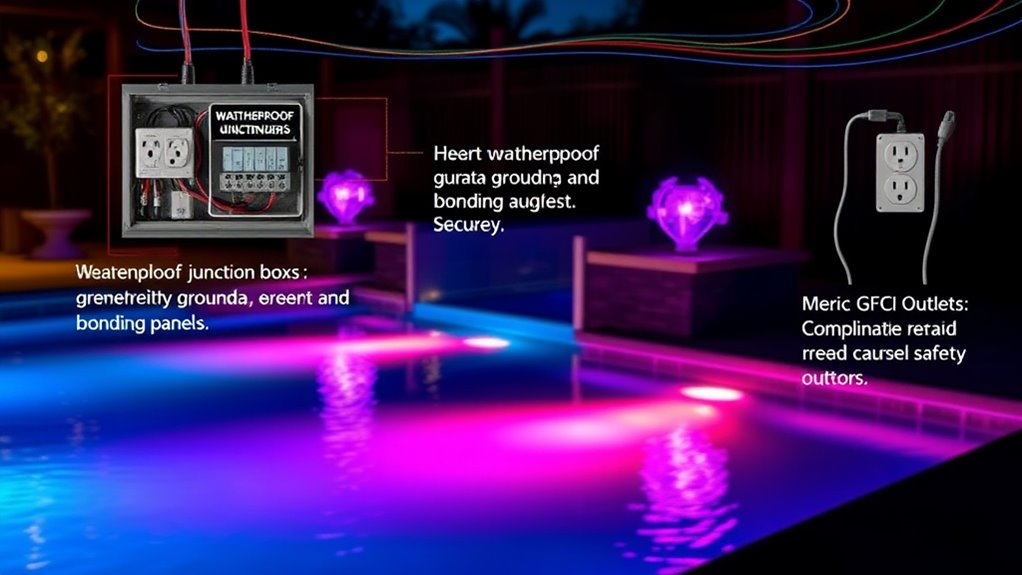
Ensuring your pool lighting meets electrical codes is essential for safety and compliance. One of the key aspects to consider is ground fault protection, which is designed to prevent electric shocks by quickly shutting off power if a ground fault occurs. This safety feature is mandatory for all outdoor electrical installations, including pool lighting systems. When installing or upgrading your pool lights, make sure they are connected to a circuit that includes a ground-fault circuit interrupter (GFCI). GFCIs constantly monitor the flow of electricity and trip instantly if they detect any imbalance, reducing the risk of electrocution or electrical fires around your pool area. This protection is particularly critical because water conducts electricity and can amplify hazards if proper safeguards aren’t in place.
In addition to ground fault protection, outdoor outlet requirements play a vital role in maintaining safety standards. All outdoor outlets used in pool areas must be weather-resistant and equipped with ground-fault protection. These outlets should be positioned at a safe distance from the pool’s edge, complying with local codes that specify minimum height and clearance requirements. Proper placement prevents accidental contact with water and minimizes the risk of electrical shock. Using GFCI outlets for outdoor wiring not only meets code but also provides an added layer of safety by cutting power if moisture or faulty wiring is detected. Remember, outdoor outlets should be covered with weatherproof covers to shield against rain, snow, and debris, ensuring they remain functional and safe over time. Additionally, verifying that all wiring complies with the National Electrical Code (NEC) helps ensure the installation is both safe and legal.
When planning your pool lighting setup, always verify that the electrical wiring and fixtures conform to the National Electrical Code (NEC) and any local amendments. This includes ensuring that all wiring is rated for wet locations and that junction boxes are accessible and sealed properly. If you’re uncertain about the installation process, consulting a licensed electrician is highly recommended. They can ensure that your outdoor outlets, lighting fixtures, and grounding methods meet all requirements, including the correct placement of GFCI devices and adherence to outdoor outlet standards. Proper grounding and adherence to these codes aren’t just about legal compliance; they’re about protecting yourself, your family, and your guests from potential electrical hazards.

ELEGRP Outdoor GFCI Outlet with Extra-Duty in Use Cover, 20 Amp TRWR Self-Test GFI Receptacle, 1 Gang Weather Resistant in-Use Cover, Lockable, Horizontal/Vertical Mount, UL Listed, 1 Pack, Black
✅【Ultimate Outdoor Electrical Combo】 Enhance your outdoor spaces with this high-performance GFCI outlet and weatherproof in-use cover set….
As an affiliate, we earn on qualifying purchases.
As an affiliate, we earn on qualifying purchases.
Frequently Asked Questions
Can I Install My Own Pool Lighting Without Professional Help?
You can attempt a DIY installation of your pool lighting, but it’s not recommended without professional help. Electrical DIY projects around pools involve complex wiring and safety risks. If you choose to proceed, make certain you understand local electrical codes and safety standards, and consider consulting a licensed electrician. Proper installation is vital to prevent hazards, so weigh the risks carefully before tackling pool lighting on your own.
What Are the Penalties for Non-Compliance With Electrical Codes?
Ignoring electrical codes can lead to liability fines and code violations, which can feel like storm clouds gathering overhead. If you don’t comply, authorities might impose penalties that disrupt your peace of mind and financial stability. These fines serve as reminders to prioritize safety, helping you avoid more serious consequences down the line. Staying within code not only safeguards your property but also guarantees you enjoy your pool without unwelcome legal interruptions.
Are Solar-Powered Pool Lights Compliant With Safety Standards?
Yes, solar-powered pool lights are generally compliant with safety standards if they follow solar regulations and electrical safety guidelines. You should verify they are certified by recognized safety organizations like UL or ETL, and that they’re rated for outdoor use around pools. Always install them according to manufacturer instructions and local codes to prevent electrical hazards. Properly tested solar lights help you enjoy your pool safely without risking electrical safety violations.
How Often Should Pool Electrical Systems Be Inspected and Maintained?
You should inspect your pool electrical systems at least once a year, similar to how a homeowner discovered faulty wiring during an annual check, preventing potential hazards. Follow a consistent inspection schedule and maintain proper practices like checking for corrosion, loose connections, and water leaks. Regular maintenance guarantees safety, prolongs equipment life, and keeps your pool area secure, giving you peace of mind during swimming season.
Do Outdoor Outlets Near Pools Need Special Weatherproofing?
Yes, outdoor outlets near pools need special weatherproofing. You should use weatherproof enclosures to protect outlets from rain, splashes, and humidity. Additionally, guarantee they have ground fault protection to prevent electrical shocks. Proper weatherproofing and ground fault protection are essential for safety, especially in wet environments. Regularly inspect these outlets to confirm the enclosures remain sealed and functional, reducing risks around your pool area.

SURAIELEC 12V AC Pool Lights for Inground Pool, 10 inch Color Changing LED Pool Light with Remote Control, 300W Equivalent, Underwater Swimming Pool Light Fixture for Large Wet Niches, 50FT
⚠️⚠️⚠️A Transformer is Required! -[Fits 10" Standard Niches]: Perfectly designed for 10 inch wet niches; easily replaces Pentair,…
As an affiliate, we earn on qualifying purchases.
As an affiliate, we earn on qualifying purchases.
Conclusion
By following pool lighting and electrical codes, you’re not just ensuring safety—you’re guarding against chaos and catastrophe. Imagine a dark night turning into a storm of sparks or a silent pool turning deadly with a single faulty connection. But with proper compliance, you create a fortress of safety, turning your pool into a serene oasis instead of a battleground of danger. Don’t leave safety to chance—light it right and keep disaster at bay!

HALO HLB 4 inch LED Recessed Ceiling Light Canless Dimmable with Selectable Lumens and Selectable Color 27/30/35/40/5000K 4-Pack Wet Location Indoor Outdoor Soffit Lighting HLB4LSFS5-4PK
DESIGN: Ultra-slim 4 inch canless recessed lighting with 1/2 in profile eliminates traditional housing needs, making installation simple…
As an affiliate, we earn on qualifying purchases.
As an affiliate, we earn on qualifying purchases.

Pool Water Bonding Kits for Most Above Ground Pool Skimmers Maintenance Kit
Contact with Pool Water Effectively: ChangTa pool skimmer bonding plate which install on the side wall of the…
As an affiliate, we earn on qualifying purchases.
As an affiliate, we earn on qualifying purchases.