As a first-time pool owner, you might overlook regular water testing and chemical balancing, which are essential for clarity and safety. Safety features like fences, alarms, and rules often get neglected, increasing risks. Maintaining the surrounding area and equipment can slip your mind, leading to more issues down the line. Keeping detailed records helps catch problems early. Stick with us to discover key tips that can make your pool ownership experience easier and safer.
Key Takeaways
- Regularly testing and balancing water chemistry to prevent issues before they arise.
- Properly securing safety equipment and establishing safety rules for all users.
- Consistently cleaning and maintaining surrounding areas to reduce debris and contaminants.
- Scheduling routine filter cleanings and equipment inspections to prevent malfunctions.
- Keeping detailed records of chemical levels, maintenance, and repairs for proactive management.
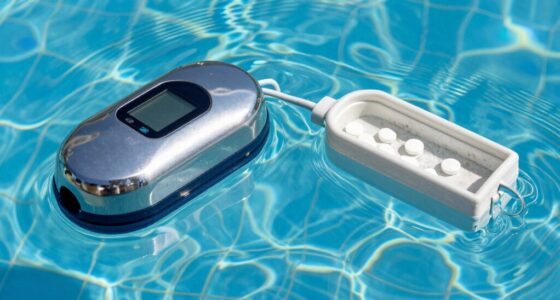
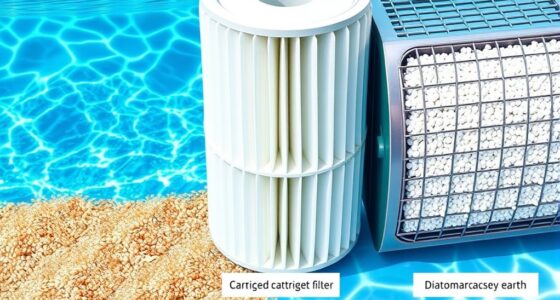
Owning a pool can be a rewarding way to enjoy the summer, but it also requires ongoing maintenance and care. When you’re new to pool ownership, it’s easy to overlook some essential aspects that keep your pool safe, clean, and inviting. One of the most common oversights is neglecting proper pool maintenance routines. Regularly checking and balancing water chemistry is essential; if you ignore pH, alkalinity, or sanitizer levels, you risk algae growth, cloudy water, or bacterial contamination. Skipping routine inspections or not cleaning filters often can lead to equipment failure or water quality issues. Many first-time owners underestimate how much work it takes to keep a pool pristine, but staying diligent with maintenance ensures your pool remains safe and enjoyable. Paying attention to water quality and ensuring proper chemical balance can prevent many common issues.
Alongside pool maintenance, safety precautions are critical, yet often overlooked by first-timers. It’s tempting to forget about safety measures when you’re excited to jump in, but establishing rules and safety features from the start is fundamental. Installing a secure pool cover, fencing, or alarms helps prevent accidents, especially if children or pets are around. Remember, even a shallow pool can pose risks, so never assume it’s safe without proper safeguards. It’s also easy to forget that safety extends to your own behavior—never swim alone, avoid diving in shallow areas, and stay vigilant about supervising others. Educating everyone about pool safety helps prevent injuries and ensures everyone enjoys the space responsibly. Additionally, understanding the importance of proper circulation and filtration can significantly improve water quality and reduce the likelihood of problems developing.
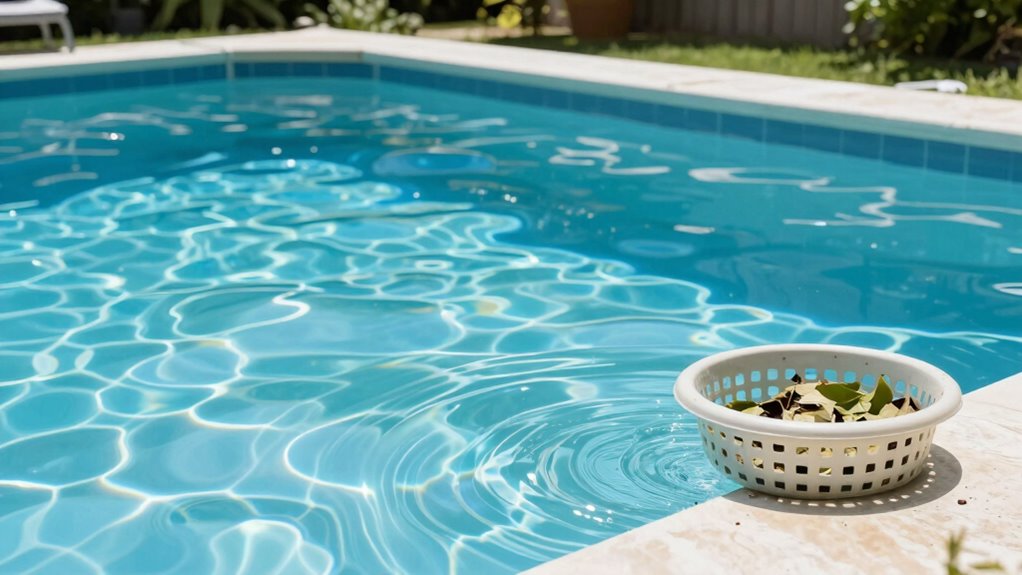
Many new pool owners also overlook the importance of maintaining a clean surrounding area. Leaves, dirt, and debris can quickly find their way into your pool, complicating maintenance and affecting water quality. Regularly skimming the surface, vacuuming the bottom, and keeping your deck tidy reduce the chances of contaminants entering the water. Proper circulation is another aspect that’s often underestimated; running your pump consistently ensures that chemicals distribute evenly and debris is filtered out efficiently. Incorporating landscaping that minimizes debris falling into the pool can further simplify upkeep and maintain water clarity.
Finally, first-time owners sometimes overlook the importance of keeping detailed records of maintenance activities and water tests. Tracking chemical levels, filter cleanings, and repairs helps you identify patterns and anticipate issues before they escalate. This proactive approach saves time, money, and frustration. In brief, paying close attention to your pool’s maintenance, implementing safety precautions, and staying organized are key to enjoying a safe, beautiful pool all season long. Don’t let small oversights turn your summer oasis into a problem-filled space—be proactive, responsible, and attentive to every detail.
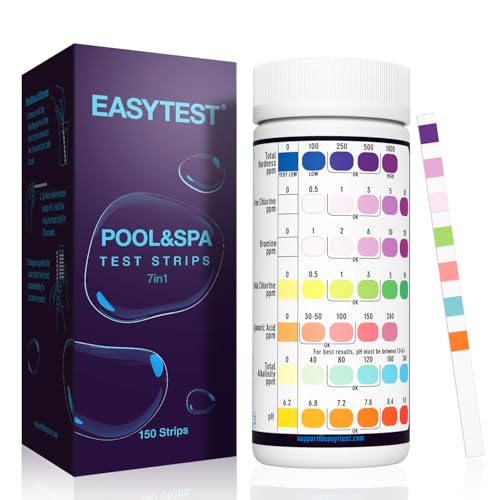
EASYTEST 7-Way Pool Test Strips, 150 Strips Water Test for Hot tub and Spa
- Includes 150 Test Strips: Enough for regular water testing
- Quick and Accurate Results: Soak for 1 second, read in 15 seconds
- 7-in-1 Water Testing: Tests Bromine, pH, Chlorine, and more
As an affiliate, we earn on qualifying purchases.
As an affiliate, we earn on qualifying purchases.
Frequently Asked Questions
How Often Should I Test My Pool Water Chemistry?
You should test your pool water chemistry at least twice a week to maintain proper water balance and guarantee safe swimming conditions. Regular testing helps you catch imbalances early and avoid problems like algae growth or cloudy water. During heavy use or after storms, test more frequently. Consistent pool maintenance, including water testing, keeps your pool clean, safe, and inviting, making your swimming experience enjoyable and hassle-free.
What Is the Best Way to Prevent Algae Growth?
To prevent algae growth, you should maintain proper chemical balance and regularly shock your pool. Keep chlorine levels consistent, as algae thrive in unbalanced water. Brush the pool surfaces frequently to remove algae spores and vacuum debris. Using algaecides as a preventive measure also helps, especially in warm or shaded areas. Consistent maintenance and monitoring guarantee your pool stays clear and algae-free, making swimming safe and enjoyable.
How Do I Winterize My Pool Properly?
Think of winterizing your pool like tucking a child into bed for the night. Start by draining water to just below the skimmer, then secure a sturdy pool cover. Balance your chemicals, adjusting pH and alkalinity to prevent algae or corrosion. Add winterizing chemicals, circulate the water, and remove any debris. These steps guarantee your pool stays protected during cold months, ready for a revitalizing splash when spring arrives.
What Safety Equipment Is Essential for Pool Safety?
You should always have essential safety equipment like a sturdy safety fencing around your pool to prevent accidental falls. A reliable pool cover is also vital, especially when the pool isn’t in use, to keep debris out and provide extra protection. Additionally, consider adding safety alarms on doors leading to the pool area and life-saving equipment like a shepherd’s hook and life ring nearby. These measures help keep everyone safe.
How Can I Reduce My Pool’s Energy Consumption?
Think of your pool’s energy use like a leaky faucet—small drips add up. You can cut costs by installing solar heating to harness free sunlight and switching to energy-efficient pumps that use less power. For example, I saved 30% on my energy bill by upgrading my pump and adding a solar cover. These simple changes make a big difference in reducing your pool’s energy consumption.
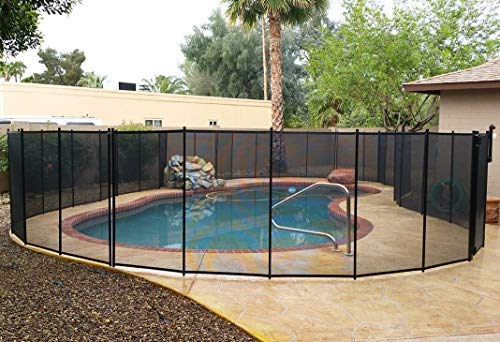
VINGLI Pool Fence 4Ft x 96Ft, Swimming Safety Fencing for Inground Pools
- Pool Fence Material: Premium mesh fabric and aluminum
- Durability: Resistant to cracking and storms
- Easy Storage: Rolls up for convenient storage
As an affiliate, we earn on qualifying purchases.
As an affiliate, we earn on qualifying purchases.
Conclusion
Owning a pool is exciting, but don’t overlook the importance of regular maintenance. Did you know that neglecting proper care can increase your energy costs by up to 50%? Staying on top of cleaning, chemical balancing, and routine inspections helps keep your pool safe, sparkling, and cost-effective. Remember, a little extra effort now saves you time and money later. Enjoy your pool season with confidence, knowing you’re avoiding common mistakes that first-time owners often make.

Hayward CL200EF in-Line Automatic Chlorine Feeder, Offline Pool Chlorinator and Chlorine Dispenser, Up to 9 lb Capacity, for In-Ground Swimming Pools
- Automatic Off-Line Chlorination: Provides consistent chlorine distribution
- High-Capacity Chlorine Feeder: Holds up to 9 lbs of chlorine
- Corrosion-Resistant Construction: Durable, chemical-resistant housing
As an affiliate, we earn on qualifying purchases.
As an affiliate, we earn on qualifying purchases.

Aqua Comb Pool Filter Cartridge Cleaning Tool
- Durable Construction: UV protected ABS and nylon materials
- Comprehensive Filter Cleaning: Cleans deep pleated cartridge filters
- Effective Debris Removal: Removes dust, debris, and particles
As an affiliate, we earn on qualifying purchases.
As an affiliate, we earn on qualifying purchases.