Beyond installing a fence, it’s vital to add multiple safety layers around your pool. Equip it with alarms, safety covers, and secure chemical storage to prevent accidents. Responsible supervision and quick access to emergency equipment are essential. Regularly check and maintain safety devices, and make sure everyone knows basic CPR and emergency procedures. Combining these measures creates a safer environment. If you want to discover more about protecting your loved ones, keep exploring further safety strategies.
Key Takeaways
- Implement multiple safety layers like alarms, covers, and supervision to enhance overall pool security.
- Ensure emergency preparedness with accessible first aid kits, clear plans, and CPR training.
- Store pool chemicals securely, follow handling instructions, and educate household members on chemical dangers.
- Regularly test and maintain safety devices such as alarms and covers for reliable protection.
- Combine physical barriers with vigilant supervision for comprehensive safety around the pool area.
Have you considered that a fence alone might not be enough to keep your loved ones safe around the pool? While a sturdy barrier is vital, it’s only one part of a thorough safety plan. To truly protect everyone, you need to think about additional layers of safety, including emergency preparedness and chemical safety. These measures can make a notable difference in preventing accidents and responding quickly if something goes wrong.
Emergency preparedness involves more than just knowing how to call 911. It means having a clear plan in place for various scenarios, such as someone struggling in the water or experiencing a medical emergency. You should guarantee that all family members and visitors know how to respond—this includes basic CPR training, which can be lifesaving. Keep emergency contact numbers visible and accessible near the pool area, along with a well-stocked first aid kit. Having a designated person responsible for monitoring the pool at all times adds another layer of safety. Remember, accidents can happen swiftly, so being prepared helps you act promptly and effectively. Incorporating comprehensive safety strategies can further strengthen your safety measures. Understanding safe handling and storage of chemicals is equally important to prevent mishaps.
Ensure all family members know emergency procedures and keep safety equipment accessible for quick response.
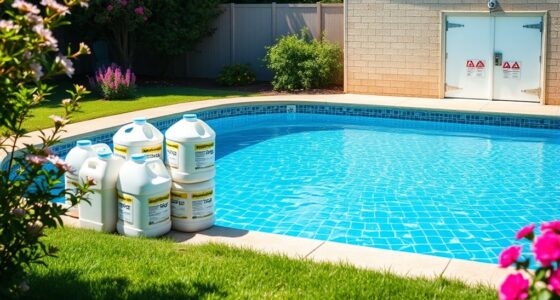
Chemical safety is another vital aspect often overlooked. Pool chemicals, like chlorine and pH adjusters, can be dangerous if mishandled. Store them in a secure, locked cabinet out of children’s reach, and always follow the manufacturer’s instructions for use and storage. Educate everyone in your household about the dangers of pool chemicals and the importance of handling them carefully. Regularly check chemical levels to prevent overuse or imbalances, which can cause skin and eye irritation or other health problems. Proper chemical management not only guarantees the water remains safe and clean but also prevents accidental poisoning or chemical burns. Additionally, understanding the role of contrast ratio in projectors can be paralleled to understanding how different safety layers work together to create a comprehensive protective environment around the pool. It’s also important to be aware of additional safety devices like pool alarms and safety covers that serve as extra safeguards. Ensuring all safety layers function together in harmony is essential for effective protection.
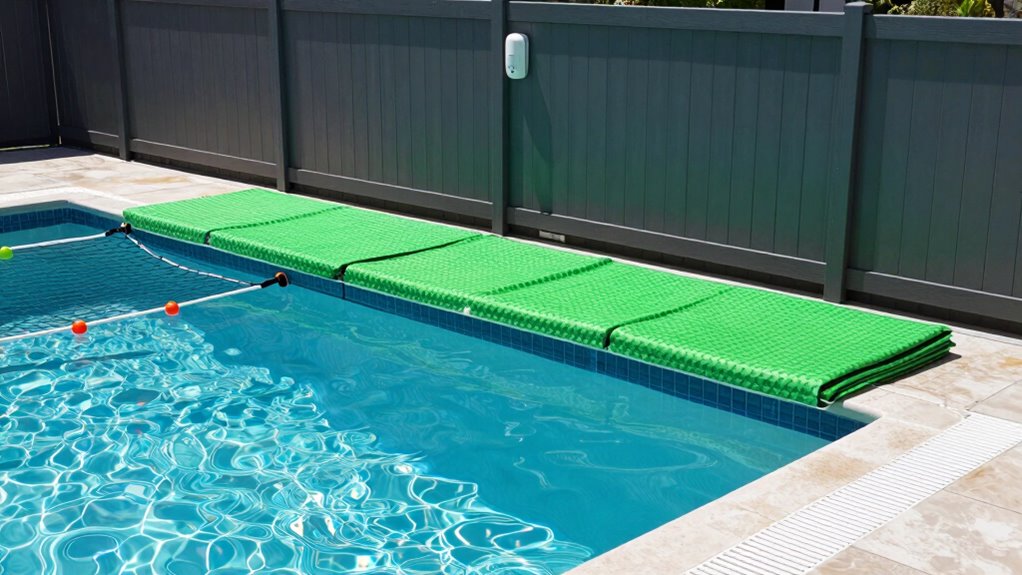
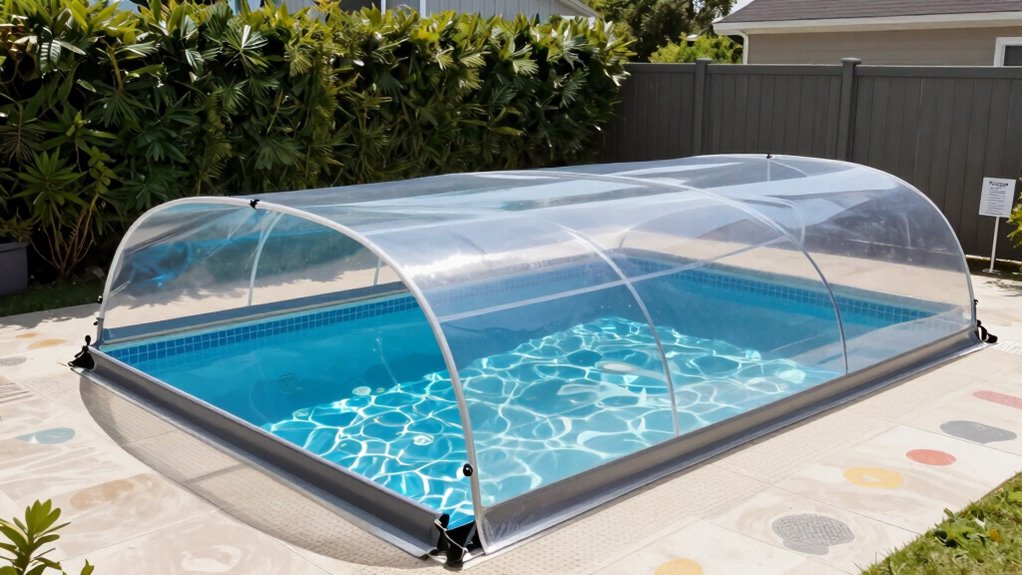
Beyond physical barriers and chemical precautions, consider safety devices like pool alarms and safety covers. Pool alarms alert you if someone enters the water unexpectedly, providing early warning of potential danger. Safety covers can prevent accidental falls into the pool when it’s not in use. These additional measures, combined with vigilant supervision, considerably reduce the risk of drownings and injuries. It’s also beneficial to regularly review and practice your safety procedures to ensure everyone remains prepared for emergencies.
In the end, creating a safe swimming environment involves multiple layers of protection. Focusing on emergency preparedness and chemical safety enhances your overall strategy, giving you peace of mind. You can’t control everything, but by implementing these safety layers, you’re taking responsible steps to keep your loved ones safe around the pool.
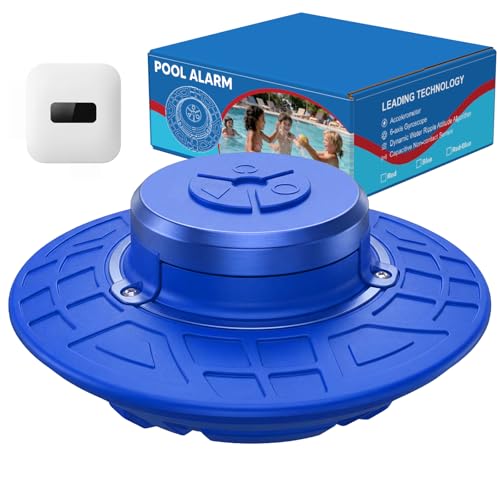
Pool Alarm, Floating Safety Alarm for Inground & Above Ground Pools, 110dB Siren IP68 Waterproof, Smart Wave-Sensing Prevents False Alerts, 262ft Wireless Range, Kids & Pets Safety (Blue)
[Instant Safety for Kids & Pets] Accidental falls are silent and happen in seconds. Our pool alarm features…
As an affiliate, we earn on qualifying purchases.
As an affiliate, we earn on qualifying purchases.
Frequently Asked Questions
Are Pool Safety Covers Effective During Winter?
Yes, pool safety covers are effective during winter if you perform proper winter maintenance and choose a cover with good durability. They prevent debris from falling into the pool and help keep children and pets safe. Make sure your cover is securely anchored and regularly check for damage or water accumulation. A high-quality, durable cover withstands harsh winter conditions, providing reliable protection throughout colder months.
How Often Should Safety Alarms Be Tested?
You should test your safety alarms weekly to guarantee they’re functioning correctly. Regular alarm maintenance helps catch any issues early and keeps your safety device standards up to date. When testing, activate the alarm and verify it sounds loudly enough to alert everyone nearby. Consistent testing is essential for reliable pool safety, giving you peace of mind that your safety devices will alert you promptly in an emergency.
Can Pool Safety Layers Be Customized for Different Pools?
Absolutely, pool safety layers can be tailored to suit your specific pool. You can choose from various pool cover options that match your backyard aesthetic and safety needs, while alarm maintenance guarantees your safety system remains reliable. Customization might include adding extra alarms or selecting covers that fit perfectly, giving you peace of mind. By personalizing these layers, you create a safer environment suited specifically to your pool’s size and your family’s needs.
What Is the Lifespan of Pool Safety Equipment?
The lifespan of pool safety equipment varies based on the type and maintenance. Generally, safety equipment like life rings and pool covers last 5-10 years with proper equipment maintenance. Following pool safety standards helps extend their effectiveness. Regular inspections and timely replacements are key to ensuring safety, so you should check equipment periodically to maintain best protection and comply with safety guidelines.
Are There Age-Specific Safety Measures for Children?
Yes, there are age-specific safety measures for children. You should prioritize constant child supervision whenever they’re near or in the pool, no exceptions. Additionally, safety education is vital; teach children about pool hazards and proper behavior early on. Use age-appropriate safety equipment, like flotation devices, and make sure they understand pool rules. These measures help prevent accidents and keep your children safe around the water.

Automatic Motorized Solar Blanket Cover Reel/Roller for Pools up to 20×40'
Motorized Pool Roller attaches to 20 FT pool reels with simple Installation in few minutes. Click the link…
As an affiliate, we earn on qualifying purchases.
As an affiliate, we earn on qualifying purchases.
Conclusion
So, while a fence might keep nosy neighbors out, don’t forget to layer up with alarms, covers, and supervision. Think of your pool as a secret lair—only accessible to those with the right keys, not just a fancy gate. After all, you wouldn’t leave the crown jewels unguarded, right? Keep safety layers in place, and you’ll guarantee your backyard remains a paradise, not a splashy disaster waiting to happen.

Sterilite 4 Shelf Cabinet, Lockable Utility Storage w/ Adjustable Shelves, Gray – Plastic Shelving Unit for Organizing Garage, Pantry, Basement, Laundry Room or Mudroom
Dimensions & Size: Exterior measures 25 5/8" x 18 7/8" x 69 3/8", with interior shelf dimensions of…
As an affiliate, we earn on qualifying purchases.
As an affiliate, we earn on qualifying purchases.

PRESTAN CPR Manikin and One Infant CPR Manikin Training Kit w/AED Trainers and Accessories, Medium Tone, MCR Medical
Dual-Age Training Bundle: A comprehensive starter kit featuring one professional adult manikin and one infant manikin in a…
As an affiliate, we earn on qualifying purchases.
As an affiliate, we earn on qualifying purchases.