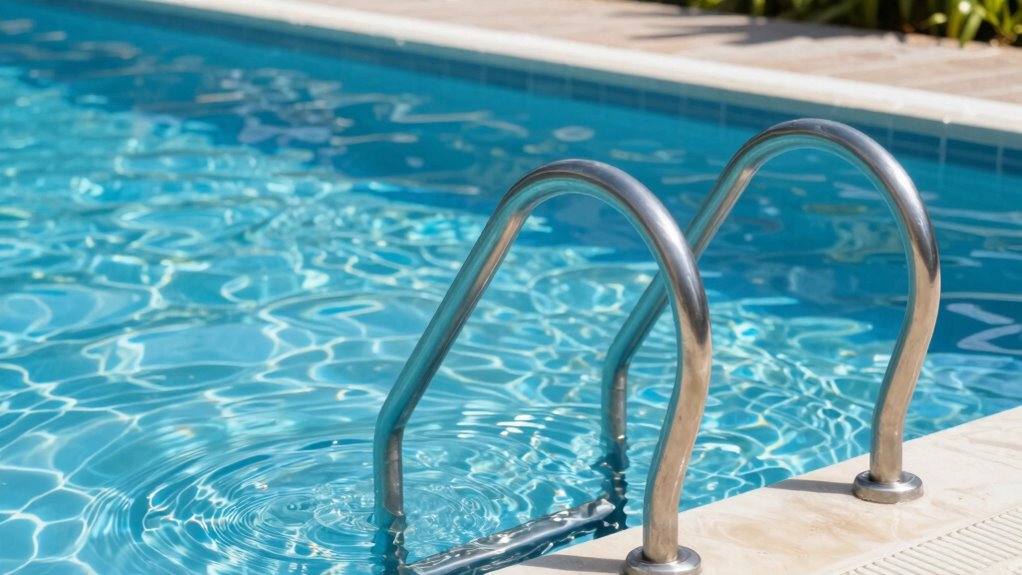

Pool handrails are a surprisingly valuable upgrade that can improve your safety, confidence, and convenience. They help prevent slips and falls while making it easier to get in and out of the pool, especially for those with mobility concerns. Properly installed and maintained handrails also last longer and reduce the risk of accidents. If you want to discover more about how these simple additions can make a big difference, keep exploring the details.
Key Takeaways
- Improve safety by reducing slips, falls, and accidents around pool entry points.
- Enhance accessibility for children, seniors, and individuals with mobility challenges.
- Promote independence and confidence in pool use for users of all ages and abilities.
- Proper installation and durable materials ensure long-term safety and minimize costly repairs.
- Thoughtful placement and compliance with standards optimize safety and user comfort.
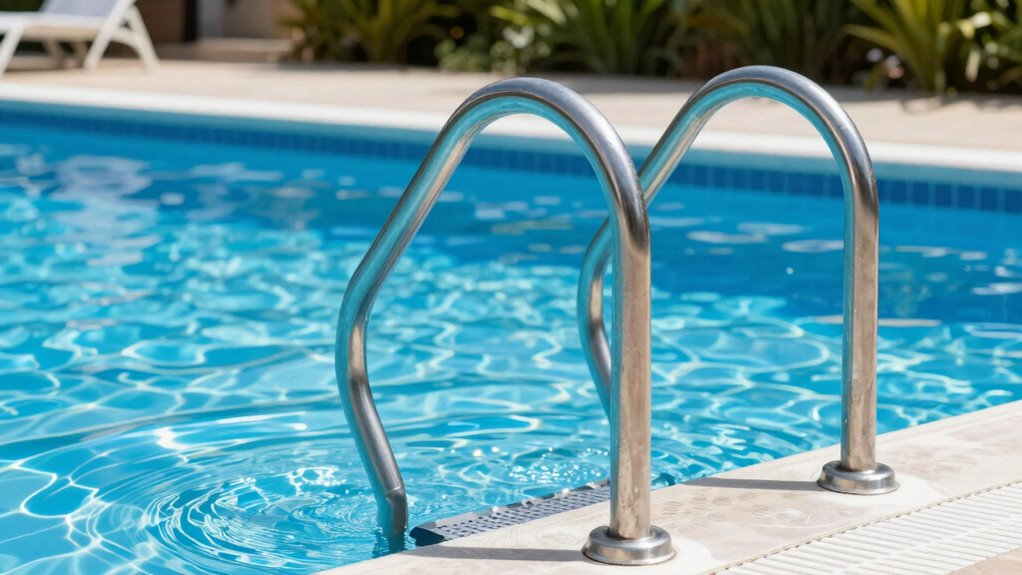
While pool handrails might seem like a simple safety feature, they actually provide a significant boost to your overall swimming experience. Not only do they help prevent slips and falls, but they also make entering and exiting the pool easier, especially for kids, seniors, or anyone with mobility concerns. When you choose the right handrails, you’re investing in safety features that promote confidence and independence around the pool area. Proper installation is key to maximizing these benefits, so understanding some essential installation tips can make a real difference. For starters, you want to assure your handrails are securely anchored into the pool deck or surrounding surface. Weak attachments can cause instability, which defeats the purpose of having a safety feature in the first place. Use corrosion-resistant materials, like stainless steel, to withstand exposure to water and pool chemicals, prolonging the lifespan of your handrails. Additionally, selecting appropriate materials ensures your handrails remain durable and functional over time.
When installing, it’s important to contemplate the height and placement of the handrails. Position them at a height that’s comfortable for most users, typically around waist to chest level, so they can grip easily without stretching or bending awkwardly. You should also place the handrails where they provide the most assistance—near steps, shallow ends, or entry points—making sure they’re accessible from both inside and outside the pool. Additionally, check local building codes and safety standards, which often specify specific dimensions and installation requirements to ensure your handrails are compliant and safe. Following installation guidelines can help you avoid costly adjustments and ensure optimal safety. Properly following these guidelines not only guarantees safety but can also prevent costly modifications later.
It’s also wise to consider the environmental factors that can impact the longevity of your pool handrails, such as exposure to sun or chemicals, and choose protective coatings if necessary. Regular maintenance and inspection are essential because corrosion resistance alone doesn’t guarantee durability; environmental factors and usage can cause hardware to loosen or degrade over time. Moreover, selecting the right installation location can also influence how well your handrails withstand environmental challenges. Beyond the technical aspects, the safety features of your pool handrails should be complemented by regular inspections. Over time, hardware can loosen or corrode, so routinely checking that everything stays secure ensures ongoing safety. When you’re installing, don’t rush the process; take your time to align everything correctly and tighten all fittings. If you’re unsure about the installation, it’s worthwhile to consult a professional. Proper installation not only guarantees safety but also enhances the durability of your handrails, saving you money in the long run.
Ultimately, adding well-installed pool handrails transforms your swimming space into a safer, more accessible environment. They serve as a simple yet effective safety feature that encourages confidence for swimmers of all ages and abilities. When you pay attention to installation tips and choose quality materials, you’re making an investment that improves your overall enjoyment and peace of mind every time you dip into the water.

VEVOR Pool Rail 55×32 Pool Railing 304 Stainless Steel 250LBS Load Capacity Silver Rustproof Pool Handrail Humanized Swimming Pool Handrail with Blue Grip Cover & M8 Drill Bit & Self-Taping Screws
𝐅𝐫𝐢𝐞𝐧𝐝𝐥𝐲 𝐑𝐞𝐦𝐢𝐧𝐝𝐞𝐫:For saltwater pools, choose 316 stainless steel or other materials. This rail may have a potential risk…
As an affiliate, we earn on qualifying purchases.
As an affiliate, we earn on qualifying purchases.
Frequently Asked Questions
Are Pool Handrails Suitable for All Pool Types?
Pool handrails are suitable for most pool types, but you should consider pool material considerations and handrail design options. For concrete or stone pools, sturdy stainless steel rails work well, while vinyl liners may need gentler, corrosion-resistant options. Check your pool’s shape and depth to choose the right design, ensuring safety and accessibility. Properly selected handrails enhance safety and convenience, making your pool more enjoyable for everyone.
How Much Do Pool Handrails Typically Cost?
Pool handrails typically cost between $100 and $500, depending on the material options and installation complexity. You can compare costs easily by considering the material options like stainless steel for durability or aluminum for affordability. The cost comparison helps you decide whether a basic or premium handrail suits your needs. Ultimately, investing in quality guarantees safety, longevity, and a smoother pool experience, making it well worth the price.
Can DIY Installation Be Effective and Safe?
DIY installation can be effective if you’re cautious, but beware of DIY pitfalls like improper mounting or using unsuitable materials. To guarantee safety, follow strict safety precautions, including turning off power, wearing protective gear, and double-checking measurements. If you’re unsure about your skills, consulting a professional is wise. Proper installation not only keeps you safe but also guarantees your pool handrail stays secure and functional.
Do Handrails Require Regular Maintenance or Inspections?
You should keep up with a regular maintenance schedule and inspection frequency for your pool handrails. They do require routine checks to spot rust, loose fittings, or any damage that could pose safety risks. Think of it as giving your handrails a health check-up—staying on top prevents bigger issues down the line. By doing so, you guarantee they remain secure, functional, and safe for everyone using your pool.
Are There Safety Standards or Regulations for Pool Handrails?
Yes, there are safety standards and regulations for pool handrails. You need to guarantee your handrails meet regulatory compliance, which includes adhering to safety certifications set by local or national authorities. These standards guarantee the handrails are securely installed, sturdy, and safe for users. Regular inspections help maintain compliance and safety, preventing accidents and ensuring the handrails continue to serve their purpose effectively.

Brass Pool Rail Anchor and Escutcheon Set – Inground Anchors with 4" Depth – Fits 1.90" OD Tubing – Heavy-Duty Mounting Kit for Pool Handrails and Ladders – 2 Pack
Heavy-Duty Brass Construction for Lasting Durability: Built from high-grade solid brass, this pool anchor and escutcheon kit offers…
As an affiliate, we earn on qualifying purchases.
As an affiliate, we earn on qualifying purchases.
Conclusion
So, next time you’re debating whether to install pool handrails, consider this: they’re more than just safety features—they genuinely boost your overall swimming experience. While some might dismiss them as minor upgrades, research suggests they markedly improve accessibility and confidence in the water. It turns out, investing in handrails isn’t just about convenience; it’s about enhancing your quality of life by making swimming safer and more enjoyable for everyone.

VEVOR Pool Rail, 48 x 32 inch Pool Handrail, 220 lbs Load Capacity Heavy Duty Stainless Steel Swimming Handrail, Seamless Welding, Recessed or Base Mount, for Poolside, Water Parks, Spa Centers
220 lbs Heavy-Duty Load: Our pool handrail ensures security entry and exit from your pool. Whether pulling up,…
As an affiliate, we earn on qualifying purchases.
As an affiliate, we earn on qualifying purchases.

ECOTRIC Short Handrail for Above Ground Swimming Pool Step
This product attaches to the BiltMor Pool Step system. Two rails needed for each ladder
As an affiliate, we earn on qualifying purchases.
As an affiliate, we earn on qualifying purchases.