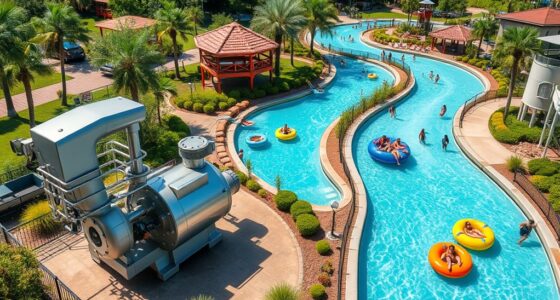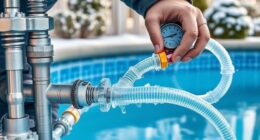
Chemical automation systems for commercial pools help you maintain ideal water quality with minimal effort. They precisely monitor and adjust chlorine, pH, and alkalinity levels automatically, reducing human error and ensuring a safer swimming environment. These systems also extend equipment lifespan and prevent issues like algae and cloudy water. With remote control options and adaptable settings, you can respond quickly to changing conditions. Exploring this further reveals how these systems can transform your pool management process seamlessly.
Key Takeaways
- Automates water chemistry monitoring and adjustments to maintain safe, balanced pool water.
- Uses sensors and controllers for precise chemical dosing based on real-time data.
- Reduces manual testing, human error, and chemical waste in commercial pool management.
- Offers remote monitoring and adaptive dosing for varying usage and environmental conditions.
- Ensures compliance with safety standards and enhances overall pool safety and equipment longevity.
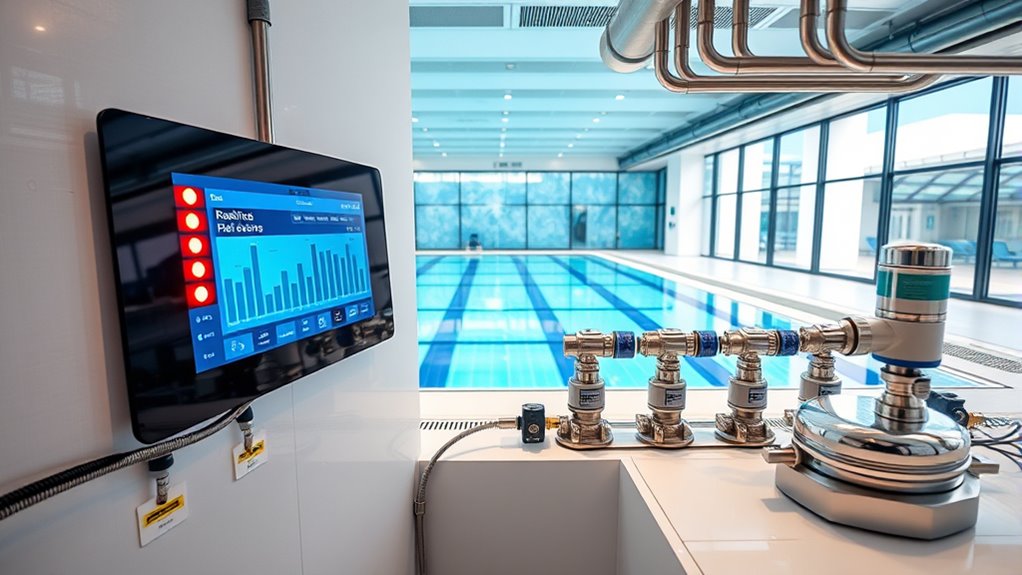
Chemical automation systems are designed to do just that, taking the guesswork out of maintaining water quality. This technology streamlines pool management, reducing manual labor and minimizing human error. With automated dosing, you can maintain consistent water chemistry, creating a safer environment for swimmers and extending the lifespan of your equipment.
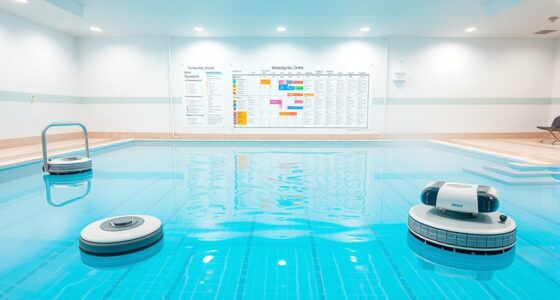
One of the biggest advantages of chemical automation systems is their ability to manage pool chemical balancing effectively. Proper chemical balancing not only keeps the water clear and inviting but also prevents issues like algae growth, cloudy water, and corrosion. These systems continuously monitor water parameters such as pH, sanitizer levels, and alkalinity, adjusting chemical inputs in real time. As a result, you don’t have to rely on periodic testing and manual adjustments, which can often lead to oversights or inaccuracies. Instead, the system maintains ideal levels automatically, ensuring that your pool remains safe and sanitary at all times.
Chemical automation ensures optimal water balance, preventing algae, cloudiness, and corrosion automatically.
Automated dosing units are designed to work seamlessly with sensors and controllers that constantly track water quality. When a reading falls outside the desired range, the system triggers the appropriate chemical injection. For instance, if pH levels rise too high, the system releases acid to bring it back into balance. Similarly, if sanitizer levels drop, it adds chlorine or other disinfectants as needed. This precise control helps prevent chemical imbalances that can cause discomfort for swimmers or damage to equipment. Plus, by automating these processes, you save time and reduce the likelihood of human error, which is critical in a commercial setting where consistency matters.
Another benefit is the ability to customize dosing schedules based on pool usage and environmental factors. Automated systems can adapt to changes in temperature, sunlight, or occupancy, adjusting chemical levels proactively. This adaptability ensures that water quality remains stable even during peak usage or extreme weather conditions. Additionally, many systems come with remote monitoring capabilities, allowing you to oversee chemical levels and system performance from anywhere. This convenience means you can respond quickly to potential issues without being physically present at the pool.
Furthermore, understanding divorce statistics and local legal resources can help facility managers prepare for any legal considerations related to pool safety liabilities or disputes, ensuring compliance and protection for their business.
Frequently Asked Questions
How Do Chemical Automation Systems Impact Long-Term Pool Maintenance Costs?
Chemical automation systems lower your long-term pool maintenance costs by optimizing chemical usage, leading to significant chemical cost savings. They improve maintenance efficiency by reducing manual adjustments and monitoring, which minimizes errors and waste. As a result, you spend less on chemicals and labor over time, making your pool management more cost-effective. Investing in automation guarantees a healthier pool environment while keeping expenses manageable through streamlined operations.
Are Chemical Automation Systems Compatible With Existing Commercial Pool Infrastructures?
Surprisingly, your existing pool equipment often welcomes chemical automation systems with open arms. They’re designed to be compatible, seamlessly integrating with your current water chemistry controls. You might think upgrading is a hassle, but in reality, these systems adapt easily, streamlining maintenance and ensuring precise chemical balance. So yes, you can upgrade without overhauling your entire infrastructure, making your commercial pool smarter and more efficient effortlessly.
What Safety Features Are Integrated Into Modern Chemical Automation Systems?
Modern chemical automation systems prioritize your safety with features like chemical safety protocols and emergency shutoff mechanisms. These systems automatically detect leaks or hazardous conditions, alerting you instantly to potential dangers. The emergency shutoff instantly stops chemical flow to prevent spills or over-dosing. By integrating these safety features, you guarantee a safer environment for pool staff and swimmers, reducing risks associated with chemical mishandling and enhancing overall pool management safety.
How Do Automation Systems Handle Unexpected Chemical Imbalances?
When unexpected chemical imbalances happen, automation systems quickly detect them using chemical sensors that monitor pH and sanitizer levels. They then adjust dosing accuracy by automatically adding the correct amount of chemicals to restore balance. This rapid response prevents issues like algae growth or skin irritation, ensuring safe and clean water. You benefit from consistent water quality, reduced manual intervention, and peace of mind knowing the system actively maintains ideal chemical levels.
What Is the Typical Installation Timeline for a Commercial Pool Automation System?
Installing a commercial pool automation system is like assembling a complex puzzle, usually taking 2 to 4 days. You’ll follow step-by-step installation procedures, connecting sensors, controllers, and valves. System integration happens smoothly as the system syncs with your pool’s existing equipment. Proper planning, site prep, and professional installation guarantee everything fits perfectly, minimizing downtime. Expect a seamless setup that keeps your pool running efficiently and reliably.
Conclusion
Imagine a busy commercial pool without automation—chaos, unpredictable water quality, and stressed staff. With chemical automation systems, you’re like a skilled conductor, effortlessly maintaining perfect harmony beneath the surface. Studies show these systems reduce chemical costs by up to 30% while ensuring safety and clarity. Embrace automation, and you’ll transform your pool into a serene oasis where every swimmer feels safe and cared for, just like a symphony perfectly played.