To winterize your pool plumbing and equipment, start by draining all water from filters, pipes, pumps, and heaters to prevent freeze damage. Use a shop vac or air compressor to blow out remaining water and disconnect hoses, skimmers, and return fittings for storage in a dry, safe location. Check your chemical balance and add winterizing chemicals to prevent algae and bacteria growth. If you want detailed steps to guarantee your equipment stays protected during winter, keep exploring.

Get pool and patio gear delivered free with Prime
- Fast, free delivery on millions of items
- Prime Video, Amazon Music and more included
- Member-only deals all year
Key Takeaways
- Drain water from all pipes, filters, pumps, and heaters to prevent freezing damage.
- Use a shop vac or air compressor to blow out residual water in plumbing lines.
- Disconnect hoses, skimmers, and return fittings; store parts safely in a dry location.
- Add winterizing chemicals to inhibit algae and bacterial growth during the off-season.
- Inspect and secure all equipment, ensuring proper storage and protection from winter conditions.
As winter approaches, it is essential to prepare your pool equipment for the cold months ahead. One of the first steps you should take is ensuring proper pool cover installation. A good cover acts as a shield against debris, ice, and harsh weather, helping to keep your pool cleaner and reducing the risk of damage. Before installing the cover, clean your pool thoroughly, removing leaves, dirt, and any remaining debris. Secure the cover tightly around the edges to prevent wind from displacing it, and consider using weights or cover clips if necessary. A well-fitted pool cover not only protects your equipment but also minimizes water evaporation and keeps out animals or pests that might cause trouble over the winter.
Alongside covering your pool, maintaining the chemical balance is essential before shutting down your system. Proper chemical balance prevents algae growth, corrosion, and the buildup of bacteria during the off-season. Test the water’s pH, alkalinity, and calcium hardness levels, adjusting them as needed to reach ideal ranges. Typically, a pH between 7.2 and 7.6, alkalinity between 80 and 120 ppm, and calcium hardness around 200-400 ppm provide the best foundation for winterization. Once the chemical levels are adjusted, add a winterizing sanitizer or algaecide to inhibit algae and bacteria growth during the months your pool isn’t in use.
Maintaining proper chemical balance before winterization prevents algae, corrosion, and bacteria growth.
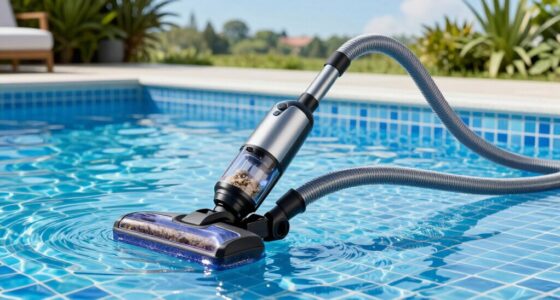
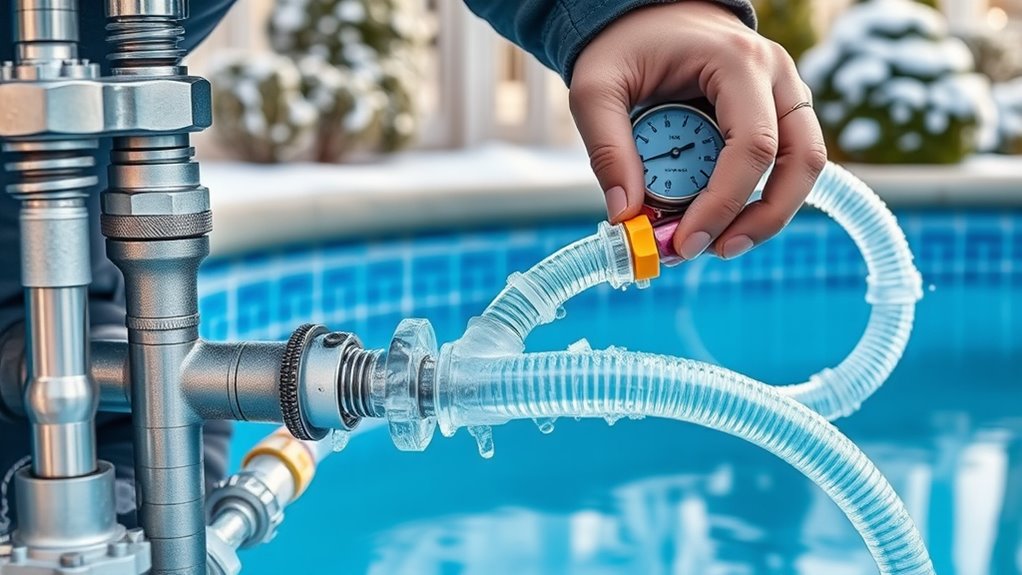
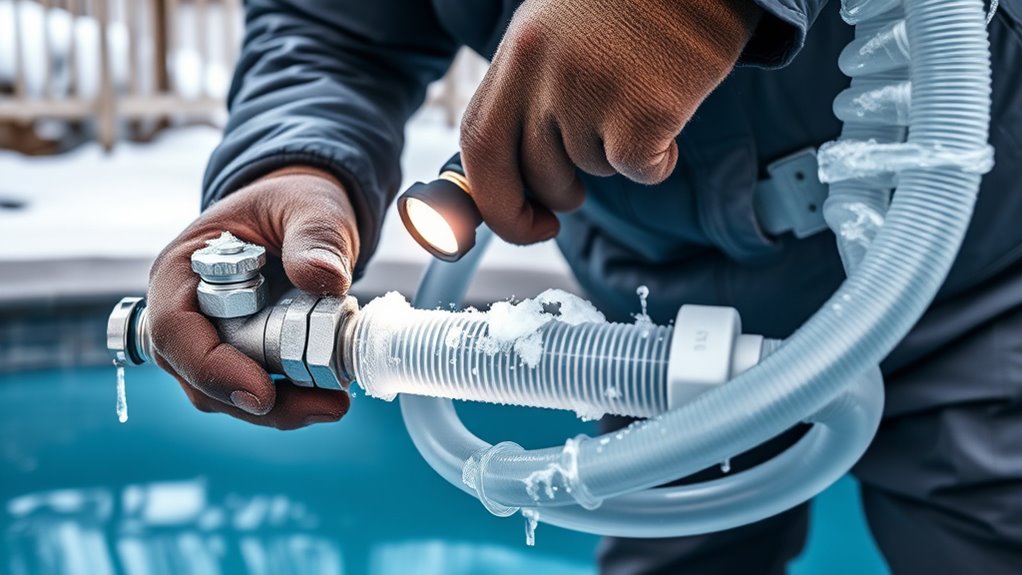
Next, you should focus on draining and disconnecting your pool plumbing and equipment. Drain all water from pipes, filters, pumps, and heaters to prevent freezing and cracking. Use a shop vac or air compressor to blow out remaining water in the lines, ensuring no moisture remains inside. Afterward, disconnect hoses, skimmers, and return fittings, storing them in a safe, dry location. This step reduces the risk of damage caused by expanding ice and keeps your equipment in good condition for spring reopening.
Additionally, proper winterization techniques can significantly extend the lifespan of your pool equipment and prevent costly repairs come spring. Finally, double-check your pool cover installation to confirm it’s secure and properly fitted, as a loose cover can let in debris or allow wind to cause damage. During this process, verify your chemical balance again and add any necessary winter chemicals. Properly winterized pool plumbing and equipment will make spring startup much easier, saving you time and money. With these steps, you’ll protect your investment, keep your pool in prime condition, and enjoy a worry-free winter season.
As an affiliate, we earn on qualifying purchases.
Frequently Asked Questions
When Is the Best Time to Winterize My Pool?
You should winterize your pool before the temperatures drop below freezing consistently, usually in late fall. Before pool cover installation, make certain your water’s chemical balance is properly maintained to prevent algae and corrosion. This timing helps protect your equipment and plumbing from freeze damage. Don’t wait too long, as rushing winterization can lead to issues. Properly preparing your pool now ensures it stays in great shape through winter and is ready for use next season.
Can I Winterize My Pool Equipment Myself?
Yes, you can winterize your pool equipment yourself with DIY maintenance if you’re comfortable with the process. However, for ideal results and to avoid costly mistakes, consider professional services. They have the expertise to thoroughly drain, clean, and protect your equipment from freezing damage. If you choose DIY, follow detailed instructions carefully, and guarantee you have all necessary supplies to winterize your pool properly.
What Tools Are Needed for Winterizing Pool Plumbing?
To winterize your pool plumbing, you’ll need a garden hose, air compressor, and plug kits. Start by draining the water from pipes, then blow out any remaining water with the compressor. While doing this, remember to check your pool cover for tears and perform pool cover maintenance. Also, make certain your water is chemically balanced to prevent algae growth and corrosion, making your winterization process smoother and more effective.
How Do I Prevent Pipe Freezing During Winter?
To prevent pipe freezing during winter, you should insulate your pool pipes with pipe insulation to keep the cold out. Additionally, you can apply non-toxic antifreeze to the plumbing system, especially in areas prone to freezing. Make sure to drain any remaining water from the pipes and equipment, and consider running a small amount of water through the lines periodically if temperatures drop drastically. These steps help protect your pool plumbing effectively.
Is It Necessary to Drain the Entire Pool for Winter?
You don’t need to drain your entire pool for winter. Instead, you should lower the water level below the skimmer, remove debris, and balance your chemicals. Cover your pool with a sturdy pool cover to keep out dirt and freezing temperatures. Maintaining proper chemical balance prevents algae growth and protects the pool’s surfaces during the off-season. This approach saves time and preserves your pool’s condition for a smooth reopening in spring.
As an affiliate, we earn on qualifying purchases.
Conclusion
As you winterize your pool, you protect it from harsh cold, ensuring it’s ready to enjoy again. Think of it as sealing a treasure chest—what’s valuable now remains safe, even when the seasons change. Left unprotected, your equipment risks damage from freezing temperatures, much like a delicate glass shattering in a storm. By taking these steps, you’re not just winterizing; you’re safeguarding your investment, so next summer’s swim is as invigorating as ever.
pool cover with weights and clips
As an affiliate, we earn on qualifying purchases.
As an affiliate, we earn on qualifying purchases.
As an affiliate, we earn on qualifying purchases.
Columbus Day / Indigenous Peoples' Day Picks
long weekend sales
As an affiliate, we earn on qualifying purchases.