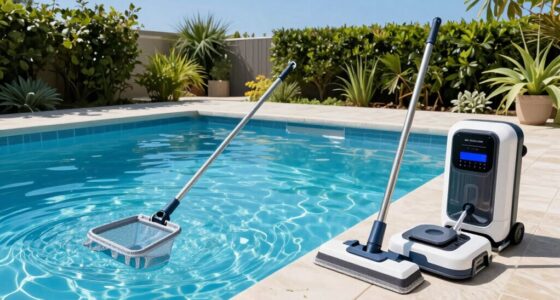
To extend your pool pump’s lifespan, regularly check and clean your filter to prevent debris buildup and make certain of smooth water flow. Keep an eye on water chemistry to prevent corrosion and avoid damage inside the pump. Lubricate bearings if needed, following your manufacturer’s instructions, and inspect the pump and surrounding area for leaks, cracks, or corrosion. Proper maintenance now helps prevent costly repairs later—continue exploring to learn how to protect your equipment even better.

Get pool and patio gear delivered free — and shop member deals
- Fast, free delivery on millions of items
- Access to Prime Big Deal Days deals on October 6–7
- Prime Video, Amazon Music and more included
Key Takeaways
- Regularly clean and inspect filters to prevent clogs and reduce strain on the pump.
- Maintain proper water chemistry to prevent corrosion and buildup inside the pump system.
- Lubricate motor bearings as recommended by the manufacturer to minimize friction and overheating.
- Check for cracks, leaks, and corrosion on the pump housing and seals, replacing damaged parts promptly.
- Keep the surrounding area clear of debris and obstructions to ensure proper airflow and operation.
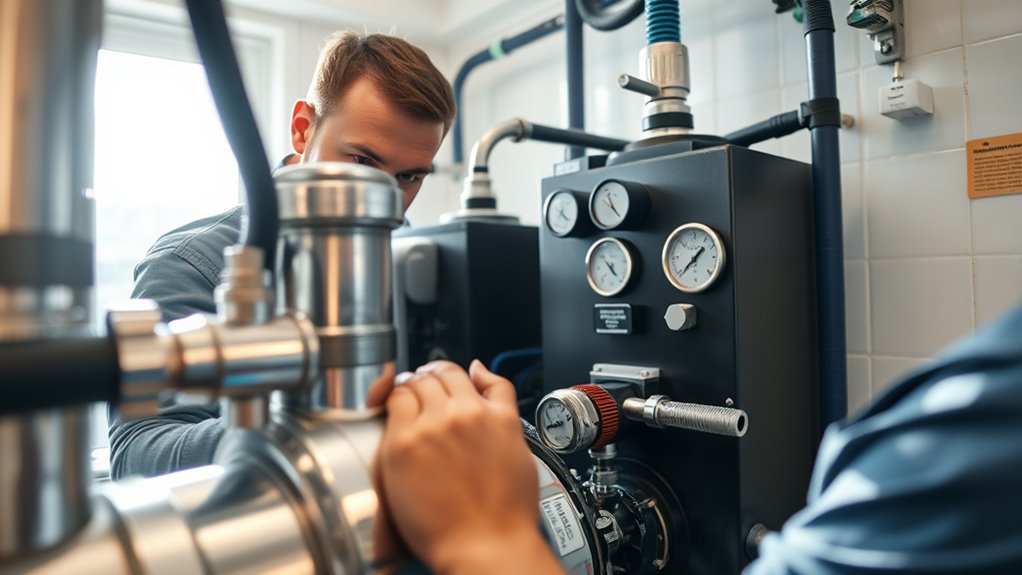
A properly maintained pool pump is essential for keeping your pool clean and running efficiently. Regular maintenance not only guarantees maximum performance but also extends the lifespan of your equipment. One of the most critical aspects of pool pump care is filter cleaning. You should schedule regular filter inspections and cleanings to prevent debris from clogging the system. A dirty or clogged filter forces the pump to work harder, which can lead to premature wear and increased energy consumption. When cleaning your filter, follow the manufacturer’s instructions carefully, whether it’s backwashing a sand or DE filter or rinsing a cartridge filter. Keeping your filter clean allows water to flow freely, reducing strain on the pump motor and improving overall circulation. Additionally, optimizing your water chemistry can help prevent corrosion and buildup inside the pump. In addition to filter cleaning, motor lubrication plays a crucial role in maintaining your pool pump’s health. Many pool pumps have sealed bearings that don’t require regular lubrication, but some models do benefit from occasional lubrication of the motor’s shaft or bearings. Check your pump’s manual to determine if lubrication is necessary and what type of lubricant to use. Proper lubrication minimizes friction, reduces heat buildup, and prevents the motor from overheating. When applying lubricant, use only products recommended by the manufacturer to avoid damaging internal components. Regular lubrication helps keep the motor running smoothly, preventing unnecessary strain and potential failure. Beyond filter cleaning and motor lubrication, you should also routinely inspect your pump for any signs of wear or damage. Look for cracks, leaks, or corrosion around the housing and seals. Tighten any loose fittings or clamps, and replace worn or damaged parts promptly. Maintaining proper water chemistry can also help prevent corrosion and buildup inside the pump. Additionally, ensure that your pump’s surroundings are clear of debris, leaves, or obstructions that could hinder operation or cause damage.
As an affiliate, we earn on qualifying purchases.
Frequently Asked Questions
How Often Should I Replace My Pool Pump’s Motor?
You should consider replacing your pool pump’s motor every 8-10 years, especially if you notice increased motor noise or frequent pump seal leaks. These signs indicate wear and tear, reducing efficiency and risking further damage. Regularly inspect the motor for unusual sounds and seal integrity. Timely replacement ensures smooth operation, prevents costly repairs, and extends your pump’s lifespan, keeping your pool clean and functioning at its best.
Can I Upgrade to a More Energy-Efficient Pool Pump?
Yes, you can upgrade to a more energy-efficient pool pump. Before doing so, check the pump compatibility with your existing setup to guarantee it fits and functions properly. Upgrading can considerably boost energy savings, reducing your electricity bills and environmental impact. Consult with a professional if needed, and choose a model with a high Energy Star rating for maximum efficiency and long-term savings.
What Are Signs My Pool Pump Needs Immediate Repair?
Your pool pump is crying out for help if you notice strange pump noises or leaks. Unusual sounds like grinding or squealing signal internal issues, while leaks around seals or fittings indicate seal failure or crack. These signs mean your pump’s health is deteriorating and needs immediate repair. Ignoring them risks further damage, which can lead to costly replacements. Stay vigilant and address these signs promptly to keep your pool running smoothly.
How Do I Prevent Algae Buildup in My Pump?
To prevent algae buildup in your pump, regularly check and maintain proper chemical balancing in your pool. This keeps algae from thriving inside the pump housing. Additionally, clean and inspect the pump housing frequently to remove any debris or algae growth. Keep the pool water circulated properly, and use algaecides if necessary. Consistent maintenance helps make certain your pump stays algae-free and runs efficiently longer.
Is It Necessary to Winterize My Pool Pump?
Did you know that improperly winterized pools can lead to costly repairs? Yes, it’s necessary to winterize your pool pump. Follow winterizing tips like draining water, disconnecting hoses, and storing the pump indoors to prevent freeze damage. Proper pump preservation ensures longevity and smooth operation when swimming season returns. Don’t skip this step; winterizing your pool pump safeguards your investment and keeps it in top condition year-round.
As an affiliate, we earn on qualifying purchases.
Conclusion
By regularly maintaining your pool pump, you might just find that your equipment lasts longer than expected. It’s like catching a glimpse of a clear, blue sky on a cloudy day—a small coincidence that makes a big difference. When you keep up with simple tasks, your pump runs smoother, saving you money and hassle down the line. So, stay attentive and proactive—your pool and wallet will thank you for the extra care.
As an affiliate, we earn on qualifying purchases.
As an affiliate, we earn on qualifying purchases.
Fall Picks
fall essentials
As an affiliate, we earn on qualifying purchases.