
To effectively manage a lazy river, you need to size your pumps accurately based on your total volume and desired circulation, ensuring efficient flow without wasting energy. Position safety watch points strategically for continuous coverage and quick response, using clear vantage spots and communication tools. Managing guest flow through well-placed signage and congestion control keeps visitors safe and satisfied. Keep system performance monitored with regular maintenance—continuing efforts will help you optimize safety and guest experience even further.
Key Takeaways
- Proper pump sizing ensures optimal water flow, system efficiency, and safety by calculating flow rates based on volume and desired turnovers.
- Safety watch patterns require trained lifeguards, strategic observation points, and effective communication to maintain continuous coverage.
- Observation points should be placed near high-traffic zones, entrances, exits, and bends for maximum visibility and quick response.
- Regular preventative maintenance and system monitoring help identify issues early, extending equipment lifespan and ensuring safety.
- Managing guest flow through strategic placement of observation points and efficient pathways enhances safety and guest satisfaction.
Understanding the Importance of Proper Pump Sizing
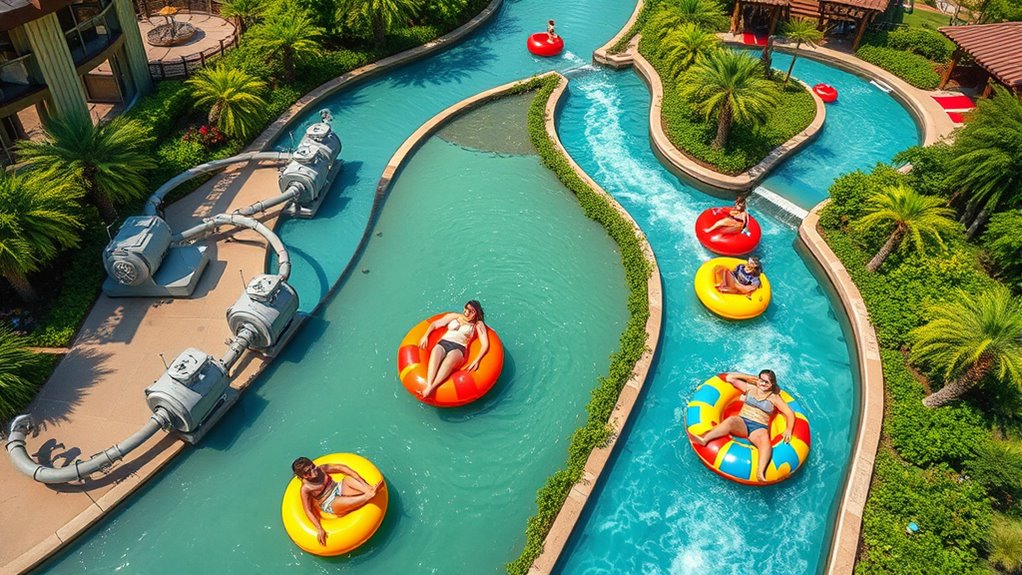
Proper pump sizing is crucial because an undersized pump won’t provide enough flow, leading to poor circulation and inefficient operation. When the flow rate is too low, the water doesn’t move smoothly through the system, causing stagnation and uneven distribution. This can result in dead spots, increased algae growth, and difficulty maintaining water quality. On the other hand, an oversized pump wastes energy and increases operational costs. It also puts unnecessary stress on the system components, risking leaks or damage. Accurate pump sizing ensures ideal flow, maintaining consistent water movement and quality. Properly selected pumps improve system longevity, reduce maintenance needs, and keep your lazy river running smoothly and safely for guests to enjoy. Additionally, selecting the right pump involves understanding the flow rate requirements to optimize system performance and efficiency.
Calculating Flow Rates for Lazy River Systems

How do you determine the right flow rate for your lazy river? First, consider the desired guest experience—smooth, gentle currents or more robust ones for excitement. Measure the total volume of the river, including the length, width, and average depth. Then, decide how quickly you want the water to circulate, typically aiming for one to two complete turnovers per hour. To find the flow rate, multiply the total volume by the turnover rate and divide by 60 minutes. For example, a 10,000-gallon river with a target of two turnovers per hour needs a flow rate of approximately 333 gallons per minute. Always verify calculations against safety standards and local codes to guarantee performance and guest safety. Proper flow rate calculations are essential to ensure both safety and an optimal guest experience.
Selecting the Right Pump Types and Capacities
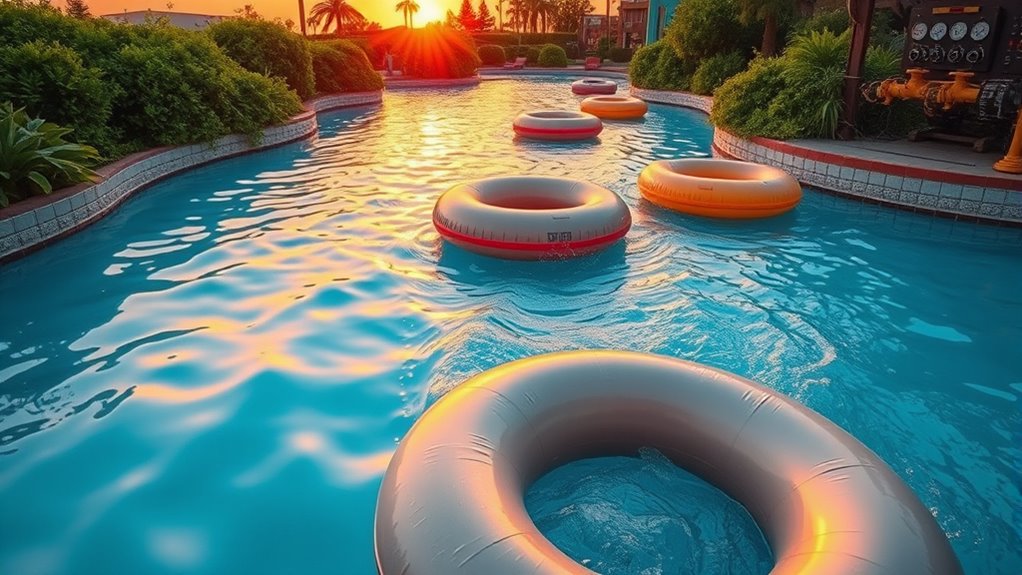
Choosing the right pump type and capacity is essential to guarantee your lazy river operates smoothly and safely. The pump must match your flow requirements and system design to prevent issues like inadequate circulation or overloading. Consider pump types such as centrifugal, submersible, or vertical turbine, based on space and maintenance needs. Next, determine capacity by calculating flow rate and head height. To help, here’s a quick comparison:
| Pump Type | Best For | Maintenance Level |
|---|---|---|
| Centrifugal | Large flow, high head | Moderate |
| Submersible | Compact spaces | Low |
| Vertical Turbine | Deep systems | High |
Selecting the right combination guarantees efficient operation and longevity of your lazy river system. Proper pump sizing is critical to AI security ensuring the safety and reliability of your aquatic environment.
Implementing Effective Safety Watch Patterns
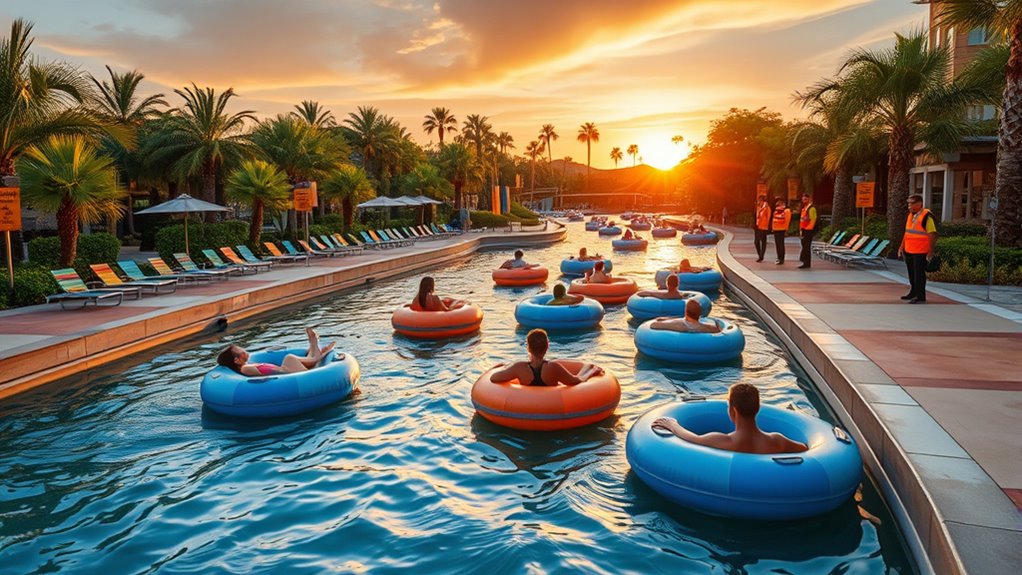
To guarantee the safety of all swimmers, implementing effective safety watch patterns is essential. You should assign trained lifeguards to specific zones, ensuring continuous coverage without gaps. Rotate their positions regularly to prevent fatigue and maintain alertness. Use clear, designated observation points that provide unobstructed views of the entire lazy river. Establish a clear communication system, such as radios or hand signals, so guards can quickly report concerns or incidents. Set strict protocols for emergency responses, including designated rescue procedures and immediate reporting. Encourage guards to stay vigilant, avoid distractions, and remain proactive in scanning the water. Regular training and briefings also help reinforce safety practices, ensuring your team responds effectively and minimizes risks. Incorporating effective monitoring techniques can further enhance overall safety by optimizing guard positioning and response times.
Designing Observation Points for Maximum Coverage
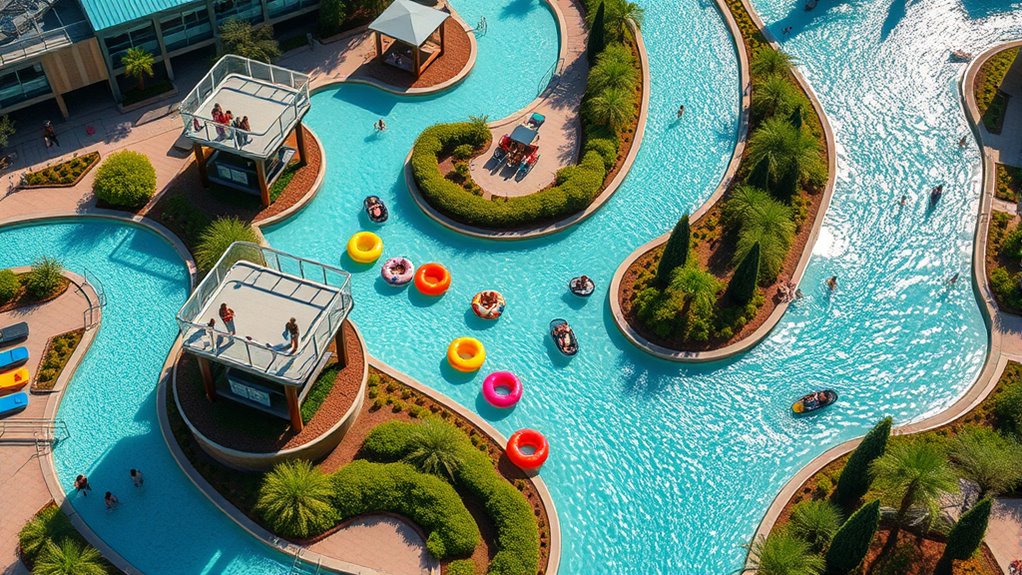
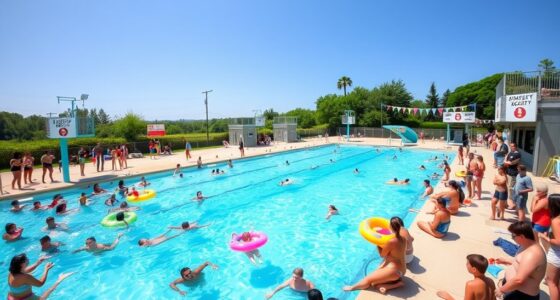
Designing observation points for maximum coverage begins with selecting strategic locations that provide unobstructed views of the entire lazy river. You want to position these points where you can monitor guest activity effectively without blind spots. Elevated platforms or raised observation decks work well because they offer broad sightlines and reduce obstructions. Place these points near high-traffic areas, such as entrances, exits, and key bends, to maximize visibility. Ensure your observation stations are easily accessible for staff and equipped with communication tools to alert lifeguards or staff quickly. Keep in mind natural and built-in features, like trees or structures, that could block views, and plan your points to minimize these issues. Proper placement ensures swift responses to guest needs and enhances overall safety. Additionally, understanding regional safety standards and regulations can help optimize your observation setup for compliance and effectiveness.
Managing Guest Flow and Congestion Control
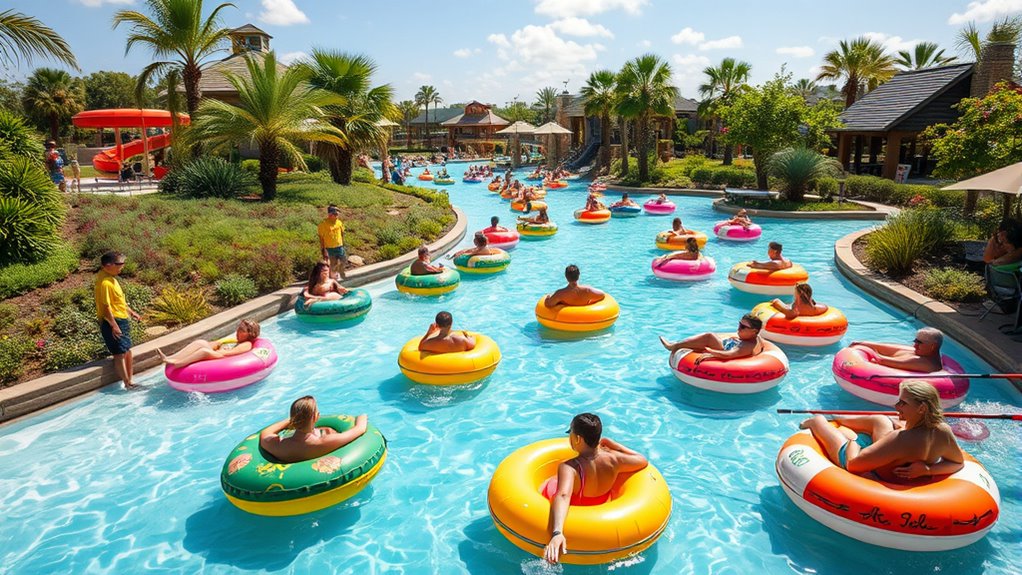
Effective management of guest flow and congestion guarantees that everyone enjoys the lazy river experience safely and comfortably. To achieve this, monitor peak times and adjust capacity limits accordingly. Implement a reservation or timed-entry system to prevent overcrowding and spread out guest arrival times. Use staff to direct guests efficiently and prevent bottlenecks at entry points and key flow areas. Encourage guests to follow designated paths and avoid clustering in one spot. Consider adding multiple entry and exit points to disperse flow and reduce congestion. Regularly assess current flow patterns and adjust staffing or flow controls as needed. Clear pathways and strategic positioning of staff help maintain a steady, safe flow, ensuring all guests have a relaxing and enjoyable lazy river experience. Understanding guest behavior can help in designing more effective flow management strategies.
Utilizing Signage and Communication for Safety
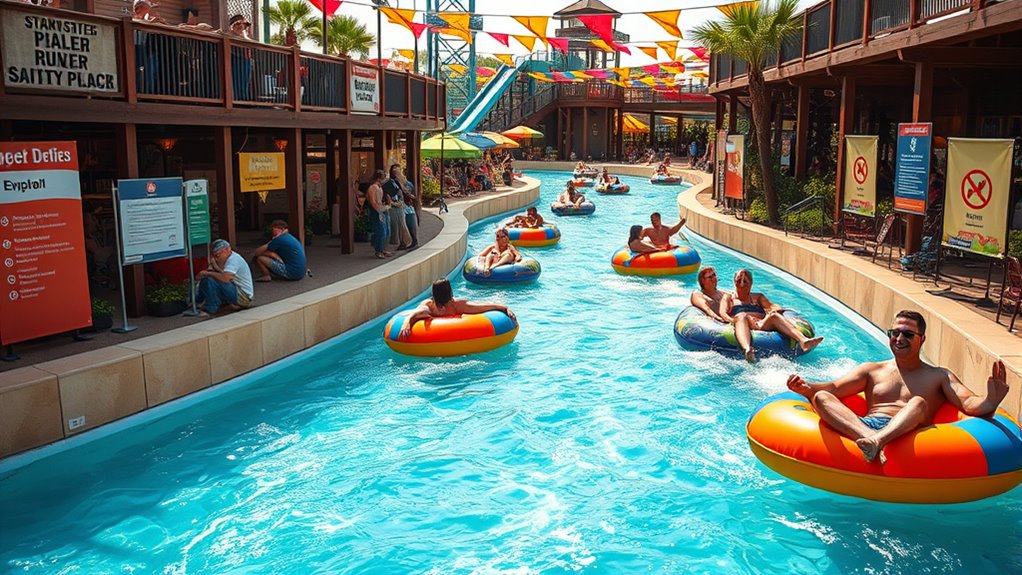
Clear signage and proactive communication are essential for maintaining safety on the lazy river. You should place clear signs indicating rules, depth markers, and emergency procedures at key points. Use simple visuals and large fonts so guests quickly understand safety guidelines. Regularly communicate safety messages through staff announcements or digital displays, reinforcing proper behavior. Having staff visibly available and approachable encourages guests to ask questions and stay alert. Here’s a quick overview:
| Signage Type | Purpose | Placement |
|---|---|---|
| Safety Rules Signs | Set expectations | Entrance and key points |
| Depth Markers | Prevent accidents | Along the riverbank |
| Emergency Procedures | Quick reference in emergencies | Visible locations |
| Directional Signs | Guide guest flow | Intersections |
| Staff Announcements | Reinforce safety info | Throughout the area |
Effective signage and communication keep safety top of mind, reducing risks and enhancing guest confidence. Additionally, understanding support hours for assistance can help staff respond promptly to guest needs.
Monitoring System Performance and Maintenance

Regularly monitoring your lazy river’s system performance is crucial to guarantee safety and smooth operation. You should keep a close eye on pump performance, flow rates, and pressure levels, ensuring they stay within ideal ranges. Use sensors and automated alerts to detect irregularities early, preventing potential failures. Schedule routine inspections and maintenance to check for leaks, corrosion, and worn parts. Maintain detailed logs of system data and repairs to identify patterns and plan preventative measures. Promptly address any identified issues to avoid costly downtime or safety hazards. Proper monitoring not only extends equipment lifespan but also ensures consistent guest experiences. Staying proactive with system checks and maintenance safeguards your lazy river’s reliability and safety, giving you peace of mind and happy visitors. Additionally, implementing a comprehensive maintenance program can help streamline these efforts and ensure all components function optimally.
Enhancing Guest Experience Through Flow Optimization

Optimizing the flow of your lazy river substantially enhances the guest experience by creating a smooth, exhilarating ride. When you fine-tune circulation speeds and streamline water movement, guests enjoy a consistent, relaxing journey without abrupt stops or slow patches. Clear flow patterns prevent congestion and ensure everyone moves comfortably through the attraction. Use strategic placement of flow sensors and adjustable pumps to maintain ideal speed throughout the day. Regularly monitor guest feedback to identify areas needing improvement. By balancing flow rates and reducing turbulence, you foster a safe, enjoyable environment that encourages guests to relax and linger longer. Effective flow optimization not only improves satisfaction but also boosts overall park efficiency, leading to happier visitors and increased repeat attendance. Ensuring proper pump sizing and consistent water circulation helps maintain ideal flow patterns, further enhancing the guest experience.
Frequently Asked Questions
How Often Should Pump Maintenance Be Scheduled for Lazy Rivers?
You should schedule pump maintenance for lazy rivers at least every three to six months, depending on usage and manufacturer recommendations. Regular inspections help identify wear and tear early, preventing breakdowns or safety issues. Keep an eye on pump performance and unusual noises, and perform routine cleaning. Consistent maintenance guarantees smooth operation, extends equipment lifespan, and keeps your guests safe and satisfied during their visit.
What Are Common Signs of Pump Failure During Operation?
You’ll notice pump failure signs like unusual noises such as grinding or humming, decreased water flow, or frequent cycling on and off. Overheating or leaks also indicate problems. If you see increased vibration or the pump isn’t maintaining proper pressure, it’s time to inspect and possibly service or replace it. Catching these signs early helps prevent complete failure and keeps the lazy river running smoothly.
How Can Guest Flow Be Adjusted During Peak Times?
During peak times, you can adjust guest flow by adding more staff to monitor entry points, opening additional access routes, or temporarily limiting new guests with clear signage. Use real-time data to identify bottlenecks and deploy crowd control measures quickly. Think of guest flow as a river—you need to gently redirect it to prevent flooding, ensuring everyone enjoys a safe, smooth experience without overwhelming your facilities.
Are There Industry Standards for Safety Watch Patterns?
Yes, industry standards for safety watch patterns exist and are designed to guarantee guest safety. You should follow guidelines from organizations like the ASTM or ANSI, which recommend specific watch ratios and patrol intervals based on pool size and guest volume. By adhering to these standards, you can effectively monitor the area, respond quickly to emergencies, and maintain a safe environment for all guests.
What Innovations Are Emerging in Lazy River Flow Management?
You’re seeing innovations like smart flow control systems that adjust water speed based on guest density, enhancing safety and guest experience. Automated monitoring with AI detects unusual patterns or emergencies instantly, allowing quick responses. Some facilities use modular designs for flexible flow management, and advanced sensors provide real-time data to optimize guest flow. These innovations help you maintain safety, improve efficiency, and create a more enjoyable, seamless lazy river experience.
Conclusion
Mastering pump sizing, safety patterns, and guest flow turns your lazy river into the ultimate aquatic adventure — a smooth, safe, and exhilarating journey that feels like floating on a cloud made of pure fun. When you optimize every detail, you’ll create an experience so seamless and enthralling, guests will be talking about it for years. Get it right, and you’ll transform your lazy river into the crown jewel of your waterpark — an unstoppable wave of joy!