To guarantee your concrete pool lasts and stays durable, focus on proper curing and finishing. Keep the concrete moist using curing compounds, wet coverings, or continuous water application for at least 7 days. Smooth the surface carefully with trowels and floats to remove imperfections. After curing, apply waterproofing sealers to protect against water penetration. Proper chemical balance also supports surface integrity. Keep these best practices in mind to achieve a strong, long-lasting pool—more details await if you continue on.
Key Takeaways
- Ensure proper curing by maintaining moisture with wet coverings, curing compounds, or continuous water application for at least 7 days.
- Control the surface during initial setting using trowels, floats, or brushes to achieve a smooth, durable finish.
- Select appropriate waterproofing methods, such as membranes or sealers, and apply them after finishing to prevent water intrusion.
- Maintain optimal chemical balance in the pool to reduce surface degradation and support the longevity of the concrete surface.
- Tailor curing and finishing techniques to project size and environmental conditions for best overall concrete performance.
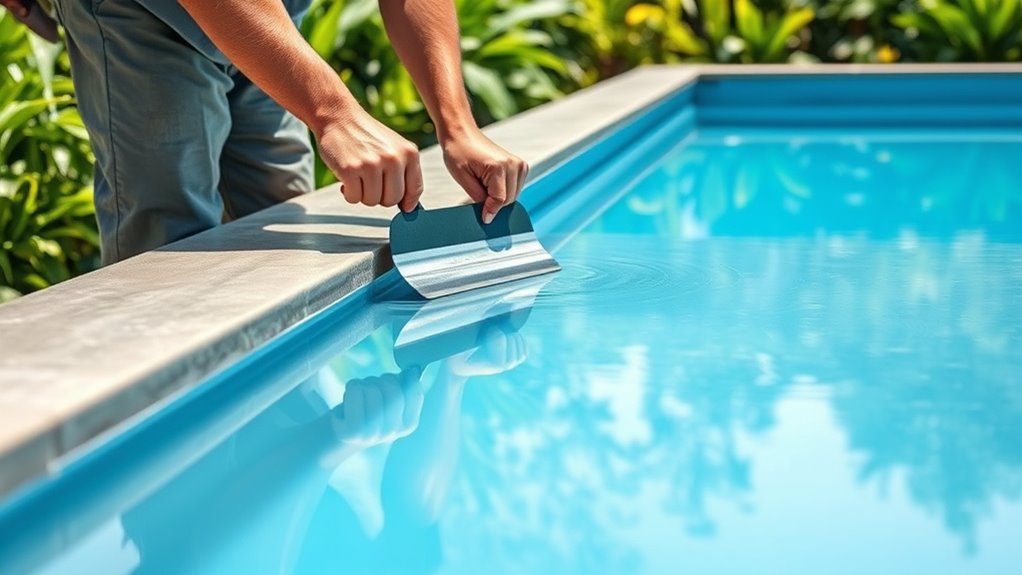
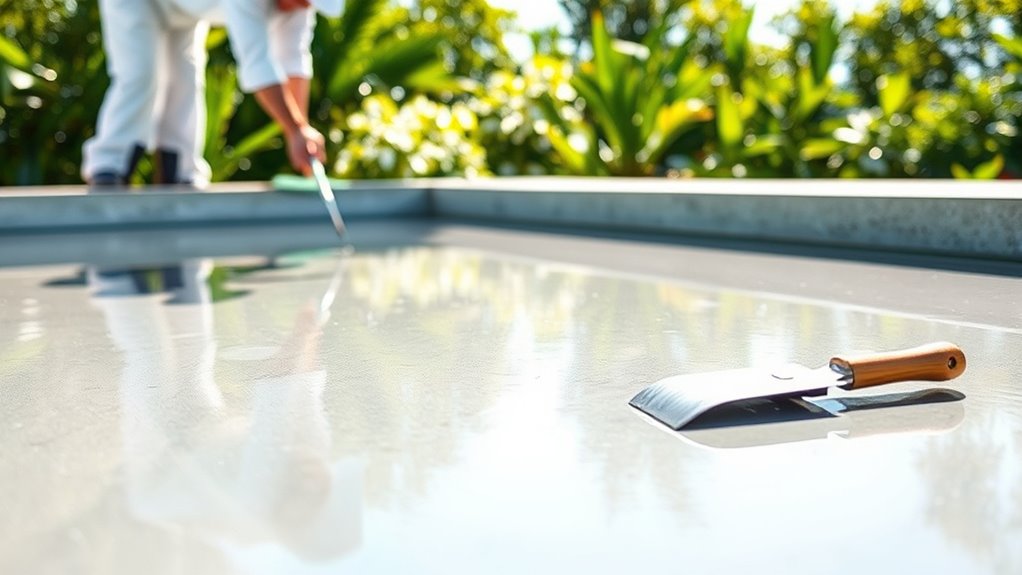
Proper curing and finishing are crucial steps in building durable concrete pools. These processes ensure the structure’s longevity, safety, and overall quality. When you focus on proper curing, you help the concrete gain strength gradually, reducing the risk of cracks and surface imperfections. Curing compounds, wet coverings, or continuous water application are effective methods to maintain consistent moisture during this period. Proper curing not only enhances concrete strength but also helps achieve a dense, less permeable surface, which is critical for waterproofing techniques. When the concrete cures well, it becomes more resistant to water penetration, reducing the likelihood of leaks and damage over time. Achieving a high-quality finish involves carefully controlling the surface during the initial setting phase. You should use tools like trowels, floats, or brushes to smooth and refine the surface, removing any imperfections or air pockets. A well-finished surface is easier to treat with waterproofing sealers later on, which further protect against water intrusion and chemical damage from pool chemicals. Additionally, choosing the right waterproofing techniques enhances the durability of the concrete and prolongs the lifespan of your pool. The waterproofing techniques you choose are essential in maintaining a balanced pool chemical environment. Properly sealed surfaces prevent water from seeping into the concrete, which can cause deterioration and compromise the structural integrity of your pool. It’s important to apply waterproofing membranes or sealers after the finishing process, ensuring they penetrate deeply and form an effective barrier. When combined with a proper pool chemical balance—keeping pH, alkalinity, and sanitizer levels within recommended ranges—you create a stable environment that minimizes corrosion and surface degradation. This synergy between finishing, waterproofing, and chemical balance extends the lifespan of your pool and reduces maintenance costs.
Frequently Asked Questions
How Long Should I Wait Before Opening My Concrete Pool to Swimmers?
You should wait at least 7 to 14 days before opening your concrete pool to swimmers, depending on your curing timeline. During this period, the concrete needs to cure properly to guarantee it’s strong and durable. Keep the surface moist and avoid heavy use early on. Checking with your contractor for specific curing times is wise, as proper curing helps prevent cracks and ensures a safe, long-lasting pool.
What Are the Signs of Improper Curing in Concrete Pools?
If you notice uneven moisture loss or cracking patterns on your concrete pool surface, it’s a sign of improper curing. These issues indicate the concrete didn’t retain enough moisture during curing, leading to surface cracks or scaling. You might also see discoloration or rough patches. Address these problems promptly by maintaining proper moisture levels and protecting the surface, preventing further damage and ensuring a durable, smooth finish.
Can Finishing Techniques Affect the Pool’s Long-Term Durability?
Your finishing techniques act like a sculptor’s touch, shaping your pool’s future resilience. When you prioritize surface integrity and texture enhancement, you build a stronger, more durable basin that withstands time and elements. Poor finishing can leave microcracks and weak spots, like cracks in a foundation, risking long-term damage. So, take your time, refine each surface, and craft a pool that stands the test of time with lasting strength and beauty.
How Does Weather Impact the Curing Process of Concrete Pools?
Weather critically impacts your concrete pool’s curing process. Temperature fluctuations can cause the concrete to dry too quickly or too slowly, leading to cracks or weak spots. High humidity levels help retain moisture, promoting proper curing, while low humidity accelerates evaporation and risks surface cracks. To guarantee durability, you should monitor weather conditions closely, use curing blankets if needed, and adjust watering schedules to maintain ideal moisture during curing.
Are There Eco-Friendly Curing and Finishing Options Available?
You’ll be happy to know eco-friendly curing and finishing options are available. By choosing sustainable materials like plant-based curing blankets or soy-based release agents, you support environmental health. Green curing methods, such as water curing with recycled or non-toxic additives, reduce chemical use and waste. These practices not only protect the planet but also promote healthier pools and surroundings, making your project both responsible and effective.
Conclusion
Think of your concrete pool as a delicate garden that needs nurturing. Proper curing and finishing are like tending to each plant with care—if you rush or cut corners, the beauty and strength suffer. When you follow best practices, you’re watering and pruning your masterpiece, ensuring it flourishes for years to come. Patience and attention now will transform your pool into a resilient, stunning oasis—just like a well-tended garden that blossoms season after season.