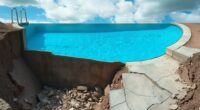
Building on clay, sand, or rock requires understanding each soil’s unique traits. For clay, improve drainage and consider deep foundations; for sand, ensure proper compaction and stabilize your base. Rock may need specialized equipment like blasting or cutters. Assess soil stability regularly and adapt your construction methods accordingly to avoid future issues. Learning how to match your building approach with your soil type helps you build confidently—more tips await if you keep exploring.
Key Takeaways
- Conduct soil tests to determine texture, composition, and load-bearing capacity before starting construction.
- Use appropriate foundations: deep for clay, gravel bases for sand, or specialized methods for bedrock.
- Improve drainage with organic matter, gravel, or drainage systems to prevent water issues on clay or sandy soils.
- Select construction techniques and materials suited to your soil type to ensure stability and longevity.
- Regularly inspect and maintain the site to address shifting, erosion, or drainage problems over time.
Assessing Your Soil Type and Composition
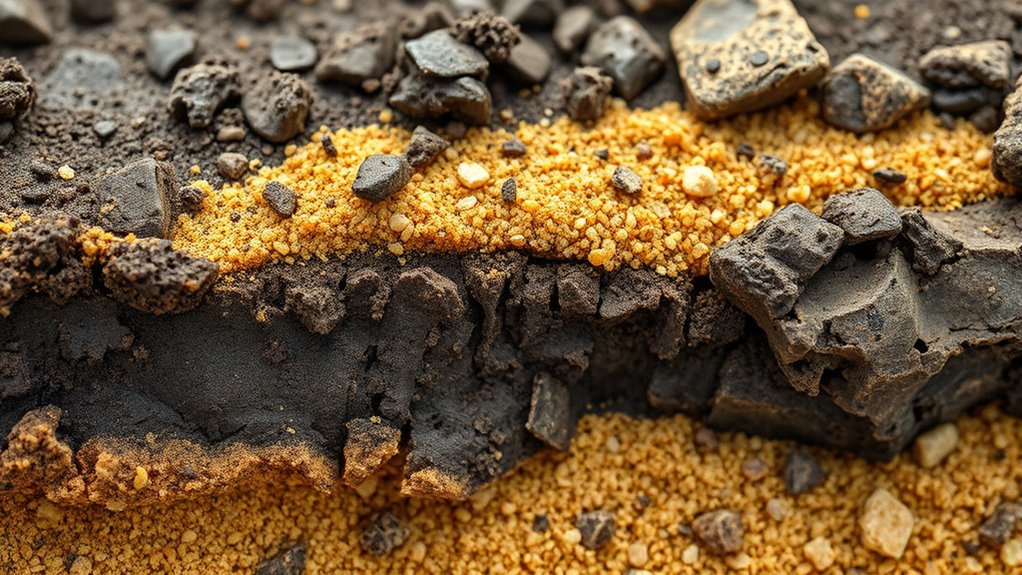
Understanding your soil type and composition is essential for successful gardening or farming because it directly affects plant health and growth. To assess your soil, start by performing a simple jar test: fill a clear jar with soil and water, then shake it vigorously. Let it settle for a few hours; you’ll see distinct layers forming. The top layer is organic matter, the middle is silt or clay, and the bottom is sand or gravel. Observe the soil’s texture—clay feels sticky, sand is gritty, and silt is smooth. You can also perform a squeeze test to check moisture retention and compaction. Knowing these characteristics helps you decide on amendments or specific planting techniques, giving your garden the best foundation for thriving plants. Incorporating aesthetic wall organization can also help you create a dedicated space for gardening tools and supplies, keeping your gardening area tidy and inspiring.
Adapting Construction Techniques for Different Soils
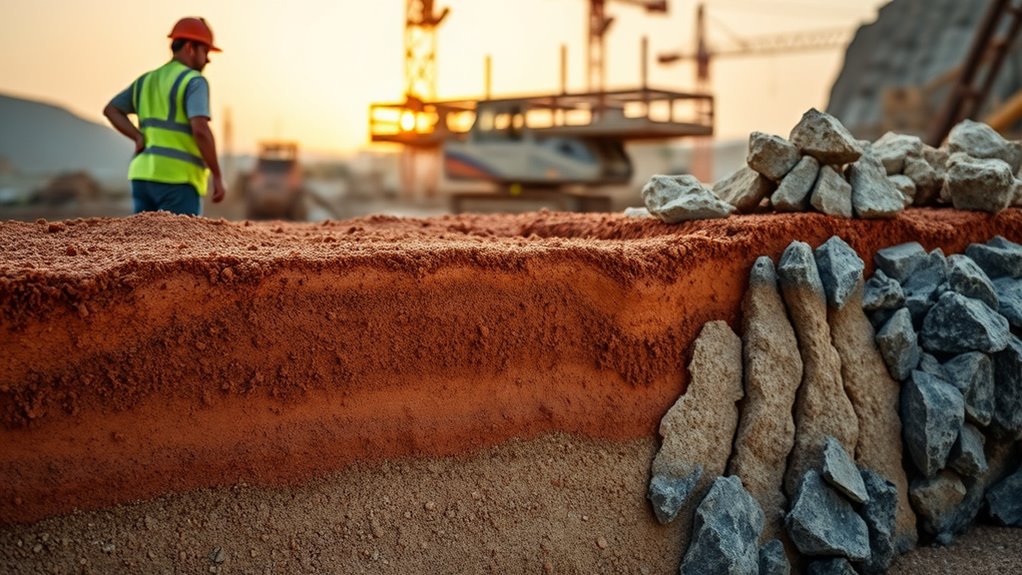
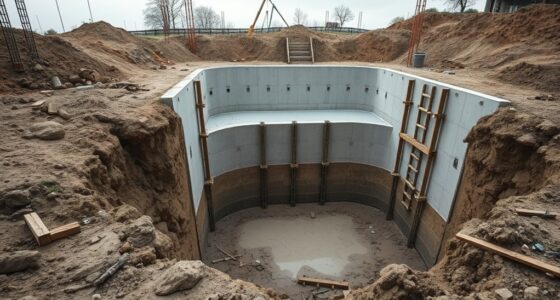
Adapting construction techniques to different soil types is essential for guaranteeing stability and durability in your projects. For clay soils, you’ll want to improve drainage and minimize swelling by using deep foundations or moisture barriers. Sand soils require careful compaction to prevent shifting, so consider using vibratory rollers and thorough testing before pouring concrete. Rock or bedrock demands specialized equipment, like rock breakers and blasting, to create a stable base. Each soil type affects your approach to excavation, foundation design, and material selection. Recognizing these differences helps you choose the right methods upfront, reducing future risks of settling, cracking, or shifting. Proper soil assessment is crucial for determining the most effective construction techniques for your project. Ultimately, tailoring your techniques to the soil assures your structure stands the test of time without regrets.
Improving Soil Stability and Drainage
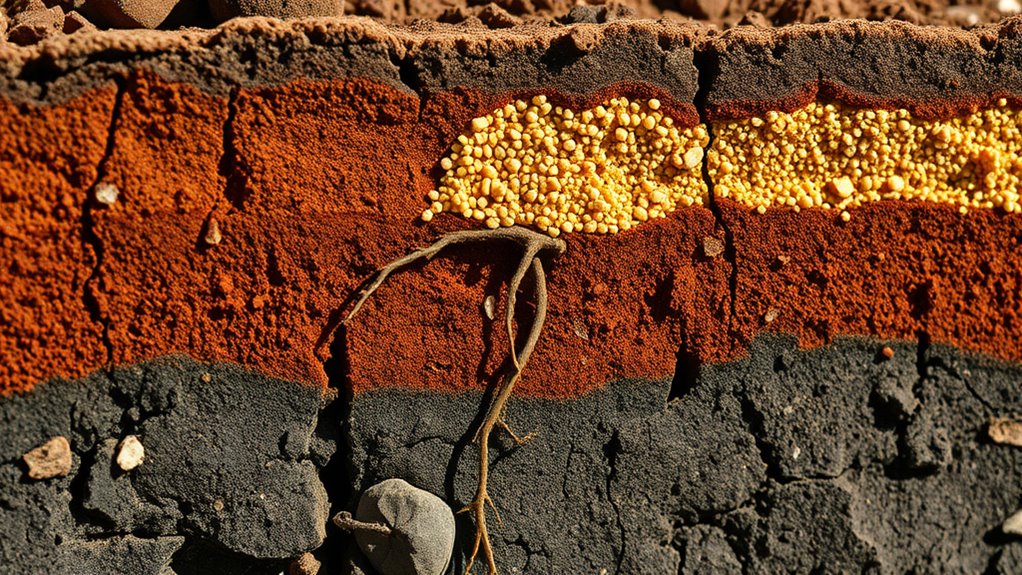
Improving soil stability and drainage is essential for ensuring the longevity of your construction projects. When you enhance stability, you prevent settling and shifting that can damage your structures. Good drainage reduces water accumulation, which weakens soil and causes erosion. To achieve this, consider these methods:
- Add organic matter or stabilizers to increase cohesion and support.
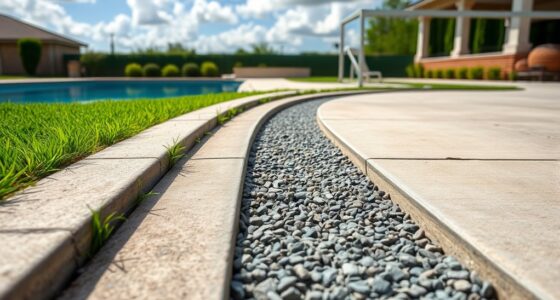
- Install drainage systems, like perforated pipes or gravel beds, to redirect water away from the site.
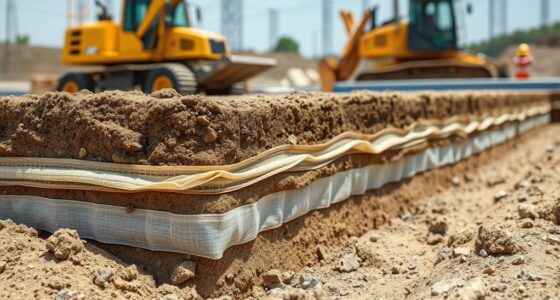
- Use compaction techniques such as roller or tamper compaction to strengthen soil structure.
- Incorporate water filtration methods to effectively manage moisture levels and prevent waterlogging, further improving soil stability and durability.
These steps help create a solid foundation that resists movement and manages water effectively. Properly improving soil stability and drainage minimizes future issues, saving you time and costs down the line.
Selecting Suitable Foundations and Materials
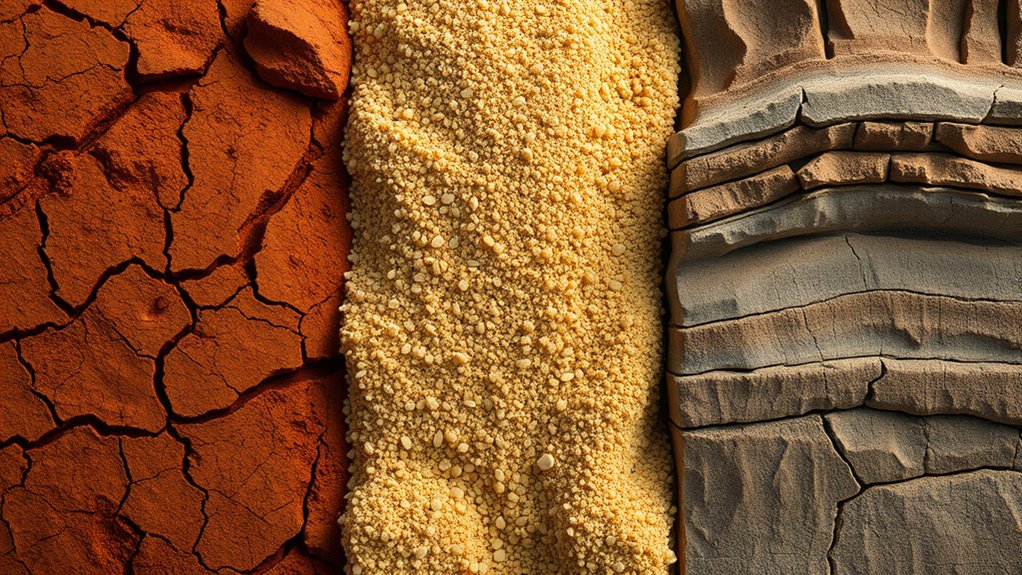
How do you choose the right foundation and materials for your project? Start by analyzing your soil type—clay, sand, or rock—and understand its load-bearing capacity. Clay soils need deep foundations or pilings to prevent shifting, while sandy soils require compacted gravel bases to improve stability. Rock foundations can often support structures directly, but may need blasting or specialized equipment. Consider your building’s weight, purpose, and local climate—these factors influence material choice. Concrete is versatile but may need reinforcement, whereas steel provides strength for larger loads. Always consult soil tests and engineering experts to determine the best solutions. Selecting suitable foundations and materials guarantees your structure remains stable, durable, and safe over time, regardless of soil type. Additionally, understanding the water interaction with your soil can help prevent future issues related to water drainage and erosion.
Long-Term Maintenance and Soil Management Strategies
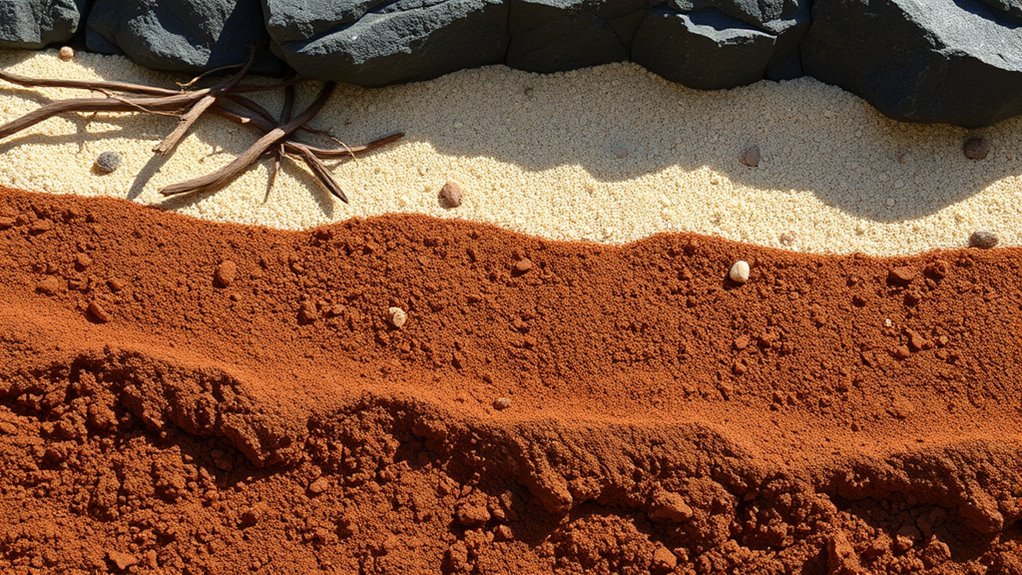
To guarantee your structure remains stable and safe over time, implementing effective long-term maintenance and soil management strategies is essential. Regular inspections help identify shifting or erosion early. You should also focus on maintaining proper drainage to prevent water buildup that can weaken soil stability. Additionally, adjusting soil treatments based on soil type ensures ongoing support for your foundation. Here are three key strategies:
- Schedule routine inspections to catch issues early.
- Enhance drainage systems to avoid water pooling.
- Incorporate soil amendments tailored to your soil type for ongoing stability.
- Understanding soil composition can help you select the most effective soil treatments for your specific conditions.
Frequently Asked Questions
How Can I Test My Soil’s Load-Bearing Capacity Accurately?
You can test your soil’s load-bearing capacity accurately by hiring a geotechnical engineer to perform a professional soil test. They’ll conduct borehole sampling and laboratory analysis to determine the soil’s properties. Alternatively, you can use a plate bearing test if you want quick, on-site results. Avoid guessing or relying solely on visual inspection, as proper testing guarantees your foundation’s safety and long-term stability.
What Are Eco-Friendly Methods to Enhance Soil Stability Naturally?
You can enhance soil stability naturally by adding organic matter like compost or mulch to improve cohesion and drainage. Plant deep-rooted grasses or cover crops to reinforce the soil structure and prevent erosion. Use biochar or natural binders like lime or gypsum to strengthen the soil without chemicals. These eco-friendly methods boost stability, promote healthy soil, and reduce environmental impact, ensuring your foundation remains secure and sustainable over time.
Can Soil Type Change Over Time, Affecting Construction Plans?
Like a chameleon changing colors, soil types can evolve over time due to natural processes or human activity. You might find clay becoming more compact or sand shifting with water movement, impacting your construction plans. Regular soil testing helps you stay ahead of these changes, allowing for adjustments. By monitoring and understanding these shifts, you ensure your foundation remains solid, just as a steady ship navigates shifting seas.
Are There Affordable Options for Soil Stabilization for Small Projects?
Yes, there are affordable soil stabilization options for small projects. You can use lime or cement treatments, which are cost-effective and easy to apply. Geotextiles and organic stabilizers like straw or shredded bark also work well for minor needs. Always assess your soil type first, and consider consulting a specialist to choose the best solution within your budget. These methods can improve soil stability without breaking the bank.
How Do Climate Variations Influence Long-Term Soil Performance?
Climate variations can considerably impact your soil’s long-term performance. If you experience heavy rainfall, expect potential erosion or weakening of soil stability, especially on sandy or clay soils. Droughts can cause shrinkage and cracking, reducing support for structures. Temperature fluctuations may lead to expansion or contraction, affecting foundations over time. To mitigate these effects, you should consider proper drainage, moisture control, and selecting suitable stabilization methods tailored to your climate.
Conclusion
Remember, your soil is the silent partner in your building journey—its strength or weakness shaping your home’s future. By understanding its secrets and adapting your approach, you’re planting the roots for a sturdy, lasting structure. Treat your soil like a loyal companion, nourishing and respecting it, so your dreams won’t sink into the ground. With patience and the right techniques, you’ll build on a solid foundation that endures through the test of time.