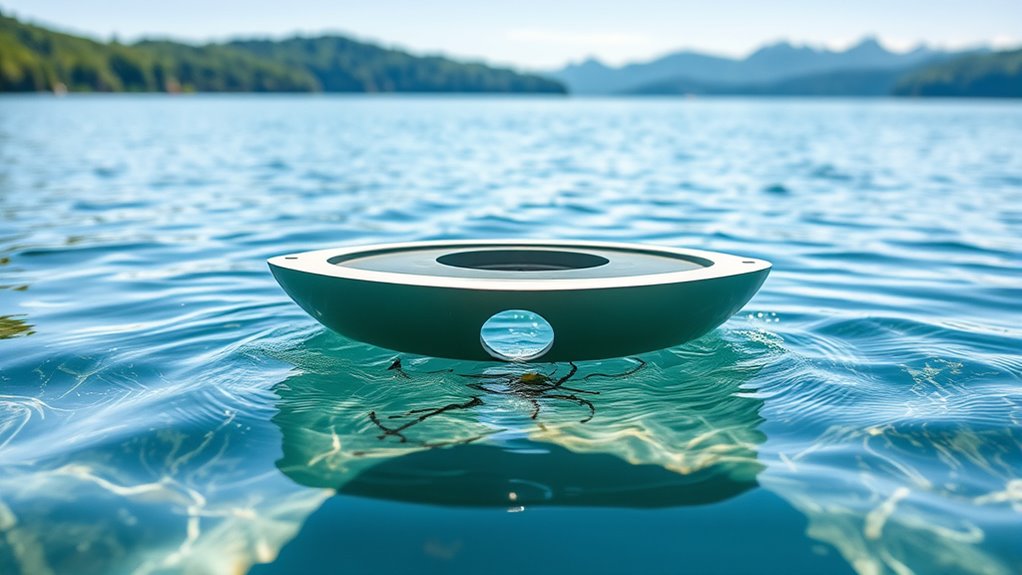

To catch debris before it sinks, position your skimmer where water flows naturally or gently converges, avoiding high-current areas like near jets. Place it at the right height so it stays flush with the water surface, ensuring debris floats into it easily. Keep in mind seasonal changes and environmental factors that influence debris patterns. By understanding water movement and placement strategies, you’ll maximize debris removal—more tips await to help you perfect your setup.
Key Takeaways
- Place skimmers where water naturally converges or moves slowly to maximize debris capture before sinking.
- Position skimmers near high-debris areas like trees, corners, or sheltered zones based on seasonal debris patterns.
- Ensure skimmers are level with the water surface and at proper height to optimize surface debris collection.
- Avoid high-flow zones near jets or returns that can cause debris to bypass skimmers.
- Regularly monitor and adjust skimmer placement based on debris accumulation and changing environmental conditions.
Understanding the Role of Skimmers in Pool Maintenance
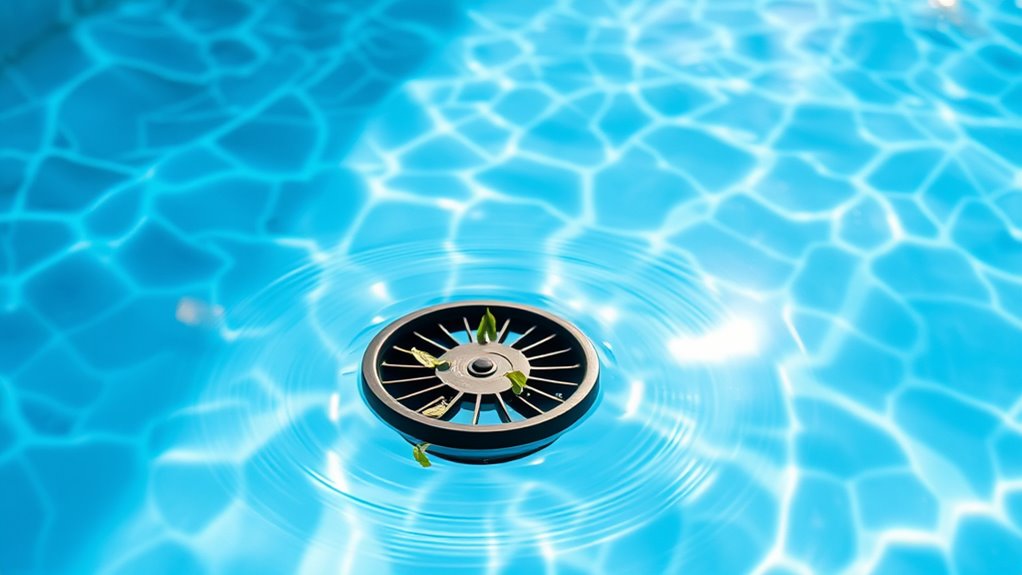
Skimmers play a crucial role in maintaining clean and safe pool water by removing surface debris before it sinks. They catch leaves, bugs, dirt, and other floating particles that could otherwise settle on the pool floor, making cleaning more difficult and potentially damaging the filtration system. By intercepting debris early, skimmers help keep the water clear and reduce algae growth, which thrives on organic matter. Proper skimming also improves water circulation, ensuring chemicals distribute evenly and preventing stagnant areas. This not only enhances water quality but also extends the lifespan of your pool equipment. Regular maintenance of your skimmer basket and ensuring correct placement are essential steps in effective pool upkeep, saving you time and effort in the long run.
The Physics Behind Debris Movement in Pool Water
Understanding how debris moves in pool water involves examining the underlying physics that influence particle behavior. Water currents, caused by circulation systems, create forces that push debris along specific paths. As water flows, particles experience drag, which depends on their size and shape, affecting their speed and trajectory. Smaller debris, like leaves or pollen, are easily carried by gentle currents, while larger pieces may settle faster due to gravity. Turbulence generated by jets or skimmers can lift debris, keeping it suspended temporarily. Additionally, thermal gradients and surface tension influence how debris interacts with the water surface. Recognizing these physical principles helps you understand where debris is likely to travel, enabling better skimmer placement to catch particles before they sink. Understanding particle behavior is essential for optimizing skimmer positioning and maintaining a clean pool environment.
Ideal Locations for Skimmer Placement
To maximize debris collection, placing skimmers in areas where water naturally converges or moves slowly is essential. These spots include corners, along the pool’s edges, or near steps and ledges where debris tends to accumulate. Avoid placing skimmers in high-flow zones, like near the jets, which can push debris past the skimmer’s reach. Instead, position your skimmer where debris drifts or gathers naturally, so it has a better chance of capturing it before sinking. If your pool has a curved shape, target the wider or more sheltered sections. Understanding water flow patterns can help you identify the most effective skimmer locations. Consistent placement in these strategic locations ensures a cleaner pool with less debris sinking out of reach. Proper placement reduces the workload on your filter and keeps your pool looking pristine.
Factors Influencing Skimmer Effectiveness

Proper skimmer placement isn’t enough on its own; several factors influence how effectively it captures debris. First, the water flow rate matters; a strong current can carry debris past the skimmer, reducing efficiency. You also need to consider the surface tension and wind, which can push debris away or cause it to drift unpredictably. The shape and size of your pool impact debris movement, making certain zones more prone to accumulation. Additionally, the skimmer’s design and size influence how much debris it can handle at once. Regular maintenance, like cleaning the basket, guarantees maximum performance. Lastly, environmental factors such as nearby trees or wind patterns can introduce more debris, requiring you to adjust your skimmer’s position or operation for better results.
Common Mistakes in Skimmer Positioning and How to Avoid Them
One common mistake is setting the skimmer at the wrong elevation, which can reduce its efficiency. Poor surface alignment also causes debris to circulate improperly, making cleaning harder. To avoid these issues, guarantee your skimmer is installed at the correct height and aligned with the water surface. Incorporating automation in business intelligence can further optimize maintenance schedules by providing real-time data on debris accumulation, ensuring your skimmer functions at peak performance.
Incorrect Skimmer Elevation
Incorrect skimmer elevation is a common mistake that can considerably impair your pool’s filtration efficiency. When the skimmer isn’t level with the water surface, debris can bypass it or clog the system. Too high, and the skimmer pulls in air, reducing suction. Too low, and it skims only the bottom, missing floating debris. Proper elevation ensures ideal debris collection and consistent water flow. Here’s what to watch for:
| Too High | Correct Level | Too Low |
|---|---|---|
| Pulls in air | Level with water surface | Misses floating debris |
| Reduced suction | Ensures debris intake | Excessive bottom skimming |
| Inefficient filtration | Maintains flow | Potential for clogging |
Check your skimmer regularly to keep it aligned, and avoid elevation mistakes that weaken your pool’s filtration.
Poor Surface Alignment
Achieving the correct surface alignment of your skimmer is essential for effective debris removal. When the skimmer’s mouth isn’t level with the water surface, it can miss floating debris or pull in air, reducing efficiency. Poor alignment often results from improper installation or shifting over time. To avoid this, check that the skimmer opening is parallel to the water’s surface and positioned just below the surface level. Use a level to ensure accuracy during installation and periodically recheck its position. If the skimmer is tilted or submerged too deeply, debris may bypass it or clog the basket. Proper surface alignment enables the skimmer to capture floating debris quickly and consistently, keeping your pool cleaner and reducing the strain on your filtration system. Regularly inspecting and maintaining correct positioning supports optimal surface alignment for continuous debris capture.
Techniques for Optimizing Skimmer Performance
To get the best out of your skimmer, focus on proper placement techniques that guarantee effective water flow. Regular maintenance practices, like cleaning and inspecting components, keep your skimmer running at peak performance. By combining these approaches, you’ll maximize efficiency and keep your pool clean. Using vetted equipment ensures reliability and optimal results over time.
Proper Placement Techniques
Proper placement of a skimmer is essential for ideal performance, as it directly influences how effectively debris and surface oils are removed from the water. To optimize your skimmer’s efficiency, focus on these techniques:
- Position the skimmer just below the water’s surface, where surface tension holds debris and oils.
- Keep the opening near high-traffic areas, such as near inlets or drain points, to catch floating debris early.
- Avoid placing the skimmer too close to the pool walls or corners, which can reduce flow and create dead zones.
- Ensuring the skimmer is properly water circulation helps in maintaining effective debris collection and overall pool cleanliness.
Regular Maintenance Practices
Are you ensuring your skimmer operates at peak efficiency? Regular maintenance is key to optimal performance. Check and clean the skimmer basket weekly to remove trapped debris, preventing blockages that reduce efficiency. Inspect the skimmer’s intake and outlet for algae buildup or obstructions and clean as needed. Keep the water level consistent; too low or high can hinder skimming. Remove any debris or leaves from the skimmer opening and surrounding area to maintain proper water flow. Regularly examine the skimmer’s components for wear or damage, replacing parts if necessary. Test the skimmer’s operation periodically by observing if it produces a steady foam and clear water. Consistent upkeep ensures your skimmer catches debris effectively before it sinks, saving time and maintaining water quality. Building your outdoor kitchen knowledge can help you plan maintenance routines that fit your setup and space.
Seasonal and Environmental Considerations for Skimmer Placement

Seasonal and environmental factors substantially influence the ideal placement of a skimmer. During different times of year, debris patterns and water conditions change, requiring you to adjust placement accordingly. For example:
- Fall: Leaves and organic matter fall heavily; position the skimmer near areas where debris accumulates.
- Spring: Increased pollen and plant debris may require placement closer to flowering plants or trees.
- Weather Patterns: Heavy rains or storms can shift debris distribution, so situate the skimmer where runoff and floating debris tend to gather.
Monitoring and Adjusting Skimmer Position Over Time
Regularly monitoring your skimmer’s position guarantees it functions effectively over time. You need to check its placement frequently, especially after storms or debris accumulation. Adjust the skimmer’s position as needed to ensure it captures debris before sinking. Small shifts can make a big difference in efficiency and water quality. Staying attentive helps prevent costly repairs and maintains a clean, healthy pond or pool. Keep track of changes and observe how debris is collected to optimize placement. Incorporating regional resources and tools can also assist in maintaining optimal skimmer performance.
Frequently Asked Questions
How Often Should Skimmer Baskets Be Emptied for Optimal Performance?
You should empty your skimmer baskets at least once a week to guarantee ideal performance. During heavy debris periods, like after storms or fall foliage, check and empty them more frequently, possibly every few days. Regularly cleaning the baskets prevents clogs, maintains proper water flow, and keeps your pool cleaner longer. Consistent maintenance helps your skimmer work efficiently, saving you time and effort in the long run.
Can Skimmer Placement Affect Energy Consumption of Pool Pumps?
Have you ever noticed how a poorly placed skimmer makes your pump work harder? Yes, skimmer placement can definitely affect your pool pump’s energy use. When placed correctly, it reduces strain by efficiently catching debris early, so your pump doesn’t have to run longer or harder. Proper placement ensures better flow, less energy consumption, and lower bills, making your pool maintenance smarter and more cost-effective.
Are There Specific Skimmer Designs Better Suited for Certain Pool Shapes?
Yes, certain skimmer designs work better with specific pool shapes. For irregularly shaped pools, flexible or adjustable skimmers help reach all areas effectively. In rectangular pools, traditional wall-mounted skimmers are efficient, while in freeform pools, floating or adjustable models improve debris collection. You should choose a skimmer that complements your pool’s shape to maximize debris removal and reduce maintenance efforts. Proper selection enhances overall cleaning efficiency.
How Does Water Temperature Influence Debris Accumulation and Skimmer Effectiveness?
You’ll notice that warmer water speeds up debris breakdown and evaporation, reducing overall accumulation. For example, in a heated pool, leaves tend to decompose faster, making skimming more effective as debris stays floating longer. Conversely, cooler temperatures slow this process, allowing debris like leaves or insects to sink quicker, which can make skimmer placement and timing more critical. Adjust your skimming routine accordingly for ideal debris removal.
What Safety Precautions Should Be Taken During Skimmer Adjustments?
You should always turn off the pool pump before adjusting the skimmer to prevent injury from moving parts. Wear gloves and safety goggles to protect your skin and eyes from debris or chemicals. Use proper tools, like a pool net or screwdriver, to make adjustments carefully. Make certain the area around the skimmer is dry to prevent slips, and double-check that everything is secure before restarting the pump.
Conclusion
So, after all this science, you might think placing your skimmer perfectly is foolproof. But ironically, even the best placement can’t stop debris from sneaking past if you’re not paying attention or forget to adjust it seasonally. It’s a reminder that no matter how much you understand the physics, a little vigilance and a dash of luck still play a role. Keep tweaking, and maybe, just maybe, your pool will stay debris-free—until next season’s surprise.