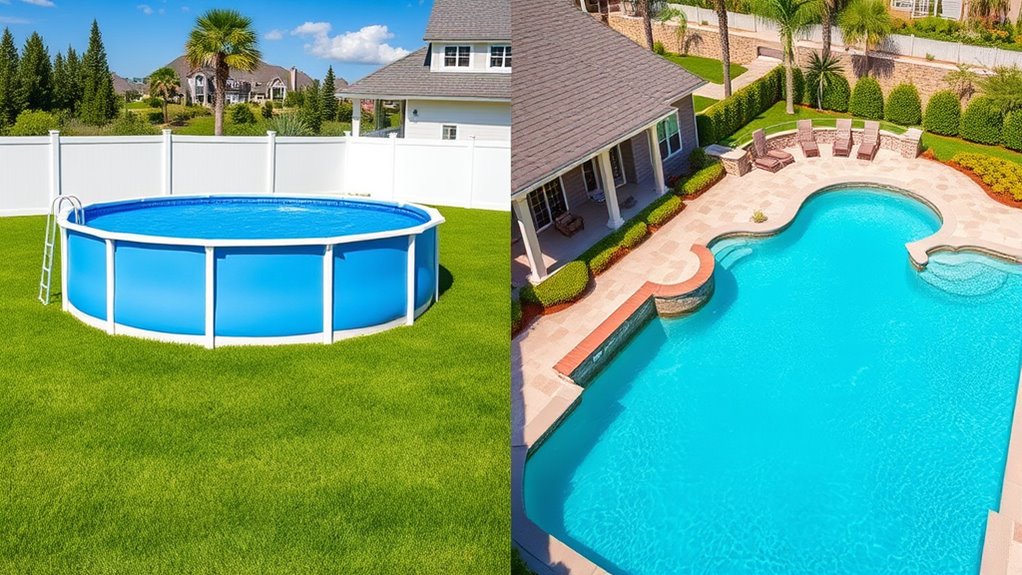
When comparing costs, above-ground pools are much more budget-friendly, typically ranging from $1,500 to $7,000, and can be installed in just a few days. In-ground pools start around $20,000 and can exceed $50,000, with longer installation times and higher maintenance. While in-ground pools add value and permanence, above-ground options offer short-term savings. Keep exploring to understand how maintenance and technology can influence your overall investment.
Key Takeaways
- Above-ground pools typically cost $1,500 to $7,000, while in-ground pools start around $20,000 and can exceed $50,000.
- Installation for above-ground pools takes days to a week, whereas in-ground pools require weeks to months, affecting overall costs.
- Maintenance for above-ground pools is simpler and less costly, while in-ground pools demand more complex and expensive upkeep.
- In-ground pools generally add more property value but involve higher initial and ongoing expenses compared to above-ground options.
- Modern automation technology can reduce maintenance costs for both types, influencing long-term overall expenses.
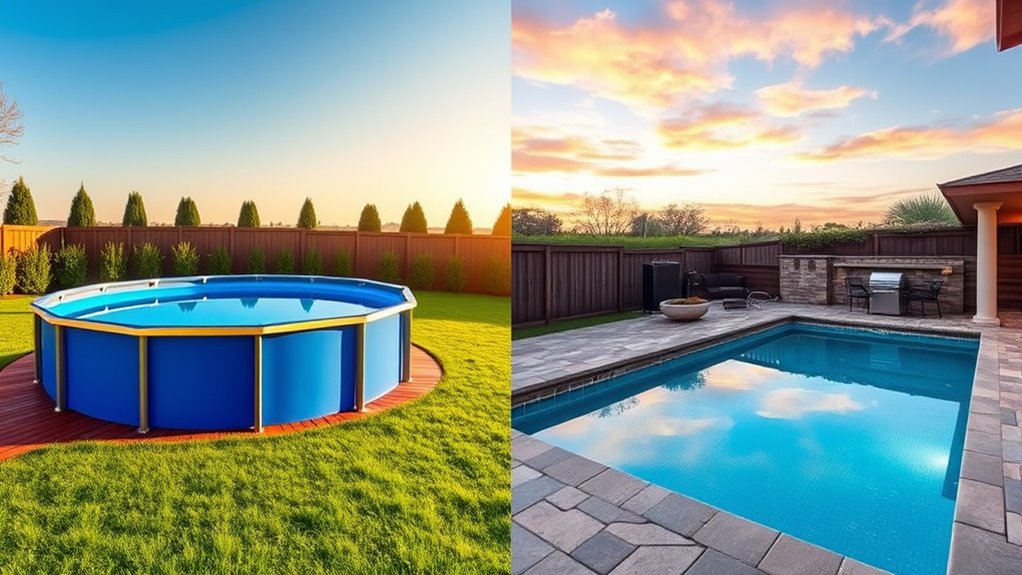
When considering installing a pool, understanding the costs involved can help you make informed decisions. One of the main factors to evaluate is the difference in costs between above-ground and in-ground pools. Beyond the initial price tags, you should also consider maintenance requirements and installation timelines, as these impact your long-term investment and enjoyment.
Above-ground pools typically come with a lower upfront cost, making them an appealing choice if you’re working with a tighter budget. You might find that the cost ranges from $1,500 to $7,000, depending on size and features. In contrast, in-ground pools usually start around $20,000 and can go well beyond $50,000, especially if you’re opting for custom designs or high-end materials. While the initial investment is higher for in-ground pools, they often provide a more permanent, aesthetically pleasing addition to your backyard.
Above-ground pools are budget-friendly options, costing $1,500 to $7,000 depending on size and features.
Installation timelines are another critical aspect. Above-ground pools generally take a few days to a week to set up, thanks to their straightforward installation process. You can expect fewer disruptions and quicker access to your new pool. In-ground pools, however, require a much longer installation timeline—often several weeks to months. This extended process involves site excavation, concrete work, plumbing, and electrical wiring, making it more complex and time-consuming. Your planning should account for these differences, especially if you want to avoid delays or unexpected costs.
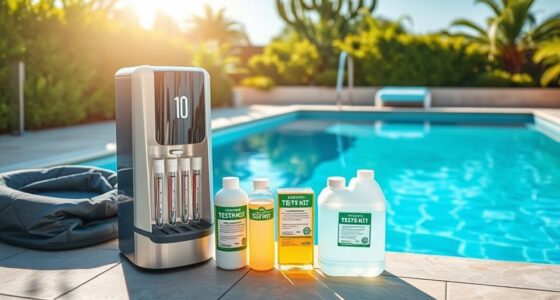
Maintenance requirements also vary markedly between the two options. Above-ground pools usually demand less maintenance because they have simpler filtration systems and fewer moving parts. You’ll need to regularly clean the pool, check chemical levels, and monitor the equipment, but overall, upkeep tends to be more straightforward. In-ground pools, on the other hand, typically require more intensive maintenance, including managing more complex filtration systems, ensuring proper water chemistry, and addressing potential structural issues over time. This ongoing maintenance can add to your overall cost and effort, so you should consider whether you’re prepared for the added responsibilities.
Furthermore, advancements in automation technology are increasingly making pool maintenance easier and more efficient, reducing the time and effort needed to keep your pool in top condition. Choosing between an above-ground or in-ground pool involves weighing these factors carefully. If budget and quick installation are your priorities, above-ground pools are usually the better choice. But if you’re seeking a long-term, integrated feature that adds value and aesthetic appeal to your property, an in-ground pool might be worth the extra investment, time, and maintenance. Ultimately, understanding these differences helps you plan better and select the option that aligns with your lifestyle, budget, and backyard vision.
Frequently Asked Questions
How Long Does Each Type of Pool Typically Last?
You can expect your above-ground pool to last around 7 to 15 years, depending on material durability and maintenance. In-ground pools generally have a longer lifespan of 20 to 50 years, thanks to their more durable construction and better resistance to weathering. Proper upkeep, like regular cleaning and repairs, considerably impacts pool longevity, ensuring you get the most out of your investment regardless of pool type.
What Maintenance Costs Are Associated With Above-Ground Pools?
You’ll spend around $100 to $300 annually on maintenance for your above-ground pool. This includes chemical expenses to keep the water balanced and safe, and pool cover costs to protect it from debris and reduce evaporation. Regularly cleaning the filter and checking the pump also help prevent costly repairs. Keeping up with these tasks guarantees your pool stays inviting and in good condition throughout the season.
Are There Tax Benefits for Installing In-Ground Pools?
You might qualify for tax deductions if installing an in-ground pool enhances your property value for resale. Some regions allow you to deduct costs related to improvements, including pools, on your property taxes. Keep in mind, though, that in-ground pools generally increase your property’s value more than above-ground pools, potentially leading to higher property taxes. Consult a tax professional to understand specific benefits in your area.
How Does Climate Influence Pool Choice and Costs?
Climate can considerably influence your pool choice and costs. If you face frequent freeze-thaw cycles, an in-ground pool might be more durable but pricier to maintain, while above-ground pools are easier to adapt to seasonal usage. Warm climates encourage year-round swimming, making in-ground pools a worthwhile investment, whereas cooler climates may lead you to opt for portable above-ground options. Consider your climate’s quirks to confidently choose the most cost-effective, climate-compatible pool.
Can Portable Pools Be a Cost-Effective Alternative?
Yes, portable pools can be a cost-effective alternative, especially for seasonal affordability. You can set them up quickly and remove them when not in use, saving on long-term maintenance and storage costs. They’re ideal if you want a temporary solution or live in areas with short swimming seasons. Plus, their lower initial investment makes them a smart choice for budget-conscious homeowners seeking summer fun without a hefty price tag.
Conclusion
Ultimately, choosing between an above-ground and in-ground pool is like picking between a sprout and a grand oak—each has its own charm and growth. While above-ground pools are quick blossoms, in-ground pools carve out a more permanent, intricate landscape of leisure. Your decision shapes your backyard’s symphony of water and whimsy. So, weigh your dreams and budget carefully, and turn your outdoor space into a lush oasis that reflects your vision and values.