Building a concrete pool in 2025 costs between $40,000 and $100,000, depending on size and custom features like waterfalls or seating. You’ll also need to budget $1,200 to $3,500 annually for maintenance tasks such as chemical balancing and filter cleaning. Eco-friendly options like solar heating and energy-efficient pumps may increase initial costs but can save you money over time. To understand how to optimize your investment and long-term savings, explore the details ahead.
Key Takeaways
- Initial construction costs range from $40,000 to $100,000, depending on size, design complexity, and custom features.
- Ongoing maintenance expenses typically total $1,200 to $3,500 annually, covering cleaning, chemical balancing, and inspections.
- Eco-friendly options like solar heaters and energy-efficient pumps may increase upfront costs but reduce long-term energy and water bills.
- Planning your budget should factor in both initial construction and ongoing maintenance, considering durability and repair costs.
- Investing in sustainable materials and technologies can lead to significant long-term savings and environmental benefits.
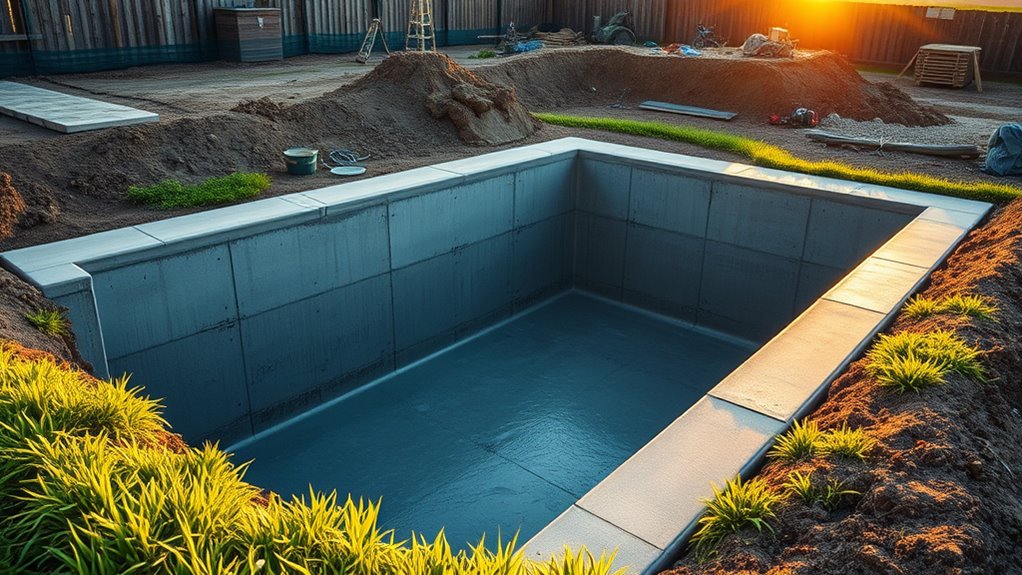
Are you curious about how much it will cost to build a concrete pool in 2025? If you’re considering adding a pool to your backyard, understanding the expenses involved is essential. The initial construction costs are only part of the picture; ongoing expenses like pool maintenance also play a notable role in your overall investment. When planning for a concrete pool, you’ll need to budget for materials, labor, and permits, but don’t forget to factor in the long-term costs of upkeep. Modern homeowners are increasingly interested in eco-friendly options, which can influence both the design and operational costs of their pool. These sustainable choices might include energy-efficient pumps, solar heating systems, or eco-friendly cleaning products, which can reduce your water and energy consumption over time.
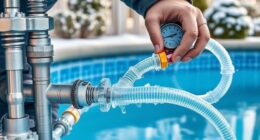
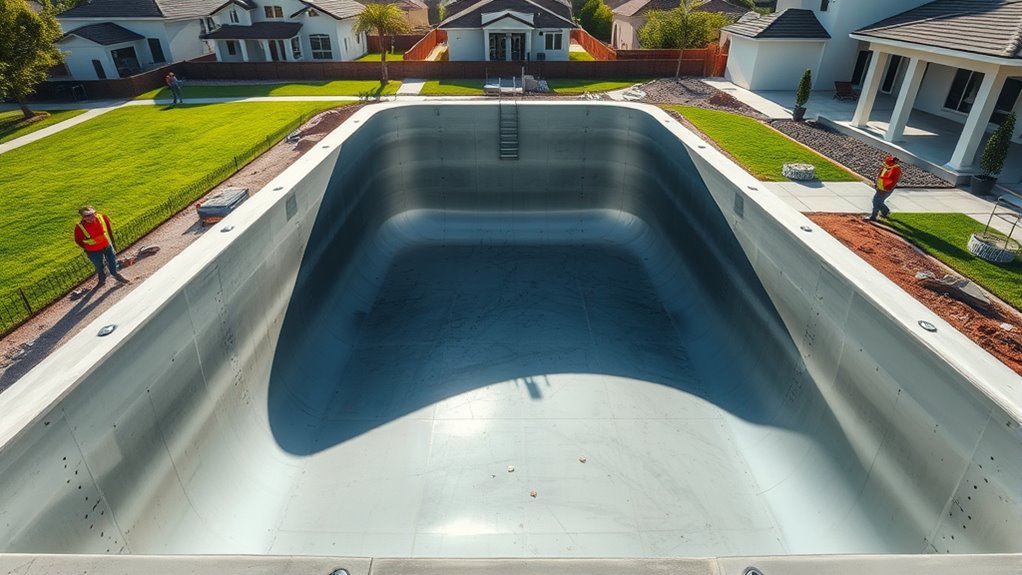
Building a concrete pool typically involves a substantial upfront investment, often ranging between $40,000 and $100,000 depending on size, features, and customization. The complexity of the design, such as custom shapes or added features like waterfalls or built-in seating, will also drive costs higher. Once the pool is built, you’ll need to think about pool maintenance. Regular upkeep includes balancing chemicals, cleaning filters, and inspecting the structure for cracks or leaks. These ongoing tasks can cost anywhere from $1,200 to $3,500 annually, especially if you hire professionals. Choosing eco-friendly options, like a variable-speed pump or a solar cover, may have higher initial costs but can notably lower your energy bills and reduce your environmental footprint over time. Additionally, understanding the importance of material selection can help optimize durability and reduce long-term repair costs.
Building a concrete pool costs $40,000–$100,000 plus $1,200–$3,500 annual maintenance.
Incorporating eco-conscious features into your pool setup can further influence the overall cost. Solar-powered heaters can add to your initial investment but offer free energy for heating your pool, saving you money in the long run. Similarly, using eco-friendly cleaning agents minimizes chemical runoff and is better for the environment. When planning your budget, don’t forget to include these long-term savings and benefits. While the upfront costs may seem steep, the sustainability benefits and reduced maintenance expenses can make eco-friendly options worthwhile investments. Remember, your choice of materials, equipment, and maintenance routines will shape your total costs, so it’s wise to research and compare different eco-friendly products and services.
Ultimately, building a concrete pool in 2025 requires a clear understanding of both immediate and ongoing expenses. By considering eco-friendly options and planning for pool maintenance costs, you’ll be better prepared to make informed decisions that fit your budget and environmental values. This careful planning ensures you enjoy your new backyard oasis without surprises, making your investment both enjoyable and sustainable for years to come.
Frequently Asked Questions
What Are the Latest Eco-Friendly Materials for Concrete Pools?
You’ll want to explore eco-friendly materials like sustainable additives, which reduce the environmental impact of your concrete, and recycled aggregates, made from crushed concrete or glass. These materials help lower carbon emissions and conserve resources. Using them, you create a greener pool that’s durable and eco-conscious. Incorporating sustainable additives and recycled aggregates into your concrete mix makes your project more sustainable without sacrificing quality or strength.
How Does the Climate Affect Concrete Pool Construction Costs?
Climate impacts your concrete pool construction costs by influencing your pool’s construction schedule and maintenance needs. In colder climates, you might face higher expenses due to seasonal scheduling, needing to build during warmer months to avoid weather delays. Additionally, extreme temperatures can affect pool temperature regulation, increasing energy costs. Proper planning around local climate conditions helps you prevent unexpected expenses and ensures your pool stays comfortable year-round.
Are There Innovative Financing Options for Pool Construction?
You can explore innovative financing options for pool construction, making pool funding more accessible. Look into options like home equity loans, personal loans, or specialized pool financing programs that offer flexible terms. Some lenders even provide low-interest or zero-interest deals for qualified buyers. By choosing the right financing options, you can enjoy your new concrete pool without upfront financial strain, spreading the cost over manageable payments.
What Are Common Unexpected Expenses During Pool Installation?
During pool installation, you might face unexpected expenses like additional costs for pool safety features such as fencing or alarms. Design customization can also lead to surprises if you decide to alter plans mid-build, requiring extra materials or labor. Keep in mind, unforeseen issues like soil conditions or plumbing problems can arise, so budgeting a contingency fund helps ensure you stay prepared for these unexpected expenses.
How Can I Maximize the Lifespan of My Concrete Pool?
To maximize your concrete pool’s lifespan, prioritize regular pool maintenance and monitor water chemistry consistently. Keep the water balanced to prevent corrosion and staining, and clean the filters and surfaces frequently. Address any cracks or minor damages immediately to avoid costly repairs later. Proper maintenance reduces wear and tear, ensuring your pool stays in excellent condition for years to come.
Conclusion
By understanding these costs, you’re basically revealing the secret to building a pool that’s so luxurious, it’ll make the Taj Mahal look like a kiddie pool. In 2025, your dream concrete paradise is within reach—just be prepared for the investment of a lifetime! With the right planning, you’ll have a backyard oasis that’ll make your neighbors’ jaws drop and your friends envy you forever. Get ready to turn your backyard into the ultimate luxury retreat!