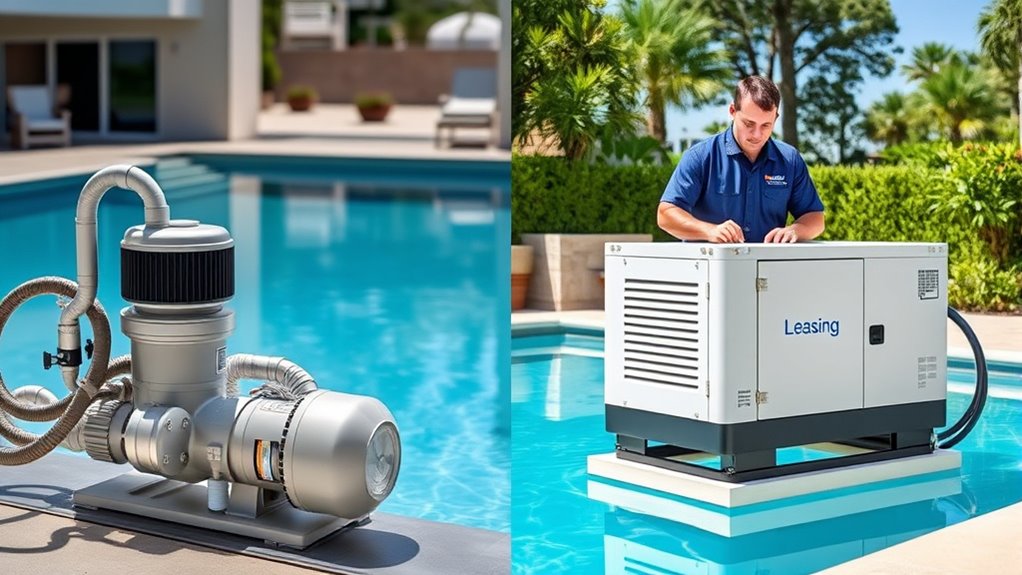

When deciding between leasing and buying pool equipment, consider your priorities for maintenance, costs, and upgrades. Leasing offers lower upfront expenses, predictable payments, and access to newer models, with the company handling repairs. Buying involves higher initial costs but gives you full control, long-term savings, and flexibility for upgrades. Think about whether you prefer hassle-free maintenance or long-term ownership—if you want more details on each option, keep exploring to make an informed choice.
Key Takeaways
- Leasing reduces upfront costs and offers predictable monthly payments, while buying requires a significant initial investment.
- Leasing provides easier access to newer, more efficient pool equipment with upgrade options.
- Buying grants full ownership, control over maintenance, and long-term cost savings despite higher initial expenses.
- Leasing minimizes unexpected repair costs as maintenance is handled by the lease company.
- Buying allows customization and longer-term use, making it more cost-effective for those prioritizing ownership.
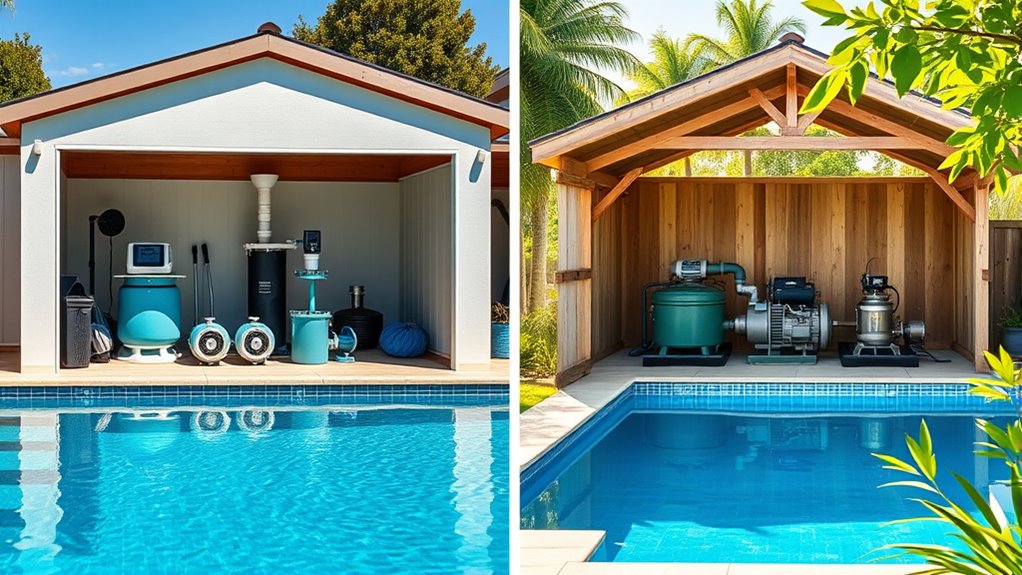
Deciding whether to lease or buy pool equipment can substantially impact your budget and maintenance plans. When it comes to pool maintenance, having reliable equipment is essential for keeping your pool clean, safe, and inviting. Leasing equipment often includes maintenance services and equipment warranties, which can save you time and money in the long run. With a lease, the company typically handles repairs and replacements, ensuring that your equipment remains in top condition without unexpected costs. This can be a significant advantage if you’re not comfortable performing regular pool maintenance or troubleshooting equipment issues yourself. On the other hand, purchasing your pool equipment means you own it outright, giving you full control over maintenance schedules and repairs. If you’re handy or have a trusted technician, owning can be more cost-effective over time, especially since you won’t be tied to a lease agreement or recurring payments.
Cost is a major factor in this decision. Leasing often involves lower upfront expenses, making it easier to fit into your budget, especially if you’re just starting or want to avoid large initial investments. Plus, with leasing, you typically have predictable monthly costs, which can simplify your financial planning. Buying, however, requires a larger initial outlay, but it might be more economical long-term if you plan to keep your pool and equipment for many years. Additionally, when you buy, you can choose equipment with longer-lasting warranties, such as extended equipment warranties, which can provide peace of mind against unexpected breakdowns. These warranties can cover repairs and replacements, reducing your maintenance costs and protecting your investment. Furthermore, understanding the importance of reliable equipment can help you make smarter decisions about durability and warranties, ensuring your investment lasts.
Another consideration is technology and equipment updates. Leasing often enables access to newer, more efficient models as technology advances, since leases can be renewed or upgraded. This means you’ll benefit from improved energy efficiency and better pool maintenance tools without having to purchase new equipment every few years. Conversely, buying equipment means you’re responsible for upgrading or replacing outdated gear, which can be costly. Ultimately, your choice depends on your budget, how much time you’re willing to spend on maintenance, and your preference for control versus convenience. If you prefer hassle-free maintenance and predictable costs, leasing might be the better option. If you’re comfortable managing repairs and want to maximize long-term savings, buying could be the smarter move. Either way, understanding the pros and cons helps you make an informed decision that aligns with your needs and lifestyle.
Frequently Asked Questions
What Are Hidden Costs Associated With Leasing Pool Equipment?
When leasing pool equipment, you should watch out for hidden fees that can increase your costs unexpectedly. These may include maintenance charges, late payment penalties, or upgrade fees. Additionally, contractual obligations might require you to stick with the lease terms, even if your needs change or costs rise. Always read the fine print carefully to understand all potential hidden costs and guarantee the lease aligns with your long-term plans.
How Does Maintenance Differ Between Leasing and Buying?
Think of maintenance as tending a garden—you reap what you sow. When you buy, you’re responsible for regular maintenance schedules that ensure equipment durability, preventing costly repairs. Leasing often includes maintenance, easing your burden and keeping equipment in top shape without extra effort. With ownership, you control upkeep but must stay vigilant, while leasing shifts maintenance responsibilities to the provider, ensuring consistent care and prolonging equipment life.
Can I Upgrade Pool Equipment Easily When Leasing?
Yes, when leasing, you can typically upgrade pool equipment more easily through equipment customization options or lease renewal options. Leasing agreements often include flexible terms that allow you to update or replace equipment without major costs. This makes it convenient to keep your pool up-to-date with the latest technology or features, ensuring ideal performance and efficiency without the hassle of full replacement.
What Is the Typical Lifespan of Leased vs. Purchased Equipment?
Leased equipment typically lasts around 5 to 7 years, aligning with warranty periods, and may need replacement or upgrades afterward. Purchased equipment often has greater durability, lasting 10 to 15 years or more if properly maintained. You benefit from longer lifespan and control over upgrades with ownership. Leasing offers shorter-term solutions with warranty coverage, but you might face more frequent replacements, while buying guarantees better long-term value and durability.
Are There Tax Benefits to Leasing Pool Equipment?
You might be surprised, but leasing pool equipment can offer notable tax benefits. When you lease, you often qualify for tax deductions on your lease payments, providing immediate financial benefits. This can improve your cash flow and reduce taxable income in the short term. So, if you’re seeking potential savings and smoother budgeting, leasing could be the smart move—making your investment work harder for you.
Conclusion
So, whether you lease or buy your pool equipment, remember it’s like choosing between a fancy rented tux or a tailored suit—you’ll look good either way, but one’s easier on your wallet. Leasing might feel like borrowing your neighbor’s pool float for a summer, while buying is like finally owning your own giant inflatable unicorn. Just pick what makes your backyard feel like paradise—minus the hassle of endless maintenance or unexpected costs. Plunge in, the choice is yours!