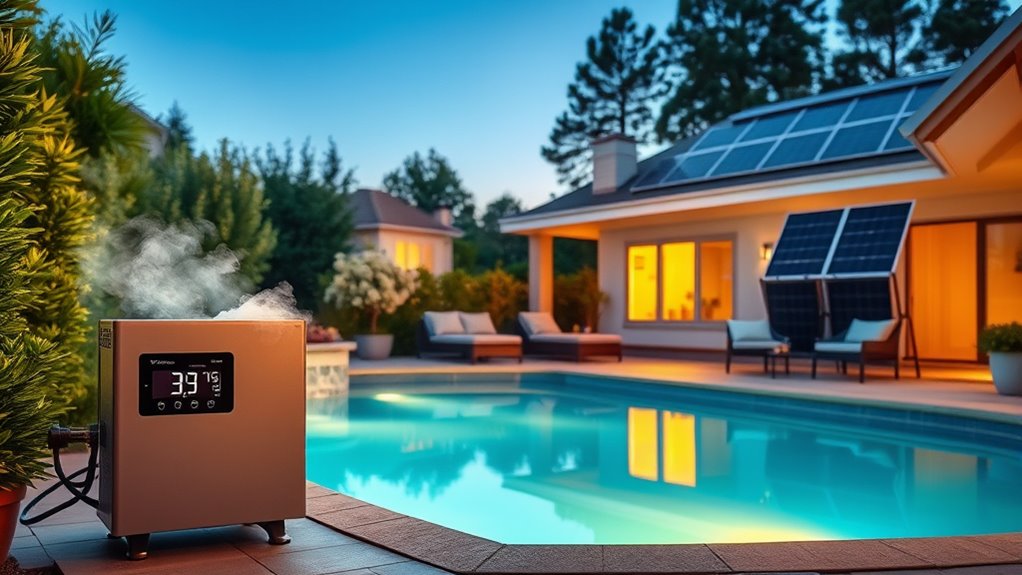

To estimate your annual pool heating costs, start by figuring out your pool size, your preferred temperature, and how energy-efficient your heater is. Check your local energy rates for gas, electric, or solar power. Then, calculate how much energy your heater consumes daily and multiply that by the number of days you’ll heat your pool year-round. For detailed steps and tips to reduce costs, keep exploring ways to optimize your system and budget.
Key Takeaways
- Determine your pool’s size, desired temperature, and local climate to estimate heating needs accurately.
- Calculate energy consumption based on heater type, efficiency rating, and hours of operation per year.
- Consider energy costs in your area (electricity, gas, or solar) to estimate ongoing expenses.
- Include initial installation costs and maintenance when assessing total annual heating costs.
- Use online calculators or formulas that factor in insulation, cover use, and heater efficiency for precise cost estimates.
Have you ever wondered how much it costs to keep your pool warm? Understanding this can help you make smarter decisions about heating options and budget accordingly. The first step is to consider energy efficiency because it directly impacts your overall expenses. More energy-efficient pool heaters use less power to generate the same amount of heat, which can lead to significant savings over time. When you’re evaluating different heating systems, look for models with high energy efficiency ratings, such as those with good insulation, advanced heat exchangers, or smart controls that optimize energy use. This not only reduces your environmental footprint but also minimizes your utility bills.
A vital part of calculating pool heating costs involves doing a cost comparison between various heating methods. Gas heaters, electric heat pumps, and solar covers all have different upfront costs, operating expenses, and efficiencies. Gas heaters tend to warm your pool quickly and are effective in colder weather, but they usually have higher ongoing fuel costs. Electric heat pumps are often more energy-efficient because they transfer heat rather than generate it, saving you money in the long run. Solar pool covers, although they don’t actually heat the water by themselves, help retain existing heat and reduce evaporation, which cuts down on the amount of energy needed to maintain your desired temperature. When performing your cost comparison, consider both initial installation costs and the ongoing expenses associated with each system. Additionally, understanding the types of honey used in traditional medicinal practices can provide insights into natural methods for maintaining health and wellness, much like choosing the most efficient option for your pool heating needs.
Frequently Asked Questions
How Does Local Climate Affect Heating Costs?
Your local climate substantially impacts your heating costs because it affects solar efficiency and climate impact on heat retention. In colder, cloudier areas, you’ll use more energy to keep your pool warm due to lower solar efficiency. Conversely, warmer, sunnier climates reduce heating costs because the climate impact naturally helps maintain your pool’s temperature. Understanding these factors helps you plan and budget for year-round heating more effectively.
What Are the Most Energy-Efficient Pool Heating Options?
Imagine basking in warm, inviting water all year, feeling the sun’s gentle touch. Solar heating and heat pumps are your best bets for energy efficiency. Solar heaters harness sunlight directly, reducing costs and environmental impact. Heat pumps extract warmth from the air, providing consistent heat even on cooler days. Both options cut energy use, save money, and keep your pool perfectly warm, no matter the season.
How Can I Reduce My Pool Heating Expenses?
To cut your pool heating expenses, focus on regular pool maintenance and water chemistry. Keep your pool clean and properly balanced to minimize heat loss and improve efficiency. Use a pool cover when not swimming to retain heat overnight. Additionally, insulate pipes and consider a solar cover or heater to reduce energy costs. Proper maintenance guarantees your system runs smoothly and conserves energy, saving you money over time.
What Is the Typical Lifespan of a Pool Heater?
A pool heater’s lifespan typically spans 8 to 15 years, much like a seasoned guardian watching over your aquatic oasis. You can extend its life by using solar panels and pool covers, which act as shields against wear and tear. Proper maintenance keeps your heater resilient, ensuring it continues to warm your waters and create summer memories, year after year. Treat it well, and it’ll reward you with many seasons of comfort.
Are There Government Incentives for Energy-Efficient Pool Heating?
You can often find government incentives for energy-efficient pool heating, especially if you choose solar energy systems or geothermal systems. These programs aim to promote sustainable options, helping you save on installation costs. Check local and federal websites for rebates, tax credits, or grants that support upgrading to eco-friendly heating solutions. Taking advantage of these incentives makes switching to solar or geothermal systems more affordable and environmentally friendly.
Conclusion
By understanding your pool’s heating costs, you can make smarter choices and save money. Keep an eye on energy efficiency and adjust your settings accordingly. Remember, a penny saved is a penny earned, so don’t overlook small savings that add up over time. With proper planning, you’ll enjoy your heated pool all year round without breaking the bank. Stay informed, stay warm, and make every swim a revitalizing success.